
Can Vows Include Humor? A Guide for Couples
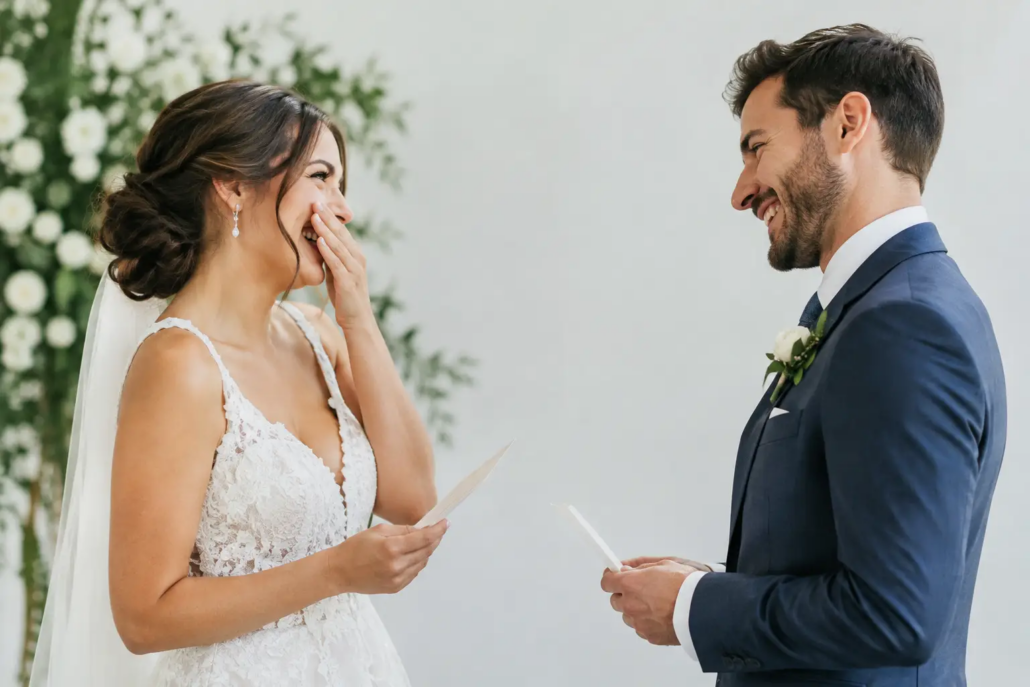
Can vows include humor? Absolutely. A well-placed laugh can make your ceremony feel less like a performance and more like the two of you standing together, telling the truth about the life you are choosing. The goal is not to turn your vows into a comedy routine. It is to make room for the affection, quirks, and real-life moments that make your relationship yours.
For many couples, writing vows feels surprisingly vulnerable. You want to say something meaningful, but you may worry about crying, sounding too formal, or sharing more than feels comfortable in front of family. Humor can be a gentle way in. It can settle your nerves, invite your guests into the warmth of your relationship, and make the heartfelt promises that follow land even more deeply.
Why Humor Belongs in Personal Wedding Vows
Your wedding vows do not need to sound like they came from another century to be sincere. In fact, vows often feel most powerful when they sound like the people saying them. If you and your partner laugh often, tease each other kindly, or have a shared sense of the absurd, leaving all of that out may make your words feel less authentic.
A funny line also gives everyone a breath. Weddings are emotional, and a little laughter can release the tension before the room reaches for tissues again. In an intimate Seattle elopement, it may be the joke about surviving rainy-day hikes together. At a larger celebration, it may be a promise to keep making coffee or to remain patient during a passionate debate over the correct way to load the dishwasher.
The difference is intention. Humor should help guests recognize your bond, not distract from the commitment you are making.
Can Vows Include Humor and Still Feel Meaningful?
Yes, as long as the humor supports the promise rather than replaces it. Think of a lighthearted line as seasoning, not the entire meal. Your vows still need to answer the emotional question at the center of the day: what are you committing to, and why does this person matter to you?
A strong approach is to begin with a small, specific observation about your relationship, then connect it to a real promise. For example: “I promise to love you through every overly ambitious home project, including the ones that somehow require three trips to the hardware store.” That gets a laugh because it is recognizable. Follow it with something grounded: “More than that, I promise to be your steady teammate when life is complicated, unexpected, or unfinished.”
This rhythm works because it holds both sides of partnership. Marriage includes grand devotion, but it also includes grocery runs, pet hair, flight delays, family group texts, and figuring out dinner at 8 p.m. The everyday details can make your vows more moving, not less.
The best humor is specific, kind, and easy to understand
A joke usually works best when it is affectionate and clear to nearly everyone in the room. An inside joke can be lovely, but guests should not need a five-minute explanation to understand why it is funny. If the story requires lots of backstory, save it for the reception toast.
Kindness matters even more. Your partner should feel seen and loved, never exposed. A playful reference to their love of color-coded calendars may be perfect. A joke about an insecurity, a difficult family relationship, an ex, or a stressful part of wedding planning is usually better left out.
Before you finalize your words, ask one simple question: if this line got no laugh at all, would my partner still feel cherished hearing it? If the answer is yes, you are probably on the right track.
How Much Humor Is the Right Amount?
There is no universal ratio, because every couple has a different comfort level. Some partners naturally write tender, funny vows with several light moments. Others may want one smile-inducing sentence in an otherwise emotional reading. Both are completely valid.
For most couples, one to three humorous touches is plenty. That could be a quick opening line, a shared memory in the middle, and a playful promise near the end. Give the sincere statements room to breathe between them.
It also helps to consider your ceremony’s overall tone. A casual backyard wedding with your closest people may invite more relaxed language than a formal gathering in front of several generations. If you are blending cultural or religious traditions, humor can still belong, but it should sit comfortably alongside the meaningful elements you have chosen to include.
You do not have to match each other word for word, either. One partner may be naturally funny while the other is more reflective. What matters is that both sets of vows feel honest. You can agree on a general length and level of formality without trying to make your voices identical.
A Simple Way to Write Funny, Heartfelt Vows
Start by making a private list of memories that make you smile. Skip the pressure to write beautifully at first. Think about the small things: your first road trip, the meal you always order, the pet who clearly has a favorite person, the phrase one of you says too often, or the moment you knew this relationship was different.
Then choose one or two memories that reveal something deeper. Maybe the joke about getting lost on a ferry points to how well you handle surprises together. Maybe the reference to your partner’s snack collection leads into a promise to build a home where both of you feel cared for.
A helpful vow structure is simple: name what you love, share one true detail, and make promises for the future. You might write, “I love how you bring calm to every crowded room. I promise to keep pretending I do not notice when you steal the good pillows. And I promise to choose patience, honesty, and laughter with you for all the days ahead.”
Read your draft out loud. Vows are meant to be heard, not just admired on a screen. If a sentence feels too long, shorten it. If a joke feels forced when spoken, trust that instinct and remove it. The best vows are clear enough to say through nerves and meaningful enough to remember afterward.
When to Leave a Joke Out
Not every funny story belongs in a ceremony. If the joke depends on embarrassment, could confuse guests, or might make either of you feel self-conscious, it is not worth the risk. Your wedding is not the time to test material.
Be especially thoughtful about humor involving family members or cultural traditions. Even a harmless joke can land differently when grandparents, children, or loved ones from different backgrounds are present. When in doubt, aim for warmth over cleverness.
You may also decide that you simply want deeply serious vows. That is just as authentic. Humor is an option, not a requirement. A ceremony should reflect your relationship, not a rule about what weddings are supposed to sound like.
Let Your Ceremony Hold Both Laughter and Feeling
Your vows are one part of a larger ceremony, which means you do not have to carry every emotional note alone. A personalized ceremony can include gentle humor in the welcome, your story, or a reading, allowing your personal vows to stay more private or reflective if that feels right.
An experienced officiant can help you find that balance, especially if you are combining traditions, including bilingual elements, involving children or family, or planning on a short timeline. At Forever, Together, the focus is on creating a ceremony that feels natural to you, whether that means a quiet waterfront elopement, a joyful gathering with a full guest list, or something in between.
The most memorable vows are rarely the most polished ones. They are the ones where your partner hears your voice clearly – the love, the promise, and perhaps the one line that makes them laugh because nobody else in the world could have said it quite that way.