
How to Choose a Seattle Wedding Officiant
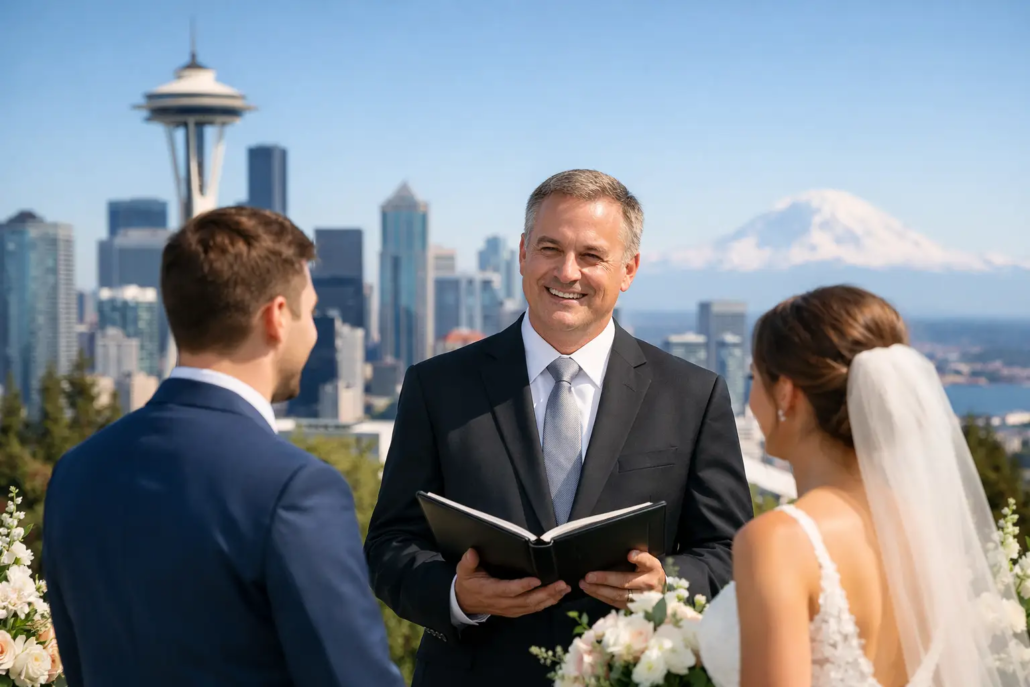
If you are looking for a Seattle wedding officiant, you are not just hiring someone to stand up front and read a script. You are choosing the person who will guide one of the most personal moments of your day. That matters more than many couples expect at first, especially once the flowers, timelines, family opinions, and weather forecasts start competing for attention.
A great officiant does two jobs at once. They handle the legal and logistical side so nothing gets missed, and they shape a ceremony that actually sounds like you. When those two things come together, the ceremony stops feeling like the box you check before the celebration and starts feeling like the reason everyone is there.
What a Seattle wedding officiant should actually do
Some couples assume all officiants offer basically the same service. In reality, there is a big difference between someone who simply performs weddings and someone who helps create a ceremony with intention.
A strong officiant should make the process easier, not more confusing. That includes explaining the marriage license process, helping you think through ceremony structure, asking good questions about your relationship, and adjusting the tone to fit your day. Maybe you want something short and simple. Maybe you want a warm, story-driven ceremony with personal vows, family involvement, a unity ritual, or bilingual elements. A good officiant can meet you where you are instead of pushing you into one style.
This is especially important in Seattle and Western Washington, where weddings come in every format imaginable. One weekend might be a rooftop celebration downtown, the next a forest elopement, then a backyard ceremony in Snohomish County or a waterfront gathering in Bellingham. Your officiant should be comfortable with that variety and calm when plans shift.
The best Seattle wedding officiant for you may not be the most traditional
For some couples, tradition is central. For others, it is something to borrow from selectively. Most fall somewhere in the middle.
That is why fit matters more than formality. A couple planning a non-denominational ceremony may want a heartfelt tone without anything overly religious. Another couple may want spiritual language but not a full church format. Some want to honor multiple cultural backgrounds. Some want a same-sex wedding ceremony that feels fully affirming without awkward assumptions built into the wording. Some just want a short legal signing with zero extra fuss.
None of those choices are more valid than another. The key is finding an officiant who understands that a ceremony is not supposed to be generic. It should reflect your values, your people, and the way you want to begin married life.
Questions to ask before booking
You do not need to turn the search into an interview marathon, but a few smart questions can save you stress later.
Start by asking how personalized the ceremony will be. Some officiants use a mostly fixed template with a few small edits. Others build the ceremony around your relationship, preferences, and comfort level. If personalization matters to you, ask what that process looks like and how much input you will have.
Ask about flexibility too. Can they perform religious, secular, spiritual, and non-denominational ceremonies? Are they comfortable with bilingual weddings or Spanish-language elements? Can they handle an elopement, a short-notice wedding, or a ceremony with just the couple and two witnesses? Couples often discover they need more flexibility than they expected once family travel, venue rules, or scheduling realities kick in.
You should also ask practical questions. What areas do they serve? What happens if the timeline changes? How early do they arrive? Will they help with the rehearsal if needed? Do they guide vow writing? What is included in the fee? A warm personality is wonderful, but reliability matters just as much.
Ceremony style matters more than people think
When couples talk about wedding vendors, the ceremony sometimes gets less attention than the photos, food, or music. Then the wedding day arrives, and everyone realizes the ceremony sets the emotional tone for the entire event.
An experienced officiant knows how to read the room and shape that tone. A ceremony can be romantic without becoming stiff. It can be funny without turning into a stand-up routine. It can be brief without feeling rushed. It can include family, children, cultural traditions, or personal stories without becoming cluttered.
That balance is hard to fake. It comes from experience, careful preparation, and a real understanding of people. If your officiant gets that balance right, guests stay present. More importantly, you stay present.
Why customization is worth it
Personalized ceremony design sounds like a luxury until you realize how much pressure it removes. Couples often come in with a rough sense of what they do not want. They do not want a ceremony that feels cold, preachy, generic, or painfully long. They may not know what they do want yet.
That is where guidance matters. A thoughtful officiant helps you sort through options without making the process feel like homework. You can decide how formal or relaxed the ceremony should be, whether to include vows, whether to mention how you met, whether to involve parents or friends, and whether to include readings, rituals, or cultural touches.
The result is not just a prettier script. It is a ceremony that feels grounded in your relationship. Couples are often surprised by how much that changes the day. When the words feel true, people listen differently.
Seattle weddings often need flexibility
A Seattle wedding officiant should be ready for real life, not just ideal conditions. In this region, weather shifts fast, ferry timing can get weird, traffic has opinions, and outdoor ceremonies sometimes need a backup plan with about ten minutes’ notice.
That is one reason flexibility is not just a nice extra. It is part of good service. If you are planning a mountaintop elopement, a courthouse-area signing, a restaurant buyout, or a backyard ceremony with limited setup time, you want someone who can adapt without creating more stress.
This matters even more for short-notice weddings. Sometimes couples are planning around military leave, family health concerns, immigration timelines, travel schedules, or a date that suddenly opens up at the venue they love. You do not need an officiant who acts like your timeline is a problem. You need one who knows how to move things forward calmly and clearly.
Bilingual and inclusive ceremonies should feel natural
If your ceremony includes more than one language, more than one faith background, or family members with different expectations, the right officiant can make everyone feel more at ease.
That does not mean trying to please every person in the room. It means creating a ceremony where your relationship stays at the center while important parts of your background are honored with care. Bilingual ceremonies, in particular, require more than direct translation. They need rhythm, warmth, and thoughtful transitions so both languages feel genuinely included.
Inclusivity matters just as much in every other way. Couples should not have to brace for awkward wording, outdated assumptions, or a ceremony that sounds like it was written for someone else. You want language that fits your relationship, full stop.
Price matters, but value matters more
Budget is real. Weddings in the Seattle area add up quickly, and many couples are trying to make thoughtful decisions without overspending.
Still, the lowest-priced officiant is not always the best value. If someone charges very little but gives you a generic script, minimal communication, and no support when plans change, the savings may not feel worth it. On the other hand, a reasonably priced officiant who offers customization, clear communication, and genuine care can make the entire planning process easier.
That is often the difference couples remember later. Not whether the officiant was the cheapest option, but whether they felt supported.
What the right fit feels like
When you find the right officiant, the conversation usually feels easier. You are not trying to convince them of what matters to you. You are not translating your relationship into a template that does not fit. You feel heard, guided, and a little more relaxed than you did before the call.
That is the real goal. Your ceremony should feel personal, your planning process should feel manageable, and your officiant should bring both confidence and calm to the day. At Forever, Together, that is exactly how we approach it.
You do not need a perfect wedding to have a meaningful ceremony. You just need the right person helping you create a moment that feels honest, joyful, and fully yours.