
11 Nonreligious Wedding Ceremony Ideas
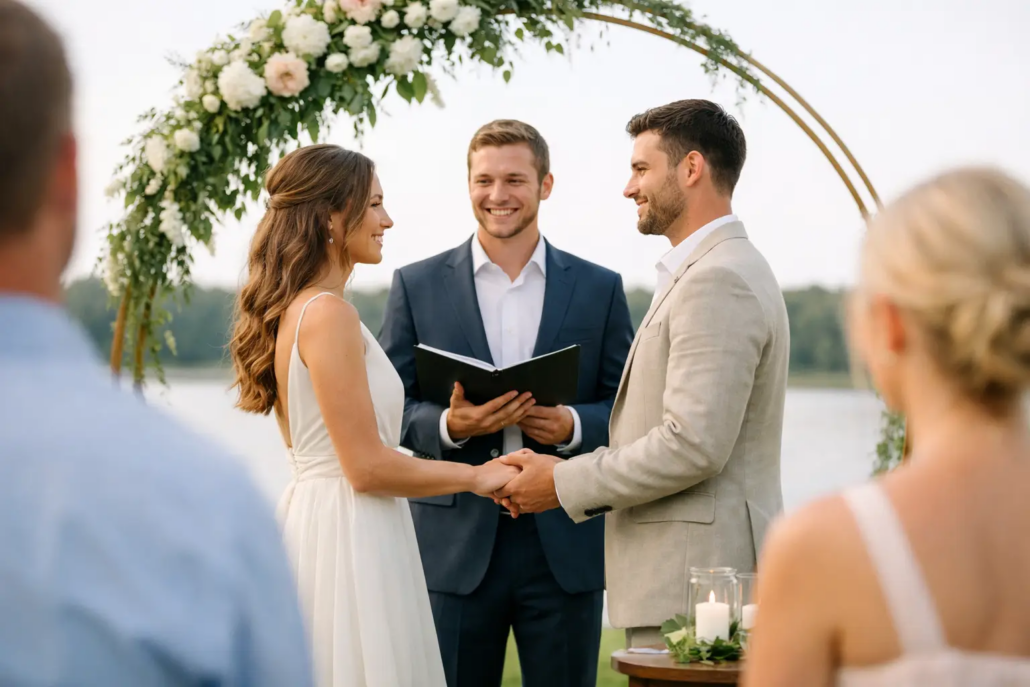
Some couples know right away that a traditional religious script does not fit. Others realize it later, somewhere between venue tours, family opinions, and the moment they hear ceremony wording that sounds nothing like them. If you are looking for nonreligious wedding ceremony ideas, the good news is this: a secular ceremony can still feel deeply meaningful, emotional, and memorable. It can be simple, warm, funny, elegant, or heartfelt without borrowing language that does not reflect your values.
The best nonreligious ceremonies are not defined by what they leave out. They are defined by what they include – your story, your people, your priorities, and the tone that feels right for the two of you. That gives you a lot of freedom, but it can also make planning feel a little open-ended. A clear starting point helps.
What makes nonreligious wedding ceremony ideas work
A strong secular ceremony usually has the same goal as any great ceremony: it brings everyone into the moment and makes your commitment feel real. The difference is in the framing. Instead of relying on religious structure, it draws meaning from personal vows, thoughtful readings, family participation, shared rituals, and an officiant who knows how to guide the flow.
This matters because not every couple wants the same kind of nonreligious ceremony. Some want something short and modern. Some want a traditional wedding feel, just without prayer or scripture. Some want to honor culture, family, or heritage in a way that still feels secular. And some want a ceremony that lasts ten minutes, includes the legal basics, and gets them to cocktail hour before anyone starts sweating through formalwear.
That is why the best ideas are the ones that match your relationship, not just your Pinterest board.
11 nonreligious wedding ceremony ideas to consider
1. Tell your story without making it a performance
One of the easiest ways to personalize a secular ceremony is to include a brief story about how you met, what you admire in each other, or what brought you to this day. This works especially well when it sounds natural rather than overly polished.
A good officiant can shape this so it feels warm and personal, not like a stand-up set or a long biography. The sweet spot is usually a few meaningful details that help guests feel connected to your relationship.
2. Write vows that sound like you actually talk
Personal vows are often the emotional center of a nonreligious ceremony. They do not need to be dramatic or poetic to be powerful. In fact, vows tend to land best when they sound honest.
You can keep them short and sincere, mix heartfelt promises with a little humor, or use a shared structure if one of you is nervous about writing. If fully personal vows feel like too much, a blended approach works well: custom opening lines followed by classic promises.
3. Choose readings that reflect your values
Secular readings can bring depth and beauty to a ceremony without feeling formal or stiff. Couples often choose poetry, literature, song lyrics, film quotes, or excerpts about partnership, resilience, and love.
The trade-off is tone. A very literary reading can feel elegant, but it may not feel personal unless it truly means something to you. A funny reading can loosen everyone up, but too much humor can undercut a more emotional moment. It helps to think about the overall mood you want guests to leave with.
4. Include a unity ritual that feels genuine
Unity rituals are popular because they give shape to the moment of commitment. In nonreligious ceremonies, that might look like a handfasting, wine blending, sand ceremony, candle lighting, tree planting, or a shared toast.
Not every ritual works in every setting. Outdoor weddings in Western Washington, for example, may not be ideal for candles in the wind or anything too fussy in damp weather. The right choice is one that fits your venue, your timeline, and your comfort level. A ritual should add meaning, not stress.
5. Invite family in, but with boundaries
If family expectations are part of your planning, this is one of the most useful nonreligious wedding ceremony ideas to consider. A secular ceremony can still include parents, grandparents, children, or close friends in meaningful ways. They can do a reading, offer a blessing without religious language, present rings, witness your signing, or join a group vow of support.
This can be a beautiful compromise when loved ones want to feel included. It can also get complicated if too many people are involved or if family dynamics are tense. The key is thoughtful roles, clear timing, and good boundaries.
6. Add a moment of gratitude or remembrance
Many couples want to acknowledge absent loved ones, blended families, or the people who helped them reach this moment. A short remembrance or gratitude statement can do that in a way that feels sincere and grounded.
This is especially meaningful for intimate weddings and elopements, where every word carries more weight. It does not need to be long. Often, one well-written paragraph says more than a lengthy tribute.
7. Keep the legal part simple and the personal part rich
A secular ceremony does not have to be long to feel complete. Some of the most moving ceremonies are concise, especially when each part has a purpose. The legal declaration, consent, vows, and ring exchange can be paired with a few carefully chosen personal elements.
This is often the best route for couples who want something efficient but not generic. You do not need twenty minutes of ceremony text to create a memorable experience.
8. Create a bilingual or multicultural ceremony
For many couples, nonreligious does not mean culturally neutral. You may want to honor more than one language, heritage, or family tradition while keeping the overall ceremony secular.
That can look like bilingual vows, dual-language welcome remarks, a cultural reading, or a traditional element reframed in a nonreligious way. This takes care and balance, because not every tradition translates neatly into a secular format. But when done well, it creates a ceremony that feels inclusive and deeply personal.
9. Let guests participate in a simple way
Interactive moments can make guests feel genuinely present instead of just watching from their chairs. A group blessing, a ring warming, a community vow of support, or a shared response during the ceremony can create that sense of connection.
This works best when your crowd is comfortable and the instructions are clear. For very private couples, a highly interactive ceremony may feel like too much. For others, it becomes one of the most memorable parts of the day.
10. Use music with intention
Music does a lot of emotional work in a ceremony, especially in secular weddings where there is no built-in liturgical structure. Your processional, any instrumental underscore, and your recessional all shape the mood.
The practical question is not just what songs you love. It is whether they fit the moment. A favorite track can be perfect, but if the lyrics pull focus or the tempo works against the pacing, it can feel off. Thoughtful music choices make a ceremony feel cohesive.
11. Work with an officiant who can customize, not just perform
This may be the most important idea of all. A nonreligious ceremony depends heavily on the person leading it. A good officiant does more than read a script. They help you decide what belongs, what does not, how long the ceremony should be, and how to balance personality with structure.
That support matters even more if you are planning quickly, blending families, managing expectations, or trying to keep things low-stress. Couples often come in thinking they need a script. What they usually need is guidance.
How to choose the right ceremony ideas for your wedding
Start with tone before tradition. Do you want the ceremony to feel elegant, relaxed, joyful, intimate, playful, or classic? That answer will narrow your choices faster than scrolling through dozens of ritual ideas.
Then think about who needs to be reflected in the ceremony. Is this mostly about the two of you, or do you want strong family involvement? Are there cultural details that matter? Is one of you private while the other wants a more expressive moment? These are not small details. They shape what will feel comfortable when you are standing in front of everyone.
It also helps to be realistic about timing. If you are planning an elopement or a short-notice wedding, simpler usually works better. If you have a larger guest list and want the ceremony to feel like a true centerpiece, you may want a bit more storytelling and participation.
A personalized ceremony does not have to be complicated
This is where couples often get stuck. They want the ceremony to feel unique, so they assume they need to invent everything from scratch. You really do not.
Most meaningful ceremonies are built from familiar elements, just arranged with care. A welcome, a short story, a reading, vows, rings, a simple ritual, and a strong closing can feel completely original when the wording reflects your relationship. Personal does not mean complicated. It means intentional.
If you are planning in Seattle or elsewhere in Western Washington, it is also worth remembering that flexibility matters. Weather shifts, family travel changes, timelines tighten, and sometimes the wedding you thought you were having becomes something more intimate and more you. That is not a problem. Very often, it is the moment the ceremony gets better.
At Forever, Together, we have seen again and again that the most memorable secular ceremonies are the ones that let couples exhale. When the words feel true, the structure feels manageable, and the ceremony actually sounds like you, everything else settles into place. Start there, and the right ideas usually become much easier to choose.