
Short Notice Wedding Ceremony Tips
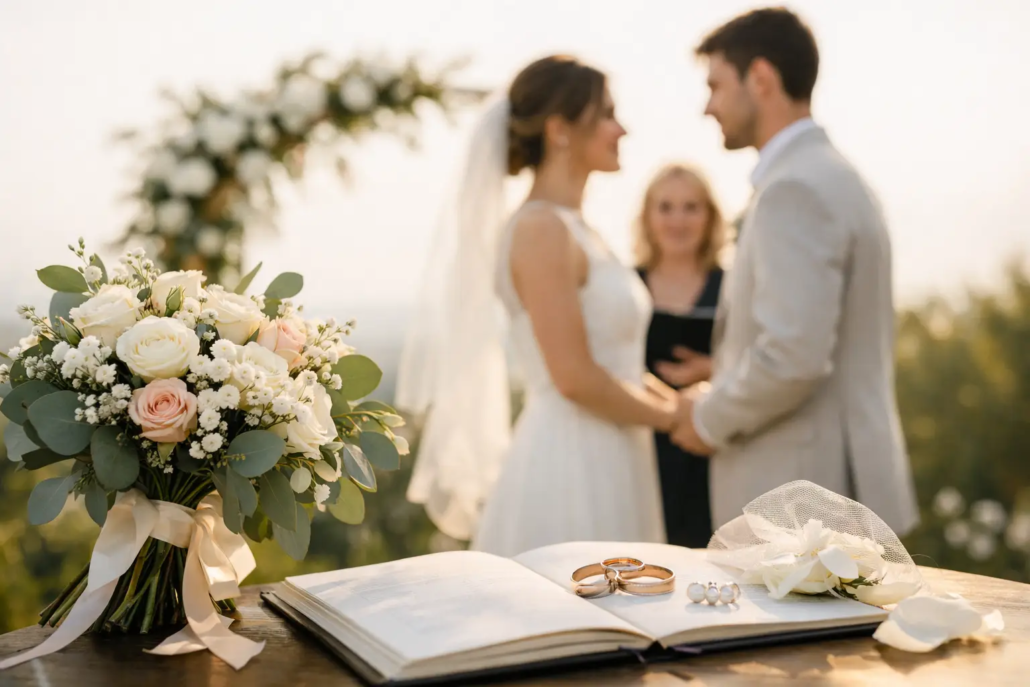
One week. Three days. Sometimes even tomorrow. A short notice wedding ceremony can sound like chaos from the outside, but in real life, it is often one of the clearest, most heartfelt decisions a couple makes. Maybe you are working around military leave, family health concerns, travel schedules, immigration timing, or the simple realization that a long engagement just does not fit your life. Whatever brought you here, the good news is this – you do not need months of planning to have a ceremony that feels meaningful.
What you do need is a calm process, the right priorities, and an officiant who knows how to make the legal pieces and the emotional pieces work together.
What makes a short notice wedding ceremony work
The biggest misconception is that fast means rushed in every sense. It can, of course, if you are trying to recreate a 200-guest ballroom wedding in four days. But if you focus on the ceremony itself, a short timeline can actually strip away a lot of noise.
Couples planning quickly are often surprisingly decisive. They already know they want to get married. They are less interested in performing for a crowd and more interested in creating a moment that feels true to them. That clarity matters.
A good short notice wedding ceremony starts by separating what is essential from what is optional. The essentials are straightforward: your marriage license, an officiant, the required witnesses if your state requires them, a location, and a ceremony format that fits your timeline. Everything else, from flowers to music to coordinated outfits, is there only if it helps the day feel more like you.
That is where flexibility becomes more than a convenience. It is the whole strategy.
Start with the legal side first
If you are planning a short notice wedding ceremony in Washington, the legal timeline matters more than the centerpiece color, and that is not exactly shocking. Washington has a three-day waiting period after you receive your marriage license, so if you want to marry fast, this should be your first step.
That waiting period changes the conversation. If you were hoping to get married tomorrow, you may need to adjust by a few days. If you are still within that window, it gives you time to finalize the ceremony wording, confirm your location, and decide who will be there.
This is also the moment when experienced guidance makes a difference. Couples under time pressure do not need vague advice. They need clear answers about timing, paperwork, witnesses, and what happens next. Once those basics are handled, everything starts to feel much more manageable.
Personal does not have to mean long
A lot of couples worry that if they book quickly, they will end up with a generic script and a transaction instead of a ceremony. That can happen with a cookie-cutter approach, but it does not have to.
A short ceremony can still feel deeply personal. In fact, some of the most moving ceremonies are brief because every word has a reason to be there. You can include a welcome, a short reflection on your relationship, personal vows or simple traditional vows, a ring exchange, and the pronouncement, all within ten to fifteen minutes.
If you want something even simpler, you can keep the legal signing at the center and add just a few customized touches. A favorite reading. A moment of gratitude for family. A bilingual section so everyone present feels included. A quick story about how you met. Small details carry a lot of weight when the ceremony is intentionally designed.
This is often the sweet spot for a short notice wedding ceremony – short in length, not short on meaning.
Choosing the right location on a tight timeline
Seattle and Western Washington give couples a lot to work with, especially if they are open to smaller gatherings. Parks, private homes, waterfront spots, courthouses, rental spaces, and quiet outdoor locations can all work beautifully. The best choice depends on your guest count, weather comfort level, privacy needs, and how quickly you need to lock things in.
Outdoor ceremonies can be gorgeous and simple, but they do come with the usual local plot twist: weather. If your wedding date is close, it helps to think in layers. Have a beautiful outdoor plan if that is your dream, but also have a backup that does not require a dramatic group text five minutes before the ceremony.
For some couples, a living room ceremony or backyard wedding ends up being the perfect answer. It removes travel stress, keeps the atmosphere intimate, and lets everyone relax. For others, an elopement-style setting with just the two of you and a couple of witnesses feels exactly right. There is no prize for making this harder than it needs to be.
Who should be there?
This is one of the hardest parts of planning quickly, especially if family expectations are involved. A short timeline can make guest decisions feel more emotionally loaded because there is less time to explain, negotiate, or smooth things over.
The helpful question is not, who might be offended? It is, what kind of experience do we want to have when we say these vows?
Some couples want immediate family only. Some want a few close friends. Some want no audience at all. All of those are valid. If you are choosing a very small ceremony now and a larger celebration later, that can also be a practical and thoughtful compromise.
A short notice wedding ceremony is not less real because it is small. If anything, the intimacy often makes the commitment feel more immediate and grounded.
What to prioritize when time is limited
When couples are under pressure, decision fatigue is real. That is why it helps to choose just a few things that matter most and let the rest stay simple.
Usually, the highest-value choices are your officiant, your ceremony tone, your location, and your marriage license timing. If those are solid, the day has a strong foundation. Clothing can be formal or casual. Flowers can be full-service or picked up that morning. Music can come from a speaker and still create a lovely atmosphere.
The trade-off is straightforward. If you want speed, you may need to release the idea that every single detail will be polished to perfection. But what many couples gain instead is presence. They remember how the moment felt, not whether every napkin matched.
Why the officiant matters even more in a short timeline
When there is less planning time, the officiant often becomes the steady center of the process. This is the person helping you understand the legal requirements, shape the ceremony, manage the pacing, and create a moment that feels grounded instead of thrown together.
That role is especially important if your ceremony includes blended families, same-sex couples, bilingual elements, spiritual-but-not-religious preferences, or guests with different cultural expectations. These are not problems to solve. They are parts of your story that deserve care.
An experienced officiant can help you decide what to include, what to leave out, and how to keep the ceremony true to you without adding unnecessary stress. At Forever, Together, that support is part of what makes short-notice ceremonies feel not just possible, but genuinely special.
It is okay if this was not your original plan
Some couples arrive at a short timeline with excitement. Others arrive with disappointment because their original plans changed. Maybe a venue fell through. Maybe a family situation shifted. Maybe planning a larger event started to feel more draining than joyful.
If that is you, give yourself a little room to grieve the version you imagined. Then look at what this version makes possible. More intimacy. Less performance. Faster relief. A ceremony focused on your commitment instead of a hundred competing logistics.
There is no single right way to get married. There is only the way that fits your real life, your relationship, and the moment you are in.
A short notice wedding ceremony can be elegant, emotional, funny, reverent, relaxed, or all of the above. It can happen on a bluff at sunset, in a cozy home with a handful of people, or in a simple signing followed by dinner somewhere you love. What matters is not how long it took to plan. What matters is that when the ceremony begins, it feels like the two of you are exactly where you are supposed to be.
If you are planning quickly, take a breath. Start with the legal steps, choose support you trust, and keep your focus on the heart of the day. The rest can be simpler than you think, and still be beautiful.