
Best Vows for Second Marriages
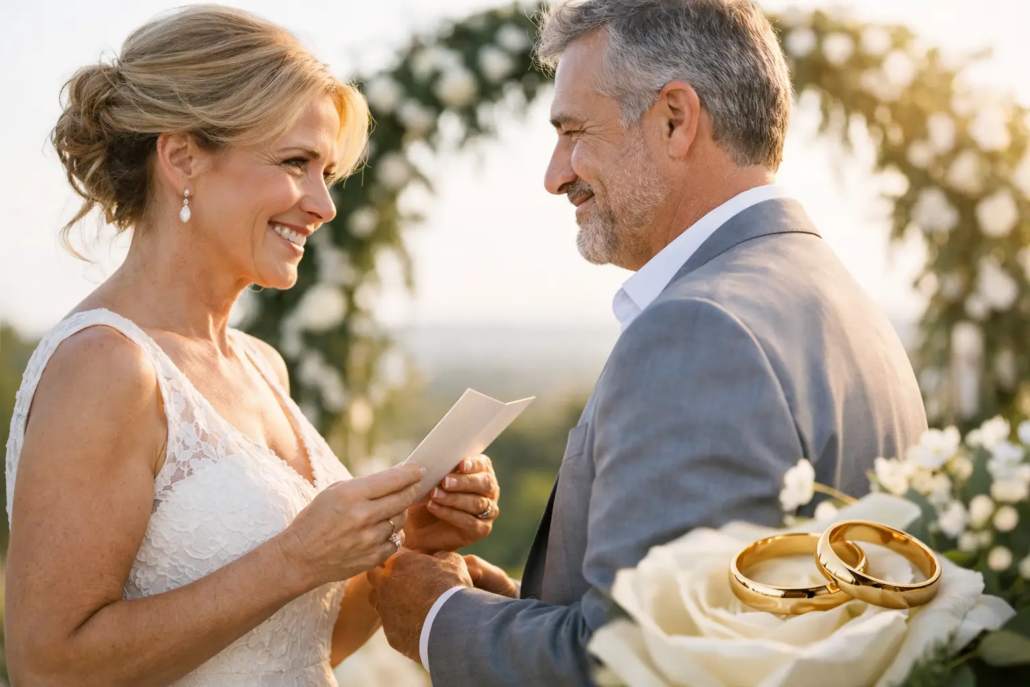
Second marriages often come with more life behind them and more intention in front of them. That is exactly why couples searching for the best vows for second marriages are usually not looking for anything overly polished or performative. They want words that feel true, steady, and earned.
A second wedding can carry joy, relief, tenderness, and a little complexity all at once. Maybe there are children involved. Maybe there is grief from a past loss or hard-earned wisdom from a divorce. Maybe both of you are older and absolutely sure that a generic script will not cut it. The good news is that second-marriage vows do not need to sound dramatic to be deeply moving. In fact, the strongest vows are usually the ones that sound like you.
What makes second-marriage vows different
The best vows for second marriages usually have less fantasy and more clarity. That is not a downside. It is often what makes them so meaningful.
For many couples, a second marriage is less about promising a perfect future and more about choosing each other with open eyes. You know that marriage includes ordinary Tuesdays, family logistics, unexpected stress, and seasons that test your patience. So your vows can reflect that maturity. They can be romantic without pretending love is effortless.
This is also where tone matters. Some couples want their vows to acknowledge the road that brought them here. Others would rather focus entirely on the future. Both approaches work. The right choice depends on your comfort level, your guests, and the emotional shape of the day.
The best vows for second marriages sound honest
If there is one quality that matters most, it is honesty. Not forced sentiment. Not borrowed movie lines. Not language that sounds beautiful but does not fit the relationship.
A strong second-marriage vow often includes gratitude, realism, and intention. Gratitude because finding love again can feel especially meaningful. Realism because you have lived enough life to know what commitment asks of you. Intention because this time, many couples are making choices more deliberately.
That does not mean your vows have to be serious from start to finish. A little humor can be perfect if that is your style. If one of you always steals the blankets or sends too many texts from the grocery store, that kind of detail can make your vows feel warm and personal. The goal is not to impress the room. It is to speak clearly to the person waiting for you at the altar.
What to include in second-marriage vows
Start with what is true about this relationship now. Why does this partnership work? What do you trust about each other? What have you learned together?
For many couples, the most powerful vows speak to companionship as much as romance. You might promise to listen with patience, protect time for each other, tell the truth kindly, or keep choosing joy even when life gets complicated. If your family already includes children, you may also want to acknowledge the life you are building together as a household, not just as a couple.
It can also help to think about what you do not want to say. If grand, sweeping promises feel unnatural, skip them. You do not need to vow never to argue or to make each day magical. Those lines usually sound nice on paper and hollow out loud. Better to promise something real, like staying present, being generous, and facing hard moments as a team.
Should you mention the past?
Sometimes yes. Sometimes no.
For some couples, a brief nod to the journey that brought them here adds depth. It might be as simple as saying, “I love the life experience that shaped you” or “I do not take this love for granted.” That kind of language honors maturity without turning the ceremony into a reflection on former relationships.
But there is a trade-off. If the mention feels too detailed, too heavy, or too tied to old pain, it can shift the focus away from the commitment you are making now. In most ceremonies, a light touch works best. You can acknowledge resilience, growth, or gratitude without giving the past center stage.
Sample vows for second marriages
Here are a few examples that work well because they are grounded, heartfelt, and flexible enough to personalize.
Simple and sincere
I stand with you today with a full heart and open eyes. I know that love is not made of perfect moments, but of daily choices, kindness, patience, and trust. I promise to honor you, laugh with you, support you, and keep building a life that feels safe, joyful, and true for both of us.
Warm and mature
I promise to love you not only for who you are today, but for the person you are still becoming. I promise to bring honesty, steadiness, and care into this marriage. I will celebrate your joys, stand beside you in the hard seasons, and never forget how meaningful it is to find this kind of love again.
For couples blending families
Today I promise myself to you and to the life we are creating together. I will love you with tenderness, speak to you with respect, and help build a home rooted in warmth, stability, and laughter. I promise to care for our family with intention and to protect what we are growing together.
Lightly humorous but heartfelt
I promise to love you in the big moments and the ordinary ones, in celebrations, in stressful weeks, and in all the small routines that make up a real life. I promise to listen, to be honest, to make room for your feelings, and to keep showing up – even when one of us is tired, cranky, or convinced we already gave the other the shopping list.
How to write vows that actually feel like you
The easiest way to get stuck is to aim for “beautiful” instead of “true.” Start by talking, not writing. Say out loud what you appreciate about your partner, what this marriage means to you, and what promises you genuinely want to keep. Then shape those thoughts into vow form.
Try keeping your vows to about one to two minutes each. That is usually long enough to feel substantial without drifting. If one partner writes six lines and the other writes a spoken memoir, the balance can feel a little awkward. You do not need to match word for word, but similar length helps.
It also helps to choose a tone together. Are you both going tender and emotional? Slightly playful? Short and simple? There is room for different personalities, but if one vow sounds like a comedy set and the other sounds like a formal poem, the moment can feel uneven.
A few things to avoid
Overpromising is the big one. Vows should be aspirational, but still believable. Promising to make every day happy or to never let life get between you may sound romantic, but mature love usually sounds stronger when it is grounded in effort and choice.
Another common issue is writing for the audience instead of the partner. If your vows are crafted mainly to get laughs or tears from guests, they can lose intimacy. The room may be listening, but the words are for one person.
And if your relationship includes sensitive family dynamics, use care with inside jokes or references to the past. What feels funny in private may land differently in a mixed family wedding. This is where a little editing goes a long way.
When you want help shaping the right words
A lot of couples know what they feel but struggle to turn it into ceremony-ready language. That is normal. Writing vows can feel surprisingly vulnerable, especially when this is not your first walk down the aisle.
An experienced officiant can help you find the balance between personal and polished, emotional and comfortable. At Forever, Together, that kind of guidance is often part of making the ceremony feel like the most meaningful and least stressful part of the day. Sometimes all you need is a good prompt, a reassuring edit, or confirmation that simple words are enough.
If you are looking for the best vows for second marriages, give yourself permission to skip the pressure to sound profound. The right vows are not the fanciest ones. They are the ones that reflect a love built with maturity, intention, and hope. When your words sound like your real relationship, they tend to be exactly right.
A second marriage is not a repeat performance. It is its own promise, and it deserves words that honor that with honesty, warmth, and room for the life you are building next.