
How to Handle Divorced Parents at Your Wedding
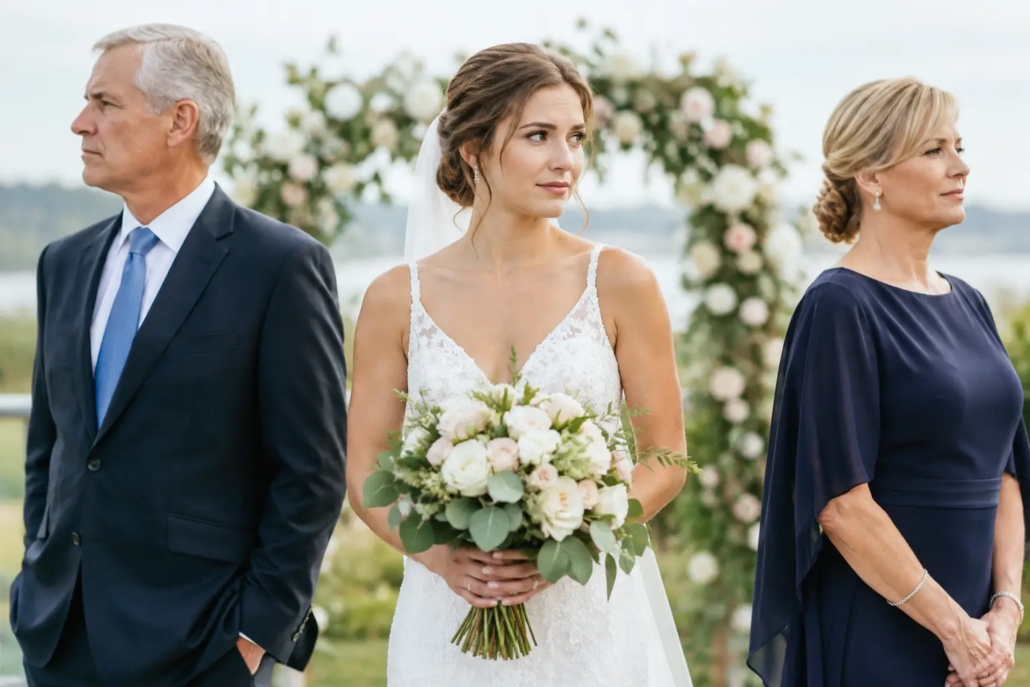
When your parents are divorced, a wedding can bring up more than seating-chart questions. You may be managing old tensions, new partners, complicated expectations, and the very reasonable wish to enjoy your own celebration. Learning how to handle divorced parents at your wedding is not about making every person perfectly happy. It is about setting a plan that feels fair, respectful, and true to you as a couple.
The good news: this is a common family dynamic, and it does not have to take over your day. With a few early conversations and clear boundaries, your ceremony can feel warm, calm, and focused on the commitment you are making.
Start With What You Want Your Wedding to Feel Like
Before deciding who walks where, sits where, or stands in which photo, talk privately with your partner. What matters most to each of you? Maybe you want a relaxed backyard celebration where everyone mingles. Maybe you want a small ceremony with minimal family involvement. Maybe honoring both parents publicly feels essential, even if they have not shared a room comfortably in years.
There is no single correct approach. A divorced parent who is friendly with their former spouse may be comfortable with a shared front-row seating arrangement. Another family may do better with separate aisles, separate photo times, or a little more space. The right choice depends on the people involved, not on a traditional wedding rulebook.
Try to make decisions as a couple before asking parents for input. Otherwise, you can accidentally turn every detail into a negotiation. Your wedding is not a mediation session with flowers.
Have Individual Conversations Early
If you expect a sensitive reaction, speak with each parent separately before formal plans go out. You do not need to explain or defend every choice in great detail. A simple, loving, direct conversation usually goes further than trying to soften the message until it becomes unclear.
You might say: “We love you, and we want you to feel included. We are planning the day in a way that helps us stay present and keeps things comfortable for everyone.” Then share the relevant detail, whether that is seating, a processional role, or the guest list.
Avoid making promises on behalf of the other parent. Saying “Dad is totally fine with it” can create a bigger problem if he is not. Instead, focus on what you and your partner have decided. If a parent is disappointed, you can acknowledge the feeling without changing your plan on the spot: “I hear that this is hard. We have given it a lot of thought, and this is what works best for us.”
How to Handle Divorced Parents in the Ceremony
The ceremony is often the most emotionally charged part of the day because it is public, symbolic, and full of traditions that assume one simple family structure. Fortunately, ceremonies are wonderfully flexible.
Choose an Entrance That Feels Comfortable
You do not have to be escorted by only one parent, and you do not have to follow a parent-child processional at all. You may walk in with both parents, with a stepparent, with your partner, or on your own. Each option can be meaningful.
If both parents walking together would feel tense or performative, skip it. One parent can escort you while the other has a distinct role, such as offering a reading, welcoming guests, or joining a family blessing. If neither parent wants a formal role, that is okay too. A heartfelt hug before the ceremony may mean more than a tradition that puts everyone on edge.
Use Inclusive, Intentional Language
A personalized ceremony can acknowledge family without putting anyone in an uncomfortable spotlight. Your officiant might welcome “the parents, family members, and loved ones who helped shape this couple,” rather than calling attention to specific relationships or using labels that do not fit your family.
This is especially helpful for blended families, chosen family, and situations where a parent’s new spouse has become an important part of your life. You can honor the people who showed up for you without ranking relationships or creating an awkward public moment.
Keep Parent Participation Optional
Readings, ring blessings, family vows, and handfasting moments can be beautiful. They can also feel like pressure if family relationships are strained. Only include interactive elements because they add joy and meaning, not because you are trying to prove everyone gets equal billing.
At Forever, Together, personalized ceremony planning is designed to make room for the family dynamics that are real, rather than forcing couples into a script built for somebody else’s life.
Make Seating Simple and Respectful
Reserved seating does not need to become a message about who matters most. In many cases, placing each parent and their household in the front rows on separate sides works beautifully. They are both close to you, and neither has to navigate an uncomfortable shared bench.
If your parents get along well, they may prefer sitting together. Let that be their choice, not an expectation. If one parent has a new spouse or partner, decide ahead of time whether that person will sit in the front row as well. The answer can vary based on the length and seriousness of the relationship, your closeness, and the dynamics with other family members.
A trusted planner, coordinator, usher, or friend can quietly guide guests to their seats. That small layer of support means you do not have to manage logistics while you are getting ready to marry your favorite person.
Plan Family Photos Before the Wedding
Family photo time is where good intentions can disappear quickly. Your photographer should receive a written list of groupings before the wedding, including names and the order you want photos taken. Keep the combinations clear and realistic.
For example, you may want photos with one parent and their household, then the other parent and their household, followed by a larger group if everyone is comfortable. Scheduling separate groupings avoids confusion and makes it easier for people to step in and out without lingering through a situation that feels awkward.
Do not feel obligated to take a photo of divorced parents together if that is not something you want or they do not want. Conversely, if they can comfortably stand together for one photo, that can be a lovely gift to you. Ask, do not assume.
Set Boundaries Around Toasts, Alcohol, and Surprises
Most divorced parents want their child’s wedding to be happy. Still, if there is a history of conflict, it is wise to plan for the moments when emotions and champagne can mix poorly.
Choose speakers in advance and let them know the tone you want. A toast should celebrate your relationship, not retell family history, make jokes about divorce, or turn into a competition for attention. If you are worried about an unplanned microphone grab, ask your DJ, bandleader, or coordinator to keep the microphone with them.
You can also identify one calm, trusted person who can step in if tension begins to rise. This is not about expecting disaster. It is about giving yourselves permission not to be the people who handle it. A sibling, wedding party member, or coordinator can redirect a difficult conversation, suggest fresh air, or simply move guests toward the dance floor.
Be Fair Without Treating Every Detail as Equal
Fairness does not always mean symmetry. One parent may be helping pay for the wedding, while another has been your emotional anchor. One may be comfortable in the spotlight, while the other would rather celebrate quietly. Trying to make every gesture identical can make the day feel overly managed.
Instead, aim for thoughtfulness. If you want to recognize each parent, consider doing so in ways that fit your relationship with them. That may mean a private note, a gift, a dance, a meaningful mention, or a few minutes together before guests arrive. Love is not measured by whether two moments look exactly the same from the outside.
Give Yourself Permission to Feel More Than One Thing
Even with excellent planning, you may feel sadness, guilt, relief, gratitude, or frustration as the wedding gets close. Those emotions do not mean you are ungrateful or doing anything wrong. Big life moments can make old family stories feel newly present.
Let yourself be supported by your partner and by the people who make you feel grounded. If a conversation with a parent is becoming circular or hurtful, it is okay to pause it. “I love you, but I am not going to keep discussing this today” is a complete sentence.
Your ceremony is a chance to gather the people who care about you and begin your marriage with intention. Make choices that protect your peace, leave room for kindness, and allow the day to be about the life you are building together.