Ceremony Accessibility Trends Couples Can Use
A wedding ceremony can be deeply personal without asking a guest to push through pain, confusion, sensory overload, or a space they cannot comfortably enter. That idea is at the heart of today’s ceremony accessibility trends. Couples across Seattle and Western Washington are planning with a broader definition of hospitality: not simply inviting loved ones, but making it genuinely possible for them to share the moment.
Accessibility is not a single checklist item. It can involve mobility, hearing, vision, language, neurodiversity, chronic illness, pregnancy, age, mental health, and the realities of getting to and staying comfortable at a particular venue. The best part is that many thoughtful choices also make ceremonies calmer, clearer, and more meaningful for everyone.
Ceremony Accessibility Trends Start With Real Guest Experience
The most helpful shift is happening early in the planning process. Instead of treating access needs as a last-minute venue question, couples are considering the full guest experience from arrival through the recessional. Can someone park close enough? Is the ceremony site reached by a steep trail, uneven lawn, gravel, stairs, or a narrow doorway? Is there a nearby restroom? Will guests have shade, warmth, seating, and a clear place to wait?
Outdoor ceremonies remain wonderfully popular in the Pacific Northwest, but beautiful does not always mean easy to navigate. A beach overlook, forest clearing, rooftop, or backyard can work beautifully when the plan accounts for pathways and seating. A firm, level route can make a difference for wheelchair users, guests using walkers, parents with strollers, and anyone in dress shoes on a rainy day. If the site has limitations, being honest about them ahead of time lets guests make informed choices rather than face an awkward surprise on arrival.
This is not about making every wedding look the same. It is about deciding which details are essential to your vision and where flexibility will help the people you love actually enjoy it. Sometimes that means choosing a more accessible location. Sometimes it means holding portraits at a dramatic spot but exchanging vows somewhere easier to reach.
Seating is becoming more intentional
“Please stand” used to be an automatic ceremony instruction. Now, many couples and officiants use language such as, “If you are able, please rise,” or skip the request altogether. It is a small change that prevents people from being singled out or feeling pressured to explain why they need to remain seated.
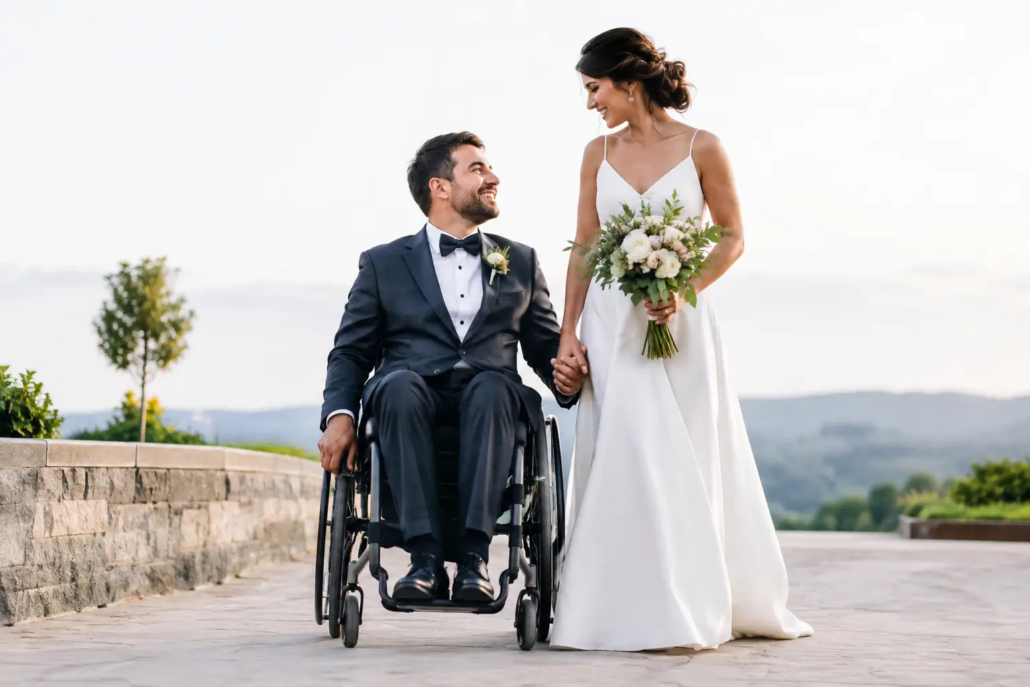
Couples are also reserving accessible seating near the front, with room for mobility devices and a companion. This should not feel like an afterthought or a separate section. A few well-placed chairs, a clear aisle, and an unobstructed view can allow grandparents, disabled guests, and people managing fatigue or pain to be part of the ceremony rather than positioned at its edge.
For longer ceremonies, seating comfort matters. A 10-minute ceremony on a warm day feels very different from a 35-minute ceremony in direct sun or cold drizzle. There is no universally right ceremony length, but it is worth matching the format to your guests and your setting.
Sound, Visibility, and Sensory Comfort Matter
A ceremony is made of words: your story, your promises, readings, vows, and the declaration that makes it official. Guests should be able to hear those words. One of the strongest accessibility trends is the simple use of a microphone and speaker, even for a smaller guest count.
Outdoor spaces absorb sound quickly. Wind, traffic, waves, planes, and rustling trees can overpower voices that seem perfectly audible during a quiet rehearsal. A microphone supports guests with hearing loss, of course, but it also helps everyone stay connected instead of straining to catch the important parts. If a venue has sound restrictions, consider a compact sound system, a shorter spoken program, or a closer seating arrangement.
Visibility deserves the same care. Avoid placing the couple with the bright afternoon sun directly behind them if guests will be facing into it. Make sure floral installations, large wedding parties, or photographers do not block the view from accessible seating. If guests need to remain seated while others stand, plan for sightlines accordingly.
Sensory-friendly choices are becoming more common, especially for guests who are autistic, have PTSD, experience migraines, or simply find crowded, unpredictable settings difficult. You do not need to turn your wedding into a silent room. You can make a big difference by avoiding surprise pyrotechnics, limiting extremely loud music before the ceremony, offering a quiet place to step away, and sharing a clear timeline in advance.
A brief note on the wedding website or invitation insert can be kind and practical: the ceremony will be outdoors, it may be breezy, amplified sound will be used, and guests are welcome to step out and return if needed. That level of clarity gives people permission to care for themselves.
Language Access Is Part of a Personal Ceremony
For multilingual families, accessibility often means language access. A bilingual ceremony is not merely a translation project. It is a way to make parents, grandparents, and loved ones feel recognized in one of the most emotional moments of the day.
Some couples choose a fully bilingual English and Spanish ceremony. Others include a welcome, reading, blessing, or key promises in both languages while keeping the overall ceremony concise. The right format depends on who is present, how comfortably guests understand each language, and how much interpretation feels natural to you.
It can also help to print a short program with translations or a simple outline of the ceremony. This is useful for bilingual guests, Deaf or hard-of-hearing guests, young children, and anyone who feels more grounded when they know what is coming next. Clear language is welcoming language.
When incorporating cultural or religious traditions, explain them briefly and warmly. Guests do not need a lecture, but a sentence or two from the officiant can help everyone understand the meaning of a handfasting, lasso, tea ceremony, breaking of the glass, unity ritual, or family blessing. That context turns observation into participation.
Flexible Participation Is Replacing One-Size-Fits-All Roles
Not every loved one can walk down the aisle, stand for a reading, hold a microphone, or participate on cue. Couples are increasingly creating roles that fit the person instead of forcing the person into a traditional role.
A grandparent may offer a seated blessing from the front row. A sibling who dislikes public speaking may sign the marriage license or bring forward the rings. A child may carry a small flower, help with a unity ritual, or simply stand beside a parent for a moment. A friend joining remotely can offer a recorded reading, provided the technology is tested before guests arrive.
The same flexibility applies to the couple. If one or both partners have a disability, chronic illness, anxiety, or an injury, the ceremony can be designed around what feels sustainable. Sit together for parts of the ceremony. Keep the processional short. Use repeat-after-me vows if reading from a page feels difficult. Build in a pause. There is no prize for enduring discomfort on your wedding day.
An experienced officiant can help shape these choices without making them feel clinical or conspicuous. At Forever, Together, the goal is always a ceremony that feels like you, with the practical support needed for you and your guests to relax into it.
How to Plan Access Without Making It Feel Overwhelming
Start with your venue and your guest list, not a generic online checklist. Think about the people most likely to need accommodations, but do not assume you know every need. A private RSVP question can be useful: “Would anything help you participate comfortably in our ceremony?” Keep it open-ended and give guests a direct way to respond.
Then talk through the ceremony itself with your officiant. Consider the route to the ceremony site, seating arrangement, sound, weather backup, timing, language, and participant roles. Four small decisions often have more impact than one expensive add-on: accessible seating, amplified sound, straightforward advance information, and an officiant who uses inclusive language.
There will be trade-offs. A remote mountaintop location may not accommodate every guest. A fully bilingual ceremony may add time. A quieter event may not match every couple’s party-forward vision. The point is not perfection. It is thoughtfulness, transparency, and a plan that reflects your priorities with care.
The ceremony is the one part of the wedding where everyone gathers to witness your commitment. When guests can hear, see, understand, arrive comfortably, and participate in ways that work for them, the room feels more connected. That is not extra polish. It is the kind of welcome people remember.