
Civil Ceremony vs Officiant: What Fits You?
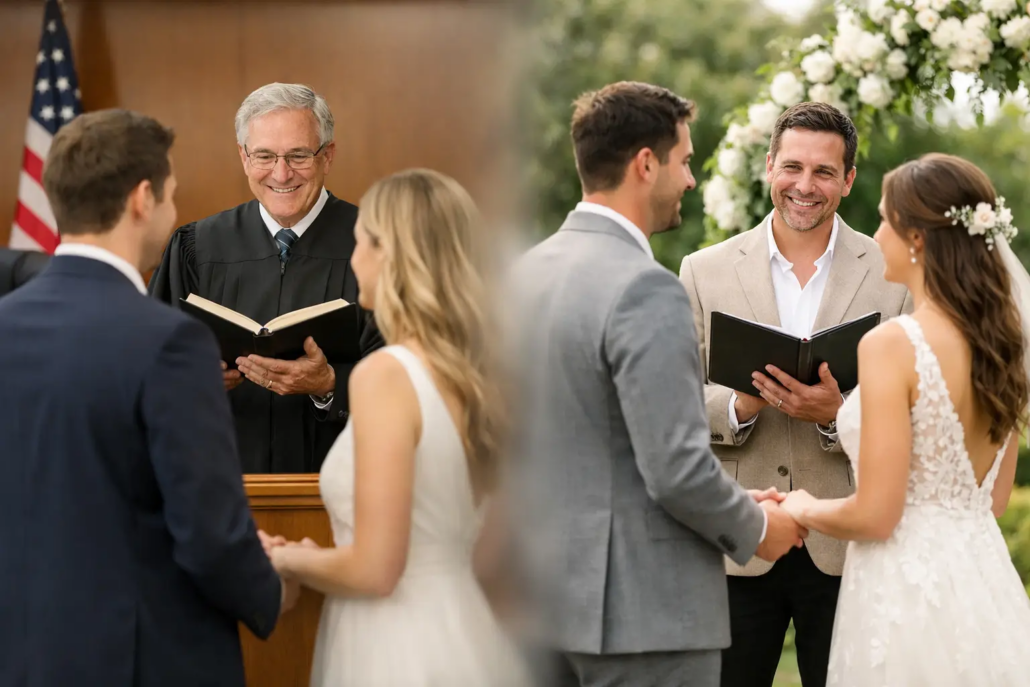
Some couples know exactly what they want the moment they get engaged. Others get halfway through planning and suddenly ask, wait – do we want a civil ceremony, or do we want an officiant-led ceremony that actually feels like us? If you are weighing civil ceremony vs officiant options, you are not overthinking it. The person leading your ceremony shapes the tone, the experience, and often how supported you feel through the process.
This choice is not just about who stands at the front and talks for ten minutes. It affects your timeline, your location options, your guests’ experience, and whether your ceremony feels efficient, deeply personal, or somewhere in between. For many couples in Seattle and Western Washington, the right answer comes down to balancing meaning, logistics, and budget without creating extra stress.
Civil ceremony vs officiant: what is the difference?
A civil ceremony is usually a legal wedding performed by a judge, court commissioner, or government official. It is often held at a courthouse or government building and tends to follow a standard format. The main purpose is to make the marriage legal, and that legal function usually comes first.
An officiant-led ceremony can also make your marriage legal, but it often gives you much more flexibility in how the ceremony feels. A wedding officiant may be ordained, non-denominational, secular, spiritual, or faith-based. They can perform anything from a very short signing to a fully customized ceremony with personal stories, readings, family involvement, bilingual elements, or cultural traditions.
That means the real difference is not legality. Both can legally marry you, assuming the officiant is properly authorized in your state. The difference is usually the experience.
When a civil ceremony makes the most sense
There are times when a civil ceremony is exactly the right fit. If you want the simplest possible path, do not care much about ceremony wording, and mostly want to handle the legal side quickly, a courthouse-style option can be a relief.
This can work well for couples who are planning a larger celebration later, need to get legally married on a tight timeline, or simply prefer a no-fuss approach. Some people genuinely do not want a lot of attention, and a short civil ceremony feels comfortable rather than bare-bones.
Budget can also play a role. In some cases, a civil ceremony may cost less than hiring a private officiant, especially if you are choosing the most basic option available. If your goal is efficiency and legality with minimal planning, it can be a solid choice.
The trade-off is that civil ceremonies are often less flexible. You may have limited control over scheduling, location, structure, and personalization. You also may not get much help shaping the moment itself. For some couples, that is perfectly fine. For others, it becomes disappointing once they realize the ceremony felt more transactional than meaningful.
When an officiant is the better choice
If you want the ceremony to feel personal, calm, and true to your relationship, an officiant is usually the better fit. That does not mean the ceremony has to be long or formal. It just means it can be built around who you are instead of around a standard script.
A good officiant helps with more than standing up front and reading words. They guide you through the process, help you choose the right tone, make space for your values, and reduce the pressure of figuring it all out yourselves. That can be especially helpful if you are blending families, honoring different cultural backgrounds, planning an elopement, or trying to include spiritual elements without making the ceremony feel overly religious.
This is also where flexibility matters. Want to get married in a backyard, on a beach, at a private venue, in a park, or in your living room with twelve guests and a dog wearing a bow tie? An officiant can usually make that happen. Want a ceremony in English and Spanish, or something short and sweet that still feels heartfelt? Also possible.
For many couples, that freedom is the entire point.
Civil ceremony vs officiant for cost, stress, and flexibility
Cost is often one of the first questions, but it helps to look at value, not just price. A civil ceremony may have a lower upfront fee, but it typically comes with fewer options and less personal support. You are paying for a legal service, not for a tailored experience.
An officiant usually costs more, but that price often includes planning guidance, custom ceremony writing, communication before the wedding, rehearsal support in some cases, and the ability to create a ceremony that feels thoughtful instead of generic. If your ceremony matters to you emotionally, that added value can be significant.
Stress is another factor couples underestimate. A courthouse or civil office may be straightforward, but it may also be rigid. If you have questions, want adjustments, or need to coordinate family expectations, there may not be much room for that. An experienced officiant often becomes part guide, part calming presence, part problem-solver. That support can be worth a lot, especially if wedding planning already feels like a full-time job.
Flexibility is where officiants usually stand apart. Civil ceremonies tend to happen where and how the court system allows. Officiant-led ceremonies can be adapted to your date, your location, your personalities, and your comfort level.
What kind of ceremony experience do you actually want?
This is the question underneath all the practical details. Do you want the ceremony to be simply the legal step before dinner, or do you want it to feel like the emotional center of the day?
Neither answer is wrong. Some couples want a brief legal exchange and would rather spend their energy elsewhere. Others care deeply about hearing words that sound like them, involving loved ones, or marking the moment in a way that feels intimate and memorable.
If you picture your wedding day and the ceremony feels like something to get through, a civil ceremony might be enough. If you picture the ceremony as the part where everyone exhales, tears up, laughs a little, and feels the meaning of what is happening, then a personalized officiant is likely the better path.
That is especially true for couples who do not connect with a rigid religious script but still want warmth, sincerity, and structure. A non-denominational officiant can hold that middle ground beautifully.
Special situations where an officiant can make a big difference
There are some situations where the benefits of an officiant become even clearer. If you are planning an elopement, a small wedding, or a short-notice ceremony, you may need someone who can adapt quickly without making the day feel rushed. If your families come from different traditions, a customized ceremony can help everyone feel seen without turning the ceremony into a negotiation.
Bilingual weddings are another important example. A ceremony that moves naturally between languages takes care, timing, and intention. It is not just about translation. It is about making both sides of the family feel included in the moment.
Same-sex couples, interfaith couples, and couples who want something secular but still meaningful often prefer an officiant because it gives them room to create a ceremony that fits without apologizing for it. That kind of ease matters.
How to decide without second-guessing yourself
Start with three questions. First, how important is personalization to you? Second, how much flexibility do you need around location, timing, and format? Third, do you want support from someone who can help shape the ceremony, not just perform it?
If your answers are mostly not very, not much, and no thanks, a civil ceremony may be all you need. If your answers lean toward very, a lot, and absolutely, an officiant is probably the better choice.
It also helps to think about what you will remember. Most couples do not look back and say, we wish our ceremony had been more generic. They usually remember how it felt. Calm or rushed. Personal or impersonal. Warm or purely administrative.
That feeling tends to stay with you longer than the line item on the budget spreadsheet.
For couples who want a wedding ceremony that feels personal without becoming complicated, working with an experienced officiant often lands in the sweet spot. It gives you the legal piece, the emotional piece, and the practical guidance all in one place. And honestly, having someone help make this the most meaningful and least stressful part of wedding planning is not a bad way to start a marriage.