
How to Plan a Secular Wedding Ceremony
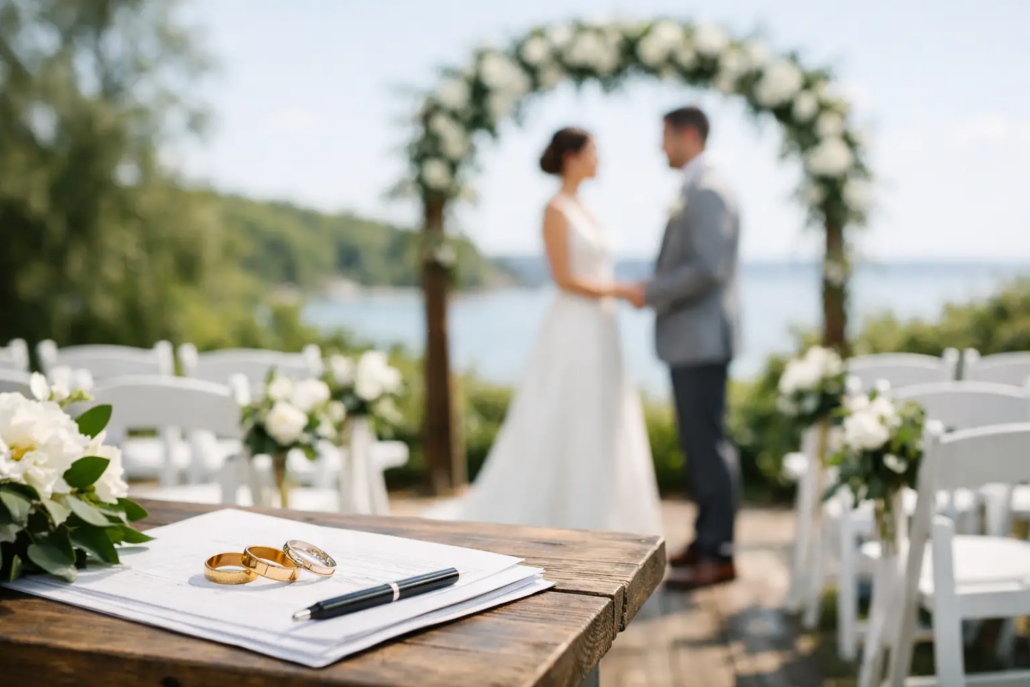
You know that moment when someone says, “So, what kind of ceremony are you having?” and your answer is somewhere between “not religious” and “we want it to actually sound like us”? That is exactly where many couples start when they plan a secular wedding ceremony.
The good news is that secular does not mean generic, stiff, or emotionally flat. It simply means you are free to build a ceremony around your relationship, your values, and the people who matter most to you, without following a religious structure that does not fit. For many couples in Seattle and across Western Washington, that freedom is the whole point.
What it means to plan a secular wedding ceremony
A secular wedding ceremony is a non-religious ceremony, but that definition only gets you so far. In practice, it can be romantic, funny, deeply moving, very simple, highly interactive, or a mix of all four. It can include personal vows, family tributes, cultural traditions, readings from literature, a ring warming, a unity ritual, or just the legal essentials with a little heart around them.
What makes it secular is not a lack of meaning. It is the source of the meaning. Instead of drawing from one faith tradition, the ceremony draws from your story, your shared values, and the life you are building together.
That flexibility is wonderful, but it can also feel like a lot. When there is no preset script, couples sometimes worry they have too many choices. The easiest way to make decisions is to stop asking, “What does a wedding ceremony usually include?” and start asking, “What do we want this to feel like?”
Start with the feeling, not the script
Before you pick readings or decide who walks in when, get clear on the tone. Do you want your ceremony to feel intimate and grounded? Joyful and upbeat? Formal enough for the grandparents, but still relaxed? Short and sweet because you hate being the center of attention? There is no wrong answer, but there should be an answer.
This part matters because tone guides everything else. A warm, conversational ceremony calls for different wording than a formal one. A ceremony with 15 guests on a bluff above the water will likely feel different from one with 150 guests in a ballroom. If one of you loves public emotion and the other would rather fake a Wi-Fi outage than sob in front of a crowd, that matters too.
A good officiant can help translate those preferences into an actual ceremony. That support is especially helpful when one partner wants very personal vows and the other wants something more private, or when family expectations are pulling the ceremony in different directions.
Build the ceremony in sections
When couples hear “custom ceremony,” they sometimes imagine writing a full script from scratch. Usually, that is not necessary. It is much easier to think in sections.
The opening
This is where the ceremony begins to feel real. An opening can welcome guests, acknowledge the setting, and set the tone in the first minute or two. For a secular ceremony, this is also a helpful place to explain what the gathering is about in plain, human language – love, commitment, family, partnership, and the choice to build a life together.
The story
Not every secular ceremony needs a detailed love story, but most benefit from some personalization. This could be a short reflection on how you met, what you admire in each other, or what brought you to this day. The sweet spot is usually personal without becoming a 12-minute biography.
A little goes a long way. The goal is not to tell every chapter. It is to help guests feel connected to what they are witnessing.
Readings or ritual elements
This is optional, not mandatory. Some couples love including a reading from a favorite author, a poem, or a piece written by a friend. Others prefer a unity ritual, such as lighting a candle, blending sand, sharing a toast, or inviting guests to silently offer their support.
The trade-off is time and flow. A ritual or reading can add depth, but too many elements can make the ceremony feel busy. If you want a short ceremony, choose one meaningful feature rather than four nice-enough ones.
Vows and rings
This is the emotional center for most couples. You can write your own vows, repeat simple vows after the officiant, or combine the two by sharing personal promises and then doing a short legal-style exchange.
If you are nervous about writing vows, you are not alone. Some couples want them poetic. Some want them honest and a little funny. Some want to save private words for later. All of those choices are valid. The best vows sound like you, not like a screenwriter trying too hard.
The legal declaration and pronouncement
Every wedding ceremony needs the legal basics handled correctly, but those moments do not have to feel cold. The official declaration of intent, ring exchange wording, and pronouncement can still sound warm and natural.
That is one reason experienced officiant guidance matters. You want the ceremony to feel personal, but you also want the legal piece done right the first time.
How to plan a secular wedding ceremony with family in mind
For many couples, the ceremony itself is not the hard part. The hard part is balancing what feels true to you with what important people around you expect.
If you have religious family members, a secular ceremony can still feel respectful. You are not required to include religious language that does not reflect your beliefs, but you can acknowledge family heritage, express gratitude, or incorporate a cultural tradition that feels meaningful rather than performative. There is a difference.
It also helps to be honest early. If your parents assume there will be a prayer or a traditional scripture reading, a gentle conversation now is better than a tense surprise later. Often, families respond better when they see that the ceremony is thoughtful and heartfelt, not just “non-religious” by default.
This is also where customization becomes more than a nice extra. Bilingual elements, blended family acknowledgments, memorial wording for loved ones who have passed, or a way to involve children can all make a secular ceremony feel fuller and more inclusive.
Keep the ceremony personal without making it long
A common mistake when couples plan a secular wedding ceremony is assuming personal means long. It does not. Some of the most memorable ceremonies are 10 to 15 minutes because every part earns its place.
If you want to keep things concise, focus on the moments guests will remember most: a strong welcome, a few personal lines that sound true, meaningful vows, and a confident ending. If a reading feels obligatory, skip it. If three people want to speak, consider whether one is enough. If your ceremony starts drifting into variety-show territory, that is your sign to simplify.
Short can still be moving. In fact, short often feels more intimate because nothing gets diluted.
Practical details couples forget
The emotional side gets most of the attention, but logistics shape the experience too. Make sure your officiant knows the exact location, the backup weather plan, the sound setup, and who has the marriage license. Confirm how everyone will line up and where they should stand. If you are outdoors in Western Washington, assume the weather may have opinions.
Timing matters as well. A sunset ceremony sounds lovely until you realize everyone is squinting into the light or shivering through the vows. A beautiful ceremony is not just well written. It is also well staged.
Rehearsals can help, but they do not need to be overproduced. Most couples just need enough structure to feel calm and know where to go. That alone can make the ceremony feel smoother and more relaxed.
The best secular ceremonies feel intentional
There is no one right way to do this. Some couples want a fully custom ceremony with personal stories, shared vows, and guest participation. Others want something simple, elegant, and low-key. Some are planning months ahead. Some are pulling everything together on short notice and just need someone calm, capable, and not remotely rattled.
What matters is intention. If each part of the ceremony feels chosen rather than copied, guests can feel that. More importantly, you can feel it. The ceremony stops being a box to check and becomes the moment your wedding day actually lands.
At Forever, Together, we have seen again and again that when couples are given the right guidance, planning the ceremony becomes much easier than they expected. Not because the choices disappear, but because the ceremony starts sounding like them.
If you are trying to create a wedding ceremony that feels sincere, inclusive, and comfortable in your own skin, trust that simpler and more personal is often the right path. The best place to start is not tradition for tradition’s sake. It is the two of you, standing there, ready to mean every word.