
Friend Officiant vs Professional for Your Wedding
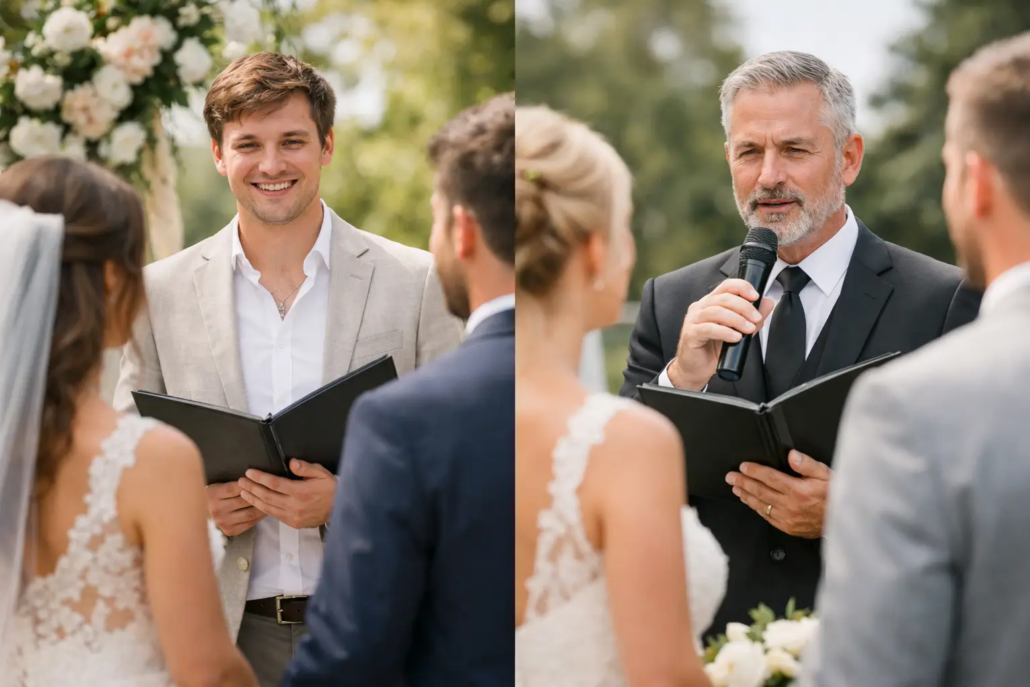
Your ceremony is the moment when all the wonderful chaos of wedding planning gets quiet. The people you love gather close, you look at each other, and you make promises that deserve to sound like you. That is why the choice of friend officiant vs professional can feel surprisingly big. Both can create a meaningful wedding, but they offer very different kinds of support.
A beloved friend may know your history better than anyone. A professional officiant brings ceremony experience, a steady hand, and the ability to turn that history into a polished, personal moment. Neither option is automatically better. The right choice depends on your relationship, your plans, and how much guidance you want along the way.
Friend officiant vs professional: the real difference
The biggest difference is not whether the ceremony will be heartfelt. It absolutely can be, either way. The difference is who is responsible for shaping the ceremony, managing its moving parts, and staying calm when real life happens.
A friend officiant usually brings intimacy and familiarity. They may have been there for your first date, your hardest season, or the goofy inside jokes that make your relationship yours. When they speak, guests may feel like they are hearing from someone who truly knows you both.
A professional officiant brings a different kind of closeness: attentive preparation. They learn your story through conversations and questionnaires, then build a ceremony around your values, personalities, family dynamics, cultural traditions, and hopes for the day. They also know how to guide the room, pace the ceremony, work with vendors, and keep the legal details from becoming a last-minute scramble.
For many couples, this decision is less about sentiment versus professionalism and more about where they want the pressure to land.
When a friend officiant can be a beautiful choice
A friend can be a wonderful officiant when they genuinely enjoy public speaking, are organized, and have time to prepare. This option often works especially well for relaxed, intimate celebrations where the friend is comfortable taking a visible role without feeling overwhelmed.
The emotional advantage is real. A friend may be able to tell a story from your relationship with a warmth that cannot be replicated. They can make guests laugh because they understand your sense of humor. If you want the ceremony to feel like it is being led by someone from your inner circle, that can be incredibly special.
That said, choosing a friend is not the same as handing them a script the week before the wedding. A good ceremony still needs structure. Someone must decide how the processional works, who speaks when, how readings are introduced, whether vows are repeated or self-written, what happens with rings, and how the marriage is pronounced. Your friend will also need to understand the legal requirements for officiating in Washington and how to complete and return the marriage license correctly.
A friend officiant may be right for you if they are comfortable with preparation and public speaking, you have a simple ceremony vision, and you are happy to take an active role in planning the words and logistics with them.
Where friend-led ceremonies can get stressful
Even the most loving friend can feel nervous standing in front of 100 guests. Public speaking is a different skill from giving a heartfelt toast. An officiant needs to project, pause at the right moments, gently redirect a distracted wedding party, and keep the ceremony moving without making it feel rushed.
There is also the question of boundaries. Your friend may want to help, but you may not want to spend the weeks before your wedding editing drafts, explaining family sensitivities, or reminding them to practice. If they are also a member of the wedding party, hosting out-of-town guests, or managing their own travel, officiating can become one more responsibility on an already busy day.
The stakes can feel higher if the ceremony includes complicated family relationships, blended cultures, religious elements, or bilingual language. A well-meaning friend may not know how to acknowledge those details with the care they deserve. They might also avoid giving direction because they do not want to seem bossy, even when clear guidance would help everyone feel more comfortable.
None of this means a friend cannot do a beautiful job. It simply means love alone is not a rehearsal plan.
What a professional officiant adds
A professional officiant is not there to make your ceremony formal or generic. The right person helps make it unmistakably yours while taking the logistical weight off your shoulders.
They begin by asking thoughtful questions: How did you meet? What do you admire about one another? Do you want laughter, tears, or a little of both? Are there family traditions you want to honor, words you want to avoid, or cultural elements that matter deeply? From there, they help create a ceremony that feels natural in your voices instead of sounding like it was borrowed from strangers on the internet.
Experience matters most in the moments you cannot fully predict. A professional knows how to adjust when the music starts late, a ring goes missing for thirty seconds, the wind steals a page, or a nervous couple needs a grounding breath. They know where to stand for photos, how to cue the wedding party, and how to hold space when emotions arrive unexpectedly.
They also bring clarity. You do not have to wonder how long the ceremony should be, whether your vows are too long, or how to include a parent without creating an awkward spotlight. A professional can offer options, explain trade-offs, and help you make decisions that fit your day.
For couples planning a Seattle or Western Washington wedding, weather and location flexibility can be part of that value too. A ceremony on a beach, in a backyard, at a park, or in a cozy indoor venue may need a different approach to sound, timing, movement, and guest comfort.
Personal does not have to mean DIY
Some couples worry that hiring an officiant means losing the personal feeling a friend would bring. In reality, a customized ceremony can be deeply personal without asking a loved one to carry every responsibility.
You can include friends and family in meaningful ways: a reading, a blessing, a song, a ring-warming, a bilingual welcome, or a short story shared during the ceremony. A professional officiant can weave those contributions into a cohesive experience, so they feel intentional rather than like separate pieces placed side by side.
At Forever, Together, personalized ceremonies are designed around the people standing at the center of them. That may mean a joyful secular ceremony, a faith-inclusive celebration, Spanish or bilingual language, an intimate elopement, or a short legal signing that still feels warm and significant.
Cost is more than the officiant fee
A friend officiant may seem like the less expensive choice, and sometimes it is. But it is worth looking at the full picture. You may pay for ordination, training materials, a suit or outfit, travel, rehearsal attendance, or a thank-you gift that reflects the size of the role. More importantly, consider the time involved for both of you.
A professional officiant is a planned wedding expense, but the fee typically includes expertise, preparation, communication, ceremony creation, and day-of leadership. For couples who value a low-stress planning process, that support can be a meaningful investment.
Budget matters, of course. So does peace of mind. If a friend is excited, capable, and supported with a clear plan, the choice can be perfect. If you find yourselves hoping they will somehow figure it all out, a professional may be the kinder choice for everyone.
A thoughtful middle option
You do not always have to choose one or the other. Some couples ask a professional officiant to create and lead the legal ceremony, then invite a friend to offer a reading or personal reflection. Others have the friend lead most of the ceremony while a professional provides coaching, ceremony structure, and a legal backup plan where appropriate.
This approach can preserve the intimacy of a friend’s voice while giving the day a reliable framework. It is especially helpful when your friend is deeply loved but new to officiating, or when you want bilingual, religious, cultural, or family traditions handled with confidence.
How to make the decision with confidence
Ask yourselves a few honest questions. Do we want to write and manage the ceremony ourselves? Is our friend comfortable speaking clearly in front of a crowd? Can they attend the rehearsal and stay focused on this role? Do we need help balancing different family expectations or traditions? Would we feel calmer knowing someone experienced is responsible for the flow and paperwork?
Then think about the feeling you want after the ceremony. If your ideal memory is hearing a lifelong friend tell your story, a friend officiant may be the right fit. If your ideal memory is being fully present while someone else calmly guides the details, a professional may be the better choice.
The best ceremony is not the one that checks the most boxes. It is the one that lets you look at each other, breathe deeply, and feel that every word belongs there.