
How Long Should a Wedding Ceremony Be in 2026?
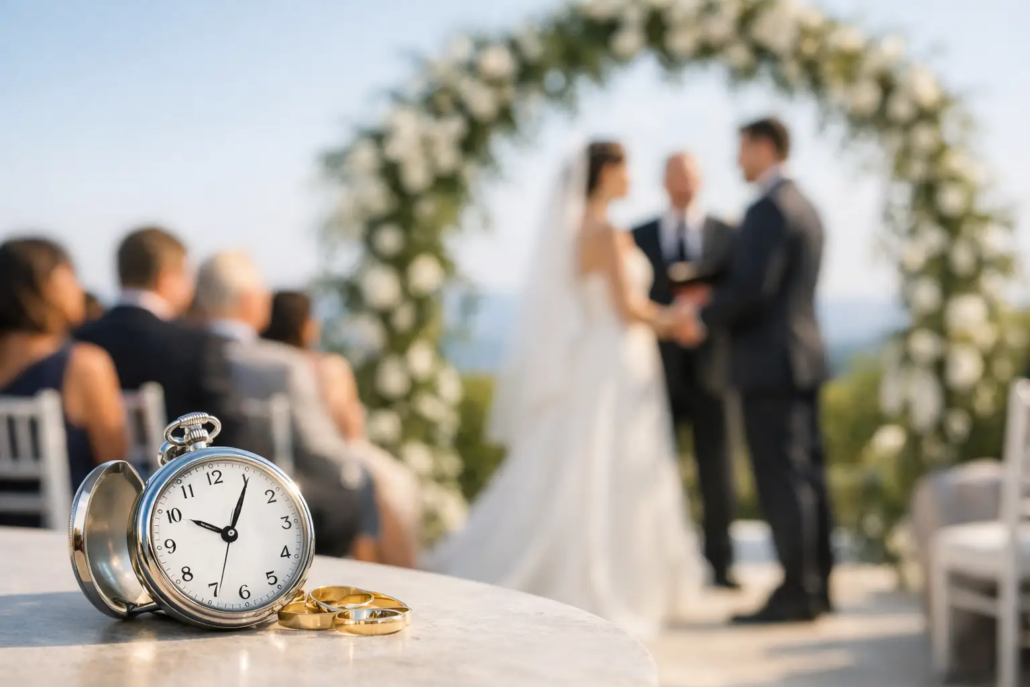
Guests have found their seats, the music changes, and suddenly the part of the day you have spent months planning is underway. It is natural to wonder, how long should wedding ceremony be when you want it to feel meaningful without asking everyone to sit through a performance that has lost its momentum.
For most couples, the sweet spot is 20 to 30 minutes. That is long enough for warmth, personality, vows, and a few happy tears, but short enough to keep the energy present and comfortable for guests of all ages. Still, there is no universally correct number. A private elopement may feel perfect at 10 minutes, while a bilingual or tradition-rich celebration may need 35 or 45 minutes to give every important element the space it deserves.
The goal is not to fill time. It is to create a ceremony that sounds like you, feels good in the room, and lets you get to the celebrating.
How Long Should a Wedding Ceremony Be for Most Couples?
A personalized, non-denominational wedding ceremony typically runs 20 to 30 minutes, including the processional and recessional. The spoken portion itself is often closer to 15 to 20 minutes.
This range works well because it gives an officiant room to welcome guests, share a little of your story, guide you through vows and rings, and pronounce you married without making the ceremony feel rushed. It also leaves room for a reading, a short moment of reflection, or a meaningful family tradition.
A shorter ceremony is not less sincere. Some couples want a simple legal signing with a few loving words, especially for an elopement, courthouse-style celebration, or short-notice wedding. Others have been together for many years and prefer a calm, direct ceremony over a longer format. Ten to 15 minutes can be deeply moving when every word belongs there.
At the other end, ceremonies of 30 to 45 minutes are common when couples include multiple readings, religious or cultural traditions, live music, a unity ritual, bilingual remarks, or participation from children and family members. The difference is not just length. It is pacing. A longer ceremony should have a clear flow so guests stay connected rather than wondering what comes next.
A Realistic Wedding Ceremony Timeline
A 25-minute ceremony might look something like this:
- A processional of three to five minutes, depending on the size of the wedding party and aisle length
- A welcome, brief reflection, and your story together for five to seven minutes
- Readings, a ritual, or a special acknowledgment for two to five minutes
- The declaration of intent, personal vows, and ring exchange for five to eight minutes
- The pronouncement, kiss, and recessional for two to three minutes
Those numbers are flexible, but they help reveal where time actually goes. Couples sometimes focus only on the vows, then are surprised by how much the processional, transitions, and family traditions add to the total.
If your ceremony has several moving parts, a practiced officiant can keep it from feeling overly formal. A warm transition between a reading and your vows, for example, makes the experience feel like one story rather than a series of separate tasks.
What Changes the Length of a Wedding Ceremony?
The biggest factor is how personal you want the ceremony to be. A standard script with traditional wording can move quickly. A custom ceremony that tells your story, includes your chosen beliefs, and recognizes the people who have supported you will naturally take a little longer.
Personal Vows
Personal vows are often the emotional center of the ceremony, and they do not need to be long to be powerful. For most couples, one to two minutes per person is plenty. That is roughly 150 to 300 words each.
If you both plan to read longer vows, consider keeping other elements concise. Guests will happily listen to what you promise each other, but a 15-minute ceremony can turn into a 40-minute one quickly if both partners have prepared a heartfelt memoir. There is nothing wrong with long vows, of course. Just make that choice intentionally and build the rest of the ceremony around it.
Readings, Music, and Rituals
A single reading usually adds two to four minutes. A live musical performance may add more, particularly if guests need time to settle afterward. Unity rituals such as handfasting, candle lighting, wine blending, sand ceremonies, or a cultural tradition can take anywhere from three to 10 minutes depending on who participates and how much explanation is included.
Choose traditions because they feel meaningful, not because they appear on a wedding checklist. One well-chosen ritual often has more impact than three rushed ones.
Bilingual Ceremonies
Bilingual ceremonies deserve thoughtful timing. Repeating every word in two languages can nearly double the spoken portion, though it does not have to. Some couples choose a bilingual welcome, key portions of the ceremony in both languages, or a summary in the second language so loved ones feel included without extending the ceremony too far.
A bilingual officiant can help you decide what should be translated word for word and what can be shared in a more natural, conversational way. The best approach honors both languages and keeps the ceremony emotionally easy to follow.
Family and Wedding Party Participation
Including children, parents, grandparents, or close friends can make a ceremony feel wonderfully intimate. It can also add unpredictability, particularly with young children, nervous readers, or large wedding parties.
That does not mean skipping those moments. It means planning for them. Give participants simple instructions, rehearse the order, and leave a little breathing room in your timeline. The unscripted giggle or happy tear is often the part everyone remembers.
Why Shorter Is Not Always Better
There is a popular idea that guests want a wedding ceremony to be over as fast as possible. Guests do appreciate a ceremony that respects their time, especially during a warm outdoor Seattle summer afternoon or a chilly waterfront day. But they also want to understand why they are there.
When a ceremony is too brief, it can feel like the legal portion was handled in front of an audience and little more. Your guests may not need every detail of your relationship, but a few personal words give them a reason to laugh, tear up, and feel invested in the moment.
The better question is not, “How fast can we finish?” It is, “What do we want our guests to feel?” If you want them to feel welcomed, included, and confident that they have witnessed something true about your relationship, build enough time for that.
How to Keep a Longer Ceremony Engaging
If your ideal ceremony is closer to 35 or 40 minutes, make every section earn its place. Variety helps. Mix spoken moments with music, invite participation only where it adds meaning, and avoid lengthy explanations before every tradition.
It also helps to think about your guests’ physical comfort. At a park, beach, mountaintop, or backyard wedding, limited seating, wind, rain, sun, and sound can make a 30-minute ceremony feel much longer. Offer water when appropriate, provide seating for older guests, and use a microphone if more than a small group is attending. A beautiful setting should support the ceremony, not make it harder to hear.
For an indoor ceremony, consider the transition into cocktail hour. If guests are moving to another room or waiting for family photos to begin, a ceremony that ends on time makes the whole day feel more relaxed.
Build the Length Around Your Priorities
Before choosing a number, decide what absolutely belongs in your ceremony. Perhaps it is personal vows, a Spanish reading for a grandparent, a ring warming, or a few words about the children joining your family. Start there, then add only what supports those priorities.
You do not need to choose between meaningful and efficient. With a thoughtful structure, your ceremony can be personal without being overly long, inclusive without becoming complicated, and joyful without feeling rushed. At Forever, Together, we often find that couples feel most relieved once they realize there is no rule saying their ceremony has to look like anyone else’s.
Give your ceremony the time it needs to sound like you. Whether that is a simple 12-minute elopement or a 40-minute family celebration, the right length is the one that leaves you both thinking, “Yes, that was us.”