
Planning a Wedding Ceremony With Children
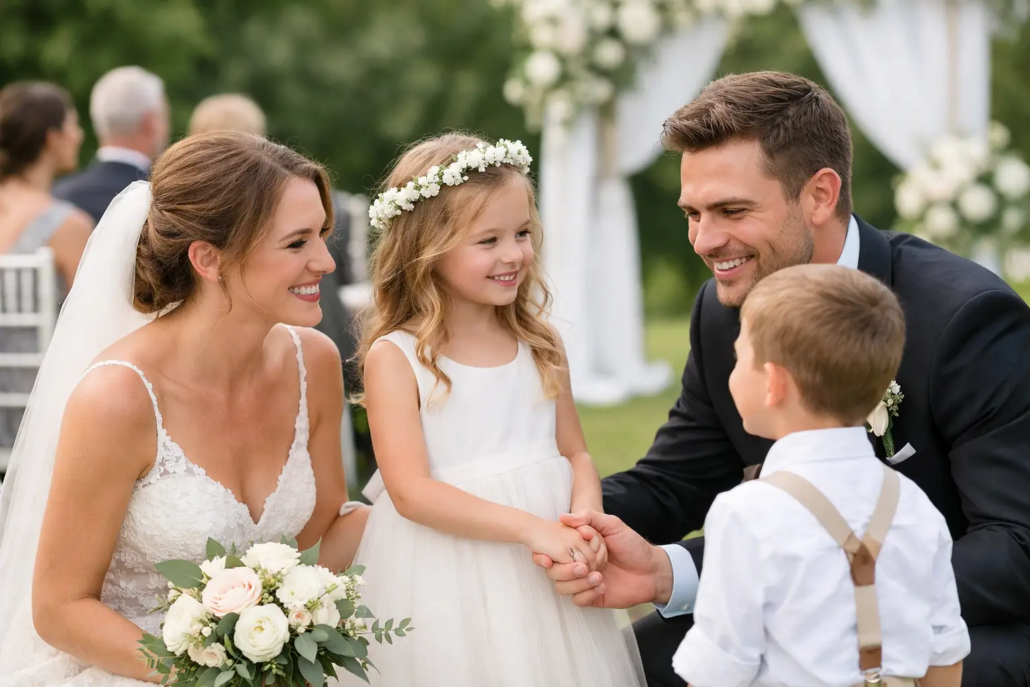
A wedding ceremony with children can be one of the most moving parts of the day – and one of the least predictable. A toddler may decide the aisle is a racetrack. A school-age child may suddenly feel shy in front of guests. A teen may be quietly wondering where they fit in a celebration that changes their family. None of that means your ceremony has gone wrong. It means real people are at the center of it.
The goal is not a perfectly choreographed family moment. It is to create a ceremony where each child feels considered, where the adults understand the plan, and where there is room for a little honest, joyful imperfection.
Start With the Child, Not the Role
Before choosing who carries rings, reads a poem, or stands beside you, think about the child in front of you. Their age matters, but temperament matters more. A confident seven-year-old might love greeting guests, while another may prefer to hand you a flower before the ceremony and then sit with a grandparent.
Ask a few simple questions: Do they enjoy attention? Can they follow a short instruction when they are excited? Will they be comfortable standing for several minutes? Have they had time to process the wedding and what it means for the family? These answers will lead you to a role that feels affirming rather than stressful.
Children should always be invited into the ceremony, not drafted into it. If a child says no to walking down the aisle or speaking in front of people, respect that. There are many meaningful ways to include them without putting them on display.
Choose a Role That Fits Their Age and Comfort
Small, clear jobs tend to work best. Young children may scatter petals, carry a small sign, walk with a trusted adult, or bring forward a family keepsake. If they are very young, consider skipping the expectation that they will walk alone. A hand to hold can make all the difference.
Elementary-age children often enjoy being trusted with a visible task. They might be a ring bearer, flower child, junior attendant, witness to a family ritual, or the person who brings up the unity candle, sand, or letters for a time capsule. Give them one job, not five. Excitement can turn into overwhelm quickly on a wedding day.
Older children and teens may appreciate a role with more choice and substance. They can offer a reading, participate in a bilingual blessing, stand in a place of honor, help write a family promise, or choose a song for a meaningful moment. Some teens would rather support behind the scenes, such as helping with music cues or looking after a younger sibling. That counts too.
A child does not need a formal title to be important. Sometimes the most meaningful inclusion is a reserved front-row seat, a private note from the couple, or a family photo before guests arrive.
Keep the Ceremony Pace Child-Friendly
A long ceremony asks a lot of little bodies and big feelings. If children are participating, a ceremony of about 15 to 25 minutes often gives you enough time for personal vows, readings, and a family moment without testing everyone’s limits. If your ceremony will be longer for cultural, religious, or family reasons, plan an easy exit for younger participants after their role is finished.
Place children’s responsibilities near the beginning whenever possible. A flower child who walks down the aisle, tosses the last petal, and then joins a parent in the front row has completed their mission before nerves or boredom take over. Asking a four-year-old to wait through ten minutes of speaking before delivering rings is a brave choice, but perhaps not the calmest one.
Build in a backup plan that does not feel like a backup. Decide in advance which adult will step in if a child freezes, cries, needs the restroom, or simply decides they are done. A grandparent, close friend, or childcare provider can quietly take over. Your officiant can also move naturally through the moment without making the child’s change of heart a public event.
Include Children in the Words, With Care
When a couple is blending families, the language of the ceremony deserves special attention. The wedding is about the two people making a marriage commitment. It can also acknowledge the family they are building together, without asking children to make promises that feel too large or too permanent.
A family acknowledgment can be warm and simple: a statement that the couple recognizes the children as loved, valued members of the family and promises to continue building a home with care, patience, laughter, and respect. This can be spoken by the officiant, included in your own vows, or shared in a short family ritual.
Be thoughtful about asking children to say vows to a stepparent. Some families love this and have already built a close, secure relationship. For others, especially after recent loss, divorce, or major change, public promises can feel like pressure. It depends on the child’s relationship with the adults and how much time everyone has had to adjust.
A gentler alternative is to invite children to participate without requiring them to speak. They might place a hand on a family keepsake, add a stone to a unity vessel, or join you for a brief embrace after the vows. The gesture can say plenty.
Consider language that honors every family story
Avoid ceremony wording that suggests a wedding instantly creates a perfect family or replaces a parent who is not present. Families can be loving, complicated, grieving, hopeful, and still very much worth celebrating. Personalized language makes room for that truth.
For bilingual families, children can be included through a reading, welcome, or blessing in Spanish and English. Even a few meaningful words in each language can help grandparents and children alike feel seen. The best choice is the one that sounds like your actual family, not a script borrowed from someone else.
Rehearse the Feeling, Not Just the Steps
A rehearsal is useful, but children do not need a military operation. Walk them through where they will stand, who they will walk with, and what happens after their job is finished. Then let them practice once or twice and move on. Repeating it too many times can make a child more nervous.
Describe the experience in reassuring, concrete terms. Tell them there will be music, people looking toward the front, and lots of smiles. Let them know it is okay if they feel shy, make a mistake, or need to go sit down. Children are often calmer when they know they have permission not to perform perfectly.
Bring comfort items when appropriate. A quiet snack, water, a favorite small toy, tissues, or headphones for a noise-sensitive child can prevent a minor challenge from becoming a major one. If photos are important, take family portraits before the ceremony, while energy is higher and outfits are still pristine.
Let Adults Carry the Logistics
The children should not be responsible for keeping the day on schedule. Assign one reliable adult to each younger child, especially if their parent is part of the wedding party or getting ready elsewhere. That adult should know the ceremony plan, have the snack bag, and understand that their first job is helping the child feel safe.
Also share the plan with your photographer, coordinator, DJ, and officiant. If everyone knows that a child may leave after a reading or needs to stand beside a parent, the moment will feel intentional. Good coordination is what allows the ceremony to remain relaxed when life happens.
This is especially helpful for outdoor weddings around Seattle and Western Washington, where wind, rain, chilly temperatures, and uneven ground can affect a child’s comfort. A shorter walk, secure shoes, a warm layer nearby, and a dry place to wait can be more valuable than an elaborate entrance.
Make Space for the Moment You Actually Get
The sweetest child-centered wedding moments are rarely the most polished ones. They are the hand squeeze before the aisle, the spontaneous hug after the kiss, the serious face of a ring bearer who knows they have an important job. When you plan for comfort and connection rather than control, you give those moments room to happen.
A personalized officiant can help shape language, timing, and rituals around your family’s particular needs. At Forever, Together, that means helping couples create a ceremony that recognizes the people they love without adding another layer of pressure to the day.
Let your children know they belong, give them a role they can genuinely enjoy, and trust that a little unpredictability is not a flaw in the story. It is often the part your family will remember most warmly.