
How to Include Kids in Your Wedding Ceremony
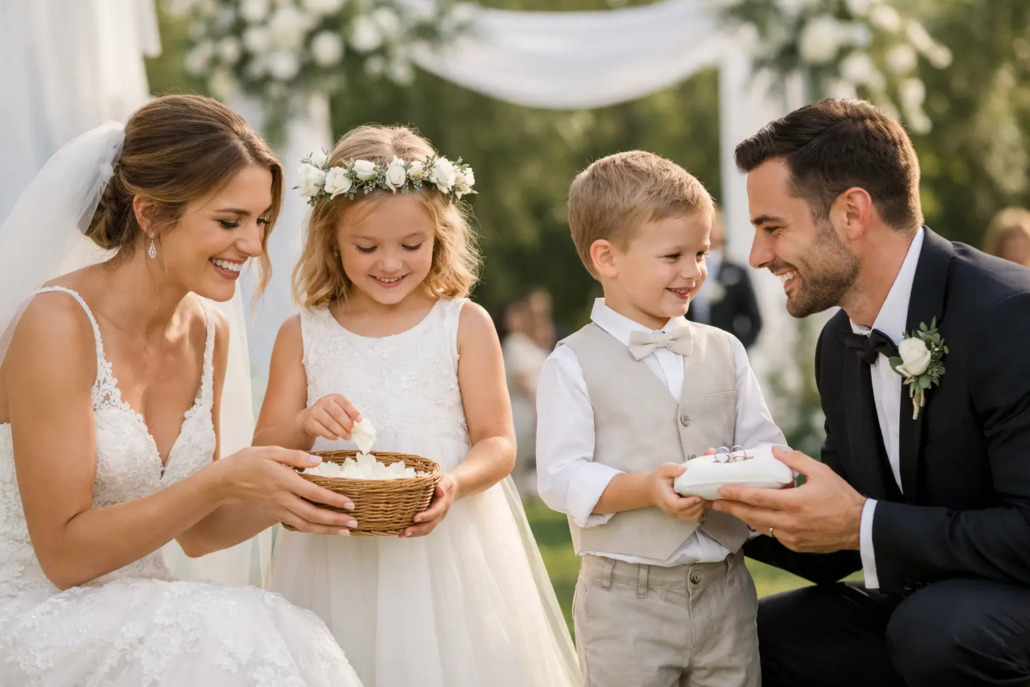
A three-year-old in a flower crown may decide the aisle is better for sitting than walking. A ten-year-old may take their reading more seriously than anyone in the room. Both can be wonderful. When couples ask how to include kids in a wedding ceremony, the best answer is not to give every child a job. It is to create a moment that feels loving, manageable, and true to your family.
Children can bring a special kind of joy to a wedding, especially when they are your own children, nieces, nephews, godchildren, or the little people who have watched your relationship grow. They can also bring unpredictable timing, big feelings, and a sudden refusal to wear shoes. A thoughtful plan makes room for both the meaningful moments and the reality of kids being kids.
Start With the Child, Not the Role
Before choosing flower petals, readings, or matching outfits, consider each child’s age, comfort level, and personality. An outgoing eight-year-old who loves an audience may be thrilled to make an announcement. A quiet six-year-old may feel far more comfortable walking beside a trusted adult or handing you the rings without speaking.
Ask older children what sounds fun to them. Giving them a real choice helps them feel included rather than assigned a task because they happen to be in the wedding party. For younger children, keep expectations simple. Their role should feel like a happy invitation, not a performance they have to get right.
It also helps to think about your relationship with the child. If you are blending families, a meaningful role can acknowledge that this wedding is about more than two people. It can be a gentle, visible way of saying, “We are becoming a family together.” That said, no single ceremony moment can carry the full emotional weight of a family transition. Keep the language sincere, warm, and appropriate to where everyone truly is.
How to Include Kids in a Wedding Ceremony Without Pressure
There is no rule saying children need to process down the aisle or stand at the front for the whole ceremony. Those traditions are lovely when they suit your group, but a successful role is one the child can actually enjoy.
For preschoolers, simple visual jobs tend to work best. They might scatter petals, carry a small sign, wave ribbon wands, or walk in with a parent, grandparent, or older sibling. If they freeze halfway down the aisle, that is okay. An adult can meet them, carry them, or simply let them change their mind.
Elementary-age children can often take on more responsibility. They may serve as a ring bearer, junior attendant, witness, or reader. A child who likes art might make a sign or decorate a small keepsake box used during the ceremony. One who prefers being helpful behind the scenes could hand out programs or greet guests before the ceremony rather than having a front-and-center role.
Teens often appreciate being treated as trusted participants rather than younger bridesmaids or groomsmen. They can offer a reading, share a brief toast during a small ceremony, act as a witness, help with bilingual elements, or stand with you during a family blessing. Their involvement can be especially meaningful when it reflects their actual place in your life.
Meaningful Ceremony Roles Beyond Flower Girl and Ring Bearer
A personalized ceremony gives you more options than the familiar wedding-party titles. You can build a role around what would feel natural for your child and the tone of your celebration.
A family vow or promise is one of the most heartfelt choices for couples joining households. You might promise to show up, listen, encourage their dreams, and build traditions together. Keep it short and avoid language that asks a child to promise more than they can understand or emotionally offer. They may choose to respond with “We do,” but there is no need to put them on the spot with individual vows unless they genuinely want that.
A unity ritual can also include children beautifully. Each family member might add sand to a shared vessel, place a stone in a keepsake box, light a candle with adult assistance, or tie ribbons around a ceremonial cord. For an outdoor Seattle or Western Washington wedding, consider the weather and wind before choosing candles or lightweight items. A small change in plan can save everyone from chasing sand, flame, or paper across the lawn.
Children can also participate through music or words. A confident child may sing a short song, play an instrument, or read a poem. If a full reading feels intimidating, invite them to share one sentence about love or family. Bilingual families may have a child welcome guests in English and Spanish, or offer a short blessing in a language that matters to your family.
Some children do not want to speak, walk, or stand in front of a crowd at all. Their inclusion can still be real. Mentioning them warmly during the ceremony, including a photo or handwritten note in a private pre-ceremony moment, or giving them a special place in family portraits may be exactly right.
Plan for the Reality of Young Kids
The most relaxed ceremonies have a backup plan. This is not pessimism. It is kindness to children, parents, and yourselves.
Choose one familiar adult whose only job is to support the child. This person should not also be responsible for coordinating vendors, holding bouquets, or recording video. They can sit near the aisle, walk with the child if needed, and quietly step out for a snack, bathroom break, or reset.
Practice the role once or twice, but do not turn rehearsal into a high-stakes drill. Show the child where they will walk, where they will stand, and what happens next. Let them touch the basket, hold the sign, or practice speaking into a microphone if one will be used. Then tell them the most important thing: they cannot mess this up.
Timing matters, too. Young children are usually happiest with short jobs near the beginning of the ceremony. Asking a four-year-old to stand still through fifteen minutes of vows, readings, and music is ambitious. Let them make their entrance, share their moment, then sit with their caregiver. They will still be included, and you will have more space to be present with each other.
Bring quiet distractions for after their role is complete. A favorite book, sticker sheet, small snack, or headphones can be a lifesaver. Avoid messy treats, noisy toys, or anything likely to become more interesting than the ceremony itself.
Keep the Ceremony Language Age-Appropriate
If children will participate in a family vow, unity ritual, or spoken response, your officiant can help shape language that is emotionally thoughtful without becoming too heavy. This is particularly valuable for blended families, where everyone may be carrying different hopes, histories, and comfort levels.
Simple words usually land best. Rather than promising that everything will always be easy, focus on commitment, care, honesty, laughter, and belonging. For example, a couple might say they promise to make room for each child’s voice, celebrate milestones together, and be a dependable source of love and support.
The child does not need to make matching promises. If they do want to respond, a collective “We do” or “We will” is often plenty. Consent matters here, even in a ceremonial moment. No child should feel pressured to publicly declare feelings they are still figuring out.
Make Space for Different Family Dynamics
Not every child involved in a wedding is part of a blended family, and not every family wants a unity ritual. You may be honoring a niece who feels like your best sidekick, including a close friend’s child, or inviting your own children into a small elopement. The right choice depends on the relationship, the child’s wishes, and the kind of ceremony you want.
Be mindful of fairness without assuming identical roles are always necessary. Two children of very different ages may need different jobs. One may walk down the aisle while another offers a reading. What matters is that each feels seen, not that every detail is perfectly symmetrical.
If family relationships are sensitive, private conversations before the wedding can prevent confusion. Explain the plan clearly to parents and caregivers, especially when there are expectations around stepchildren, former partners, grandparents, or cultural traditions. A calm conversation early on is far easier than sorting out hurt feelings during the rehearsal.
Let the Moment Be Imperfect and Memorable
A child may wave to the crowd, drop every petal in one spot, whisper their reading, or burst into tears as the music begins. None of those moments ruins a wedding. More often, they become the stories everyone remembers with a smile.
The goal is not a tiny adult performance. It is a ceremony that makes room for the people you love, in ways that fit who they are right now. With a flexible plan and an officiant who can adapt calmly in the moment, children can be part of the joy without carrying the pressure of making the day perfect.
At Forever, Together, we believe the most meaningful ceremonies leave room for real life: the tears, the laughter, the wiggly ring bearer, and the family you are choosing to celebrate. Give kids a role they can enjoy, keep your expectations generous, and let their presence remind everyone what this day is truly about.