How a Spanish Officiant Makes Your Ceremony Yours
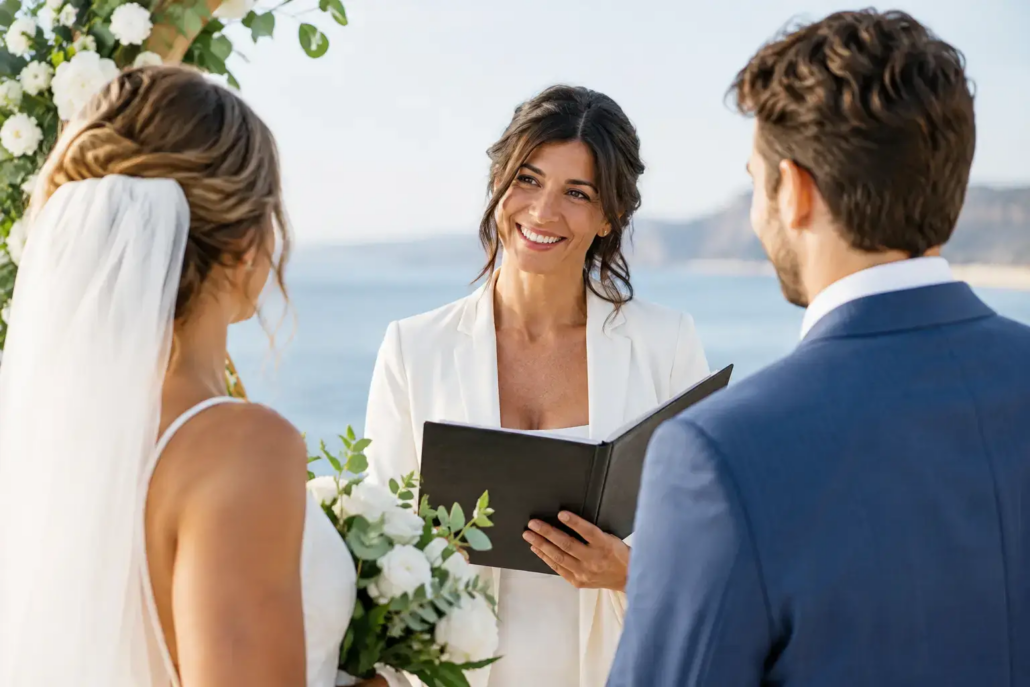
A wedding ceremony can be the one part of the day where everyone you love is asked to simply listen. When some of those guests feel more at home in Spanish, a Spanish officiant does more than translate a few lines. They help make sure your parents, grandparents, chosen family, and friends can laugh, tear up, and understand exactly what you are promising one another.
For couples planning a wedding in Seattle or Western Washington, that matters. You may be honoring a Mexican, Salvadoran, Puerto Rican, Spanish, Colombian, or another Hispanic or Latino family background. You may be a bilingual couple, marrying into a Spanish-speaking family, or simply want the people closest to you fully included. There is no single right way to build a ceremony around language. The best version is the one that sounds like you and feels welcoming to the people in the room.
What a Spanish Officiant Actually Brings to Your Wedding
Language is the obvious part, but it is not the whole job. A skilled bilingual officiant listens for the meaning behind the request. Maybe your grandmother speaks little English and you want her to hear the story of how you met. Maybe one partner’s family has never attended a non-denominational ceremony and needs a little reassurance that it will still feel respectful and meaningful. Maybe you want a short civil-style ceremony with vows in both languages, then a great party.
A personalized ceremony gives you room for all of that. It can be primarily in English with important passages in Spanish, mostly in Spanish with English interpretation, or intentionally woven between both languages throughout. The choice depends on your guests, your comfort speaking each language, and how you want the ceremony to flow.
Translation alone can sound stiff, especially with vows, readings, and family tributes. Ceremony writing needs rhythm, warmth, and context. A phrase that lands beautifully in English may need a different expression in Spanish to feel natural. That is why it helps to work with someone who can shape the words for the moment, rather than reading a generic script line by line.
Choose the Bilingual Format That Fits Your Guests
There is no prize for making every sentence appear twice. A fully duplicated ceremony can be inclusive, but it can also run long and lose momentum. On the other hand, keeping Spanish to one brief welcome may not give Spanish-speaking guests the connection you hoped for. The sweet spot is usually purposeful balance.
English ceremony with Spanish highlights
This option works well when most guests understand English but you want Spanish-speaking loved ones to feel directly welcomed. The officiant might offer the opening welcome, a family acknowledgment, the declaration of intent, a reading, or the closing blessing in Spanish. Your vows can remain in the language that feels most honest to you.
It is a lovely choice for a ceremony of about 15 to 25 minutes. It also keeps the experience easy to follow for guests who speak only one language.
A fully bilingual ceremony
For families with meaningful numbers of English- and Spanish-speaking guests, a bilingual ceremony can give both groups equal access to the experience. Rather than repeating every line mechanically, the officiant can alternate languages by section or provide concise interpretation after key moments. For example, your love story may be shared in both languages, while a reading is offered in Spanish and introduced in English.
This format takes thoughtful planning. It often works best when the ceremony is given enough time to breathe and when the couple is comfortable with a slightly longer experience. Done well, it feels generous, not repetitive.
Spanish-forward with English support
If Spanish is the primary language of your family or the language that feels most emotionally true for your ceremony, lead with it. English-speaking guests can still be included through brief explanations, translated programs, or selected English portions. Your ceremony does not need to center English simply because you are getting married in Washington.
A Spanish-forward ceremony can be secular, spiritual, traditional, modern, funny, formal, or relaxed. Language and religious style are separate choices. You can include prayer, a blessing, a unity ritual, a poem, a tribute to family, or none of those things at all.
Personalization Is Where the Meaning Lives
The most memorable ceremonies are specific. They sound like two real people who decided to build a life together, not like a speech that could be delivered at any wedding on any Saturday.
That might mean telling the story of a first date that went unexpectedly well, recognizing the children who are becoming part of a new family, or thanking parents who crossed borders or made sacrifices to create more possibilities for their kids. It might mean mentioning a beloved relative who cannot be there, gently and without turning the whole ceremony into a sad moment.
Cultural elements deserve the same care. Some couples want to include a lazo, arras, a family blessing, a handfasting, a rose ceremony, or a shared drink. Others prefer a simple exchange of vows and rings. Neither approach is more authentic than the other. Traditions are most powerful when they are chosen because they mean something to you, not because someone told you they were required.
A good officiant can explain what an element traditionally represents, help you decide whether it fits, and make space for it without making the ceremony feel crowded. If family members will participate, they can also help clarify what those loved ones need to do and when. That small bit of preparation can prevent a lot of ceremony-day confusion.
Questions to Ask Before You Book
Before choosing a Spanish-speaking wedding officiant, ask how they approach bilingual ceremonies. Do they write original ceremonies or rely on a standard script? Can they adapt the balance of English and Spanish to your guest list? Are they comfortable with secular, religious, interfaith, LGBTQ+ and blended-family celebrations?
You should also ask what the planning process looks like. The right fit is not only someone who speaks Spanish. It is someone who asks good questions, communicates clearly, and gives you confidence that the ceremony will be handled with care. You should know whether you will review the ceremony in advance, how vow support works, and what happens if your wedding is planned on short notice.
Practical experience matters, too. An officiant should be prepared to complete the legal portion of your Washington marriage license and explain the timing around it. The legal words can be brief, but they still deserve attention. Couples should not have to wonder who is signing what while they are trying to enjoy their first few minutes as newlyweds.
Make Space for Family Expectations Without Losing Yourselves
Many couples come to ceremony planning with a mix of excitement and pressure. One family may expect a religious ceremony; the other may prefer something secular. One partner may want a big cultural moment, while the other is more private. A bilingual ceremony can bring those differences into clearer view, but it can also become a beautiful bridge.
Start by deciding what must be present for the ceremony to feel right to each of you. Maybe that is a Spanish welcome for family, a prayer offered by a relative, private personal vows, or a short and simple ceremony at a mountain overlook. Then identify the nice-to-haves. This helps you make thoughtful choices without trying to satisfy every opinion in the room.
You can honor family without handing over the whole ceremony. A warm acknowledgment, a reading, a blessing, or a cultural ritual may be enough to make loved ones feel seen. Your wedding ceremony is not a performance of perfection. It is a promise, witnessed by people who matter.
A Ceremony Should Feel Easy to Be Present In
The best ceremony planning is surprisingly calm. Once you have an officiant who understands your language needs, your priorities, and your personalities, the details become manageable. You can focus on choosing the words that feel true, deciding who should be involved, and letting go of the idea that there is one correct way to get married.
At Forever, Together, bilingual ceremonies are built around the couple first, with thoughtful space for the families and traditions that shaped them. Whether you are planning a full wedding, an intimate elopement, or a short legal signing, you deserve a ceremony where everyone can feel the love in the room.
Choose the language, traditions, and tone that make you both exhale. That feeling of recognition is what your guests will remember long after the flowers are gone.