
What Makes Ceremony Personal? It Starts With You
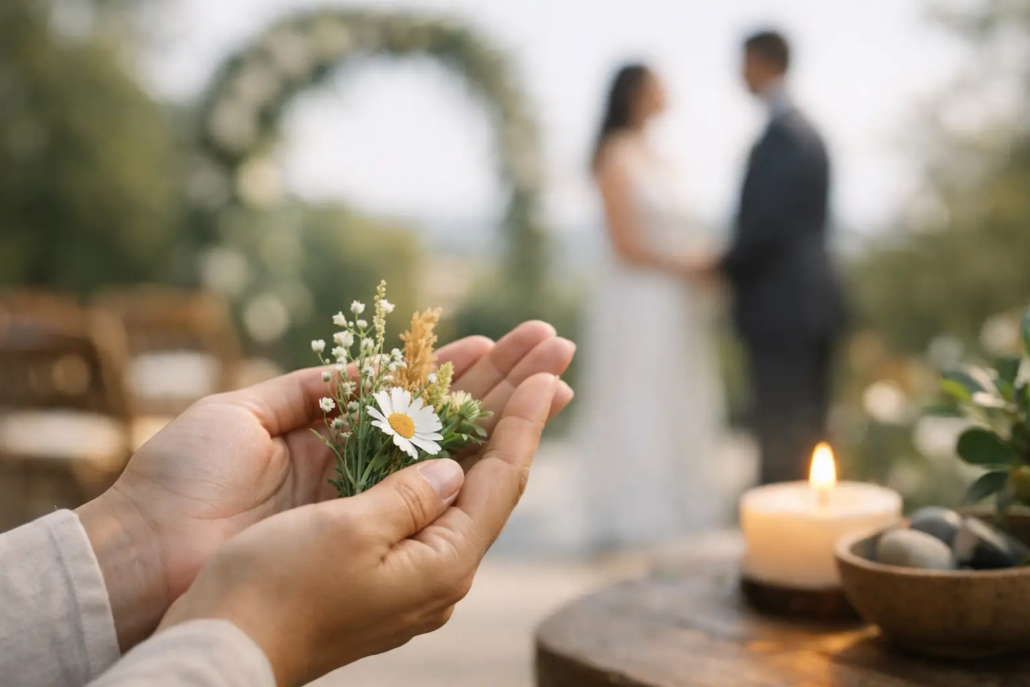
A ceremony can take only ten minutes and still bring everyone to tears. It can last half an hour and feel effortless. What makes ceremony personal is not the length, the number of readings, or whether every wedding tradition makes an appearance. It is the feeling that the words, people, and promises could belong to no one else but the two of you.
For many couples, the ceremony is the part of the wedding that feels hardest to picture at first. You may know the venue, the food, and the guest list, but not yet know how to put your relationship into a meaningful public moment. The good news is that you do not need to become writers, performers, or experts in wedding etiquette. You simply need a ceremony shaped around what matters most to you.
What Makes Ceremony Personal?
A personal wedding ceremony reflects your relationship instead of following a script simply because it is familiar. It makes room for your history, your sense of humor, your beliefs or nonbeliefs, and the people who have helped you become who you are together.
That does not mean every detail needs to be deeply emotional or shared with a room full of guests. Privacy can be personal, too. Some couples want a warm story about how they met; others prefer to keep the spotlight on the promises they are making now. A ceremony should feel honest, not like a public interview.
Personalization also does not have to mean starting from a blank page. In fact, having a caring officiant guide the structure can make this process much easier. The goal is to choose the pieces that fit, leave out the ones that do not, and create enough breathing room for the moment to land.
Start With the Feeling You Want Guests to Carry
Before choosing readings or writing vows, think about the atmosphere you want to create. Do you want guests to laugh early and cry happy tears later? Do you want something quiet, simple, and intimate? Are you hoping for a joyful, family-centered gathering with children, grandparents, or close friends participating?
There is no correct answer. A mountaintop elopement with two witnesses may call for a different tone than a bilingual ceremony with 150 guests. A short legal signing may be exactly right for a couple planning a larger celebration later. The ceremony becomes personal when the format supports your real priorities rather than someone else’s idea of what a wedding is supposed to be.
A few descriptive words can be surprisingly useful: heartfelt, relaxed, playful, reverent, modern, traditional, brief, inclusive. Share those words with your officiant. They provide a clear direction before you have selected a single reading or ritual.
Your Story Is More Than How You Met
Couples often assume a personal ceremony needs a detailed retelling of their first date. That can be lovely, but the deeper story is usually found in what you have built since then. What do you admire in one another? What challenge taught you how to work as a team? What small habit makes your relationship unmistakably yours?
The most meaningful details are often ordinary ones. Maybe one of you brings coffee to the other before a long workday. Maybe you adopted a dog, restored a home, raised children, navigated distance, or learned to blend two very different families. These details give guests a glimpse of the partnership behind the wedding photos.
An officiant can turn those memories into a ceremony narrative without making it sound overly formal or overly sentimental. A little humor is welcome when it sounds like you. So is tenderness. The right balance depends on your comfort level and the room you are inviting into the moment.
Let Your Values Lead the Choices
A personal ceremony is not defined by being religious, secular, traditional, or contemporary. It is defined by intention. You may want spiritual language, a prayer, or a passage from a faith tradition. You may prefer language about partnership, community, equality, and the life you are choosing together. Many couples want a blend.
There is room for all of that. You can include a short blessing without making the ceremony fully religious, or honor a cultural tradition in a ceremony that otherwise feels modern and secular. You can also skip practices that do not represent you, even if they are common at weddings.
The trade-off is worth considering: adding every possible tradition can make a ceremony feel crowded, while removing every familiar element can leave some couples feeling ungrounded. A thoughtful ceremony design gives you a recognizable flow while making space for the parts that hold real meaning. Usually, a few intentional choices are more powerful than ten loosely connected ones.
Make Promises You Can Actually Mean
Personal vows are often the moment couples remember most, but they do not need to be long or polished to be powerful. The best vows sound like promises, not a résumé of your relationship. They can be funny, tender, practical, poetic, or beautifully simple.
If writing your own feels intimidating, begin with a few questions: What do you want to protect in this relationship? How do you want to show up during difficult seasons? What do you hope to keep celebrating together? You might promise patience, adventure, honesty, shared snacks on road trips, or the willingness to keep choosing each other on ordinary Tuesdays.
You also have options. Some couples write and read their own vows. Some repeat personalized vows after the officiant. Some exchange private letters before the ceremony and use a shared set of promises in front of guests. None of these choices is less meaningful. Pick the approach that lets you be present rather than worried about getting every word perfect.
Include People in Ways That Feel Good
Family and friends can make a ceremony feel deeply personal, especially when they participate in a way that suits their relationship with you. A loved one might offer a reading, share a brief blessing, hold the rings, or take part in a unity ritual. Children can be included with a family vow or a simple acknowledgment that feels loving without placing pressure on them.
For couples navigating complex family dynamics, inclusion should be handled with care. You are not required to create equal roles for everyone, and you do not need to use the ceremony to resolve old tensions. A skilled officiant can help you find gracious language, set clear expectations, and protect the peaceful tone you want.
Bilingual ceremonies offer another meaningful opportunity. Hearing a welcome, reading, vow, or blessing in Spanish and English can ensure more guests feel seen and included. It can also honor family heritage without requiring every word to be repeated. The best format depends on who is present and what you want each language to carry.
Choose Rituals for Meaning, Not for Decoration
Unity rituals can be memorable when they reflect something true about your lives. A handfasting, ring warming, wine ceremony, sand blending, tree planting, or cultural tradition may give guests a visual way to understand your commitment. But a ritual is never required simply because it looks good in photos.
Before adding one, ask what it represents for you. If the answer is clear, it may belong in your ceremony. If it feels like another item on the planning checklist, feel free to let it go. The same applies to readings, music, and formal wording. Personal does not mean elaborate. It means purposeful.
Give Yourselves Permission to Keep It Simple
Seattle and Western Washington couples plan weddings in every imaginable setting: backyards, waterfront parks, restaurants, mountain lodges, private homes, and quiet courthouse-style signings. The setting can influence the ceremony, but it does not determine its heart.
A short ceremony can still include a welcome, a few personal words, meaningful vows, rings, and a joyful pronouncement. A longer ceremony can create room for readings, family participation, cultural traditions, and a fuller story. What matters is choosing a pace that feels comfortable for you, your guests, and the moment you want to remember.
At Forever, Together, we often find that couples feel most relaxed once they realize they are allowed to make thoughtful choices without carrying the entire ceremony process alone. Guidance does not make a ceremony less personal. It gives your personal choices a clear, confident shape.
When you stand together and look out at the people you love, the words do not need to impress anyone. They just need to sound like a true beginning to the marriage you are creating.