A Guide for Bilingual Vows That Sound Like You
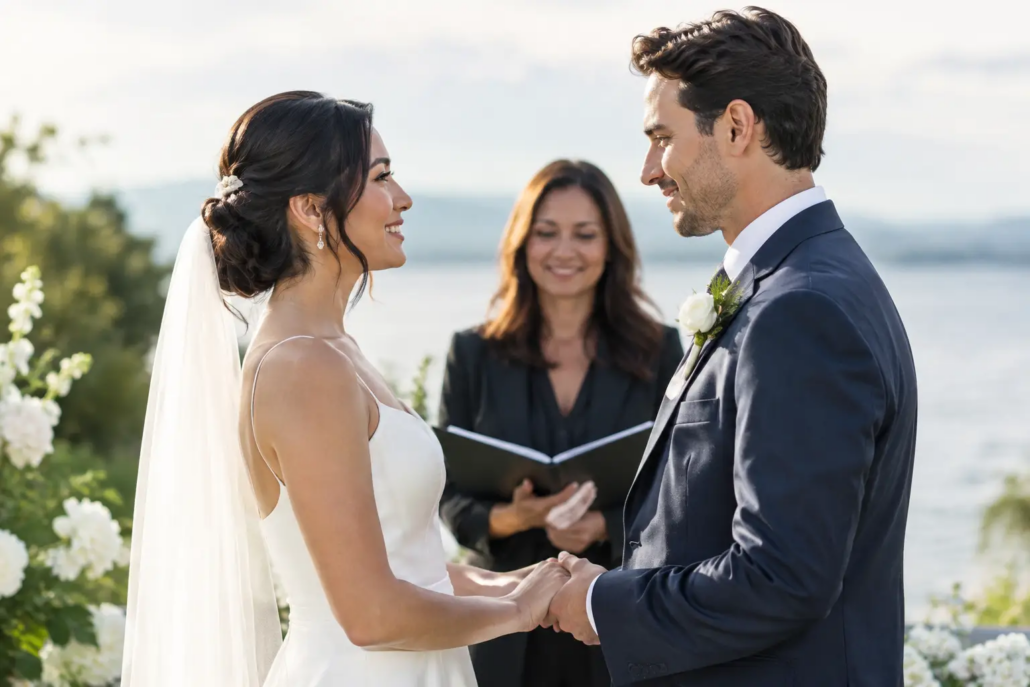
A bilingual ceremony can create one of the most moving moments of a wedding: a parent hears their child make a promise in the language of home, while a partner’s family hears the same commitment in the language they know best. This guide for bilingual vows is here to help you build that moment with care, without turning your ceremony into a language lesson or asking anyone to guess what is happening.
The best bilingual vows do more than translate words. They make room for the people, histories, and relationships that brought you both to the altar. Whether you are blending English and Spanish, honoring a heritage language, or welcoming guests who speak different languages, your ceremony can feel clear, personal, and unmistakably yours.
Start With What You Want Both Languages to Do
Before choosing which lines to translate, talk about the purpose behind using two languages. Sometimes the answer is practical: a beloved grandparent or several family members are more comfortable in Spanish, Mandarin, Tagalog, or another language. Sometimes it is emotional. One language may be tied to childhood, family traditions, or the way you and your partner express affection privately.
There is no requirement to make every word appear in both languages. A fully bilingual ceremony can be beautiful, but it is not automatically the best choice for every couple. Repeating every section may make a short ceremony feel much longer, especially if guests understand only one language. A more selective approach can preserve the rhythm while still making everyone feel included.
Think about the moments that carry the most meaning for you: the welcome, the story of your relationship, the vows, the ring exchange, a reading, or the closing blessing. Those are often the best places to bring in a second language.
Choose a Bilingual Ceremony Style That Fits
A bilingual ceremony does not have to follow one formula. The right structure depends on your guest list, the languages involved, and how much translation feels natural to you.
Full translation
With this approach, the officiant presents each major section in one language and then the other. It works especially well for intimate weddings where guests are evenly split between language groups and where both partners want equal representation throughout the ceremony.
The trade-off is timing. If a ceremony is written as a 15-minute script in English and then fully repeated in another language, it will likely take closer to 25 or 30 minutes. That may be perfect for you. Or it may feel longer than you want for a casual outdoor gathering, an elopement, or a ceremony with young children in attendance.
Shared sections
Many couples choose English for the core legal and ceremonial framework, then include meaningful portions in the second language. The officiant might welcome guests in both languages, share the couple’s story in English with key sentiments repeated in Spanish, and invite each partner to say vows in the language that feels most heartfelt.
This is often a lovely balance. Everyone can follow the ceremony, while the second language is given genuine space instead of being added as a quick gesture.
One language for the vows
Your vows are not a presentation. They are promises. If you can speak more honestly, tenderly, or naturally in one language, that is a good reason to use it. You might each say your vows in the language that feels most like your own voice, with a printed translation in the program or a brief spoken translation afterward.
There is something powerful about hearing a promise in the language where it first became real. You do not need to flatten that feeling to make every sentence identical.
A Guide for Bilingual Vows: Write for Meaning, Not Word Count
Direct translation is not always accurate translation. Idioms, humor, terms of endearment, and promises can carry different shades of meaning from one language to another. A phrase that sounds warm and romantic in English may sound formal, overly dramatic, or simply confusing when translated word for word.
Start by writing the vow you actually want to make. Keep it grounded in your relationship. Maybe you promise to make coffee on difficult mornings, to cheer on a career change, to keep dancing in the kitchen, or to remain a safe place for one another when life gets complicated. Then work with someone fluent in both languages to shape the emotional meaning, not just the vocabulary.
If one of you is not fluent in the other’s language, practice together before the wedding. That is not about perfect pronunciation for an audience. It is about knowing what you are promising and feeling comfortable as you say it. A few intentional rehearsals can replace last-minute nerves with connection.
It also helps to keep spoken vows a manageable length. Two or three deeply personal promises often land better than a long speech, particularly when a translation follows. Your guests will remember sincerity far more than they will remember whether every idea fit into a perfect paragraph.
Make Sure Guests Can Follow Along
Inclusion is not only about hearing familiar words. It is also about helping people understand the emotional flow of the ceremony.
An experienced bilingual officiant can signal transitions clearly, summarize rather than repeat where appropriate, and make sure each language group receives a genuine welcome. If the ceremony includes family participation, ask those participants which language feels most comfortable before assigning a reading or asking them to speak.
Printed programs can be useful for longer readings, poems, or cultural traditions. They are not necessary for every wedding, though. For a small group, a warm spoken explanation may feel more personal than handing everyone a detailed translation. For a larger gathering with many guests who speak different languages, a simple program with key phrases in both languages can help everyone stay present.
Avoid relying on a bilingual friend to translate in the moment unless that is their explicit role and they have time to prepare. Translating live takes focus, confidence, and more skill than most people realize. Your friend deserves to enjoy the celebration too.
Honor Culture Without Turning It Into a Performance
Bilingual vows often sit alongside cultural traditions: a lazo ceremony, arras coins, a tea ceremony, a handfasting, a family blessing, or a meaningful song. These elements can add depth when they reflect your lives and are explained with care.
You do not need to include every tradition your families expect in order to honor your background. You can choose one ritual, adapt it, or simply speak about what your heritage means to you. Couples sometimes feel pressure to make a ceremony represent an entire culture. That is a heavy job for one afternoon. Your wedding only needs to represent the two of you and the community you are inviting into it.
If family expectations are different from your preferences, a thoughtful conversation early on can prevent stress later. You might tell relatives that the ceremony will include a Spanish reading and bilingual vows, while keeping the overall format concise and secular. Clear boundaries can still be loving ones.
Plan the Logistics Before the Wedding Week
A bilingual ceremony needs a little extra coordination, but it should not become the most stressful part of planning. Once you have chosen your format, confirm who will speak each section and provide final wording well before the rehearsal.
Read every name, phrase, and vow aloud. This is especially helpful for names with pronunciations that may be unfamiliar to your officiant or wedding party. If a relative will offer a blessing, ask them for a written copy or a general outline so the officiant can introduce the moment naturally and keep the ceremony on schedule.
Timing matters, too. A bilingual ceremony can be concise, but it should never feel rushed. Build in small pauses for interpretation, emotion, applause, and the occasional happy tear. Those pauses are part of the experience, not mistakes to fix.
At Forever, Together, bilingual ceremony planning is treated as a collaboration, not a script with a few translated lines added at the end. The goal is to help both of you feel heard while making every guest feel welcome in the room.
When you stand together to make your promises, choose the words that let you be fully present. Your guests may not understand every syllable, but they will understand the love behind them.