
How to Personalize Wedding Ceremony Ideas
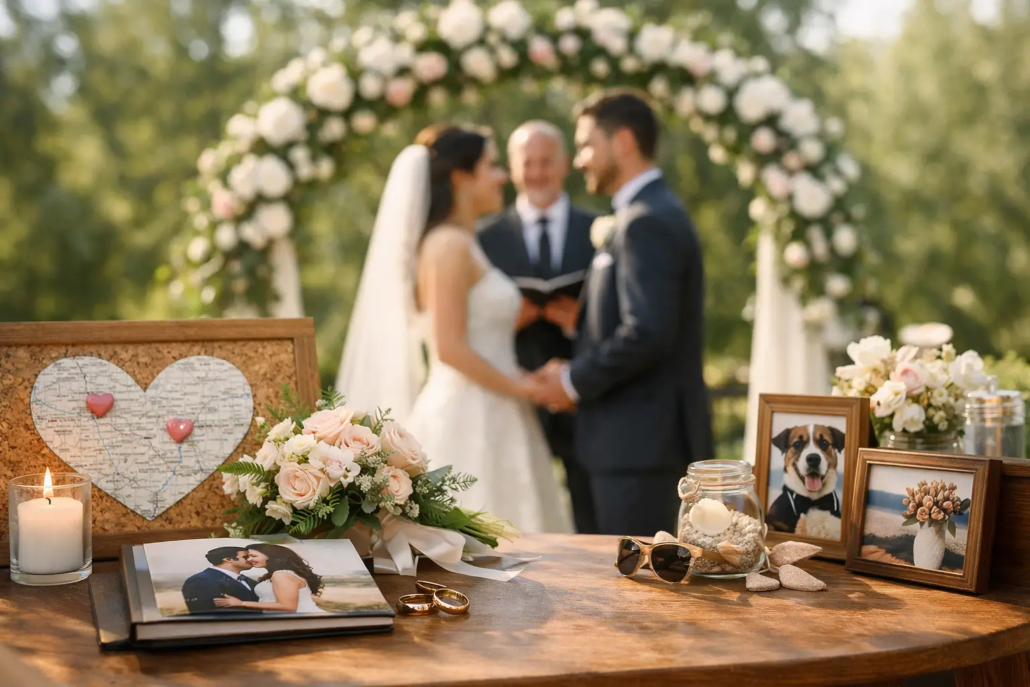
You can spot a generic ceremony almost immediately. The words are perfectly fine, the timing works, everyone smiles for the photos – and yet it could belong to almost any couple. If you are wondering how to personalize wedding ceremony planning without turning it into a stressful writing project, the good news is this: it does not take a dramatic production to make your ceremony feel deeply personal. It takes thoughtful choices.
The most meaningful ceremonies usually are not the ones with the most moving parts. They are the ones that sound like the couple, honor the people in the room, and create a moment that feels grounded in real life instead of borrowed language. That might mean a short and simple ceremony with custom vows. It might mean blending two cultures, adding Spanish or bilingual elements, including children, or finding a respectful balance between secular wording and family traditions. Personal does not have to mean complicated.
Start with the feeling you want people to leave with
Before you choose readings, rituals, or who walks down the aisle first, think about the emotional tone. Do you want the ceremony to feel light and joyful? Quiet and intimate? Traditional with a few modern touches? Warm and family-centered? Romantic but not overly formal?
This is where many couples get stuck. They start by searching for scripts, then end up trying to force their relationship into someone else’s format. It works better the other way around. Start with who you are together, then build the ceremony around that.
For example, a couple planning a waterfront elopement in Western Washington may want something brief, emotional, and relaxed. A couple hosting a larger gathering with grandparents, kids, and blended family dynamics may want a ceremony that feels more structured and inclusive. Neither approach is better. The right fit depends on your relationship, your guests, and what matters most to you.
How to personalize wedding ceremony structure without overcomplicating it
A personalized ceremony does not require reinventing every part. In fact, keeping a familiar structure can help your guests stay present while the custom details do the real work.
Most ceremonies include a welcome, a few words about marriage or the couple, vows, rings, the legal declaration, and the pronouncement. Within that basic framework, there is plenty of room to make it your own.
The welcome can set the tone right away. It can acknowledge how far people traveled, recognize family, mention the setting, or reflect the style of the day. A ceremony at a private home may open differently than one in a formal venue. A bilingual ceremony may begin by greeting guests in both languages so everyone feels included from the start.
The middle of the ceremony is usually where personality comes through most clearly. This is where your officiant can share your story, highlight what makes your connection unique, and speak in a way that feels natural rather than stiff. Some couples want a love story section that is heartfelt and detailed. Others prefer just a few thoughtful lines and more focus on vows. Both can work beautifully.
Use your real story, not a polished version of it
If you want your ceremony to feel personal, give yourself permission to be specific. The best ceremony stories are rarely about being perfect. They are about being recognizable.
Maybe you met later in life and built trust slowly. Maybe one of you is calm and steady while the other is the planner with seventeen open tabs. Maybe your relationship has crossed distance, grief, parenting, career shifts, or second-chance love. Those details matter because they make the ceremony sound true.
That does not mean sharing anything too private or uncomfortable. Personalization is not oversharing. It is choosing details that reflect your bond and values.
A good question to ask is, what do the people who know us best instantly recognize about us as a couple? If the answer is your humor, warmth, loyalty, teamwork, resilience, or total opposites-attract energy, those are excellent themes to bring into the ceremony.
Vows are personal, but they are not the only personal part
Many couples put a lot of pressure on writing vows, as if those few minutes have to carry the entire emotional weight of the ceremony. They do not.
Personal vows can be beautiful, but they are just one piece. If writing your own feels exciting, go for it. If it feels terrifying, you are not failing at romance. You can use traditional vows, lightly customized vows, or a repeat-after-me format with a few personal touches added elsewhere.
What matters is that the promises feel honest. Some couples want poetic language. Others want vows that sound like how they actually speak. A promise to keep choosing each other on ordinary Tuesdays can land just as strongly as a sweeping declaration.
If you are writing your own vows, aim for sincerity over performance. You do not need to impress your guests. You need to say something true.
Rituals, readings, and guest involvement should have a reason
This is where personalization can either shine or start to feel crowded. Unity rituals, family blessings, readings, shared wine ceremonies, handfasting, candle lighting, and community vows can all be meaningful. But none of them are meaningful just because they are popular.
If you are considering a ritual, ask why it belongs in your ceremony. Does it reflect your culture, your beliefs, your family structure, or the kind of commitment you want to express? If yes, great. If not, it may be better to skip it.
The same goes for readings. A reading from literature, scripture, or a meaningful poem can add depth, especially if it reflects your values or history. But if it is included just to fill time, guests can feel that. Shorter ceremonies often feel more powerful because every part has a purpose.
Guest involvement also depends on your style. Some couples love interactive moments, like asking guests for a blessing of support. Others prefer a more intimate, quiet tone. A ceremony can be inclusive without requiring audience participation.
Family, culture, and faith can be included thoughtfully
Some of the most personal ceremonies are also the ones balancing different expectations. Maybe one partner wants a secular ceremony and the other wants a few faith-based elements. Maybe your families come from different cultural backgrounds. Maybe you want to honor parents, children, or grandparents without making the ceremony feel heavy.
This is where thoughtful planning matters. Personalization is not about pleasing everyone equally. It is about finding a respectful way to represent what matters most to you.
Sometimes that means including a short prayer, cultural tradition, or bilingual passage while keeping the overall tone non-denominational. Sometimes it means recognizing family in the welcome and then keeping the rest of the ceremony centered on the couple. Sometimes it means involving children in a simple, age-appropriate way so the ceremony reflects the reality of your family.
There is almost always a middle ground between rigid tradition and ignoring it completely.
How to personalize wedding ceremony wording with the right officiant
The truth is, personalization is much easier when your officiant knows how to guide it. A strong officiant does more than show up and read a script. They help you figure out what fits, what to leave out, and how to shape the ceremony so it feels natural from beginning to end.
That guidance matters even more if you are planning quickly, working with family dynamics, blending languages, or trying to keep things simple without losing meaning. An experienced officiant can help translate your ideas into a ceremony that actually flows well out loud.
At Forever, Together, this is often where couples feel the biggest sense of relief. They do not have to start from a blank page or guess what makes a ceremony work. They can choose a format that fits their day, personalize the parts that matter most, and still keep the planning process calm and manageable.
Keep it personal by keeping it clear
One of the easiest ways to make a ceremony feel more meaningful is also one of the simplest: do less, but do it on purpose.
Too many added elements can water down the moments that matter most. If your vows are the heart of the ceremony, let them breathe. If your love story is the emotional centerpiece, keep the rest streamlined. If you are planning a short legal signing or elopement, remember that brief does not mean impersonal. A few carefully chosen words can be more memorable than a twenty-minute script.
The goal is not to create the most original ceremony anyone has ever seen. The goal is to create one that feels unmistakably like you.
That usually comes down to a handful of smart choices: the right tone, honest wording, a structure that fits your day, and an officiant who can help pull it all together without making you do all the heavy lifting.
When your ceremony sounds like your relationship and feels comfortable in your own voice, people notice. More importantly, you notice. And years later, that is the part you will still care about.