
9 Short Wedding Ceremony Examples to Use
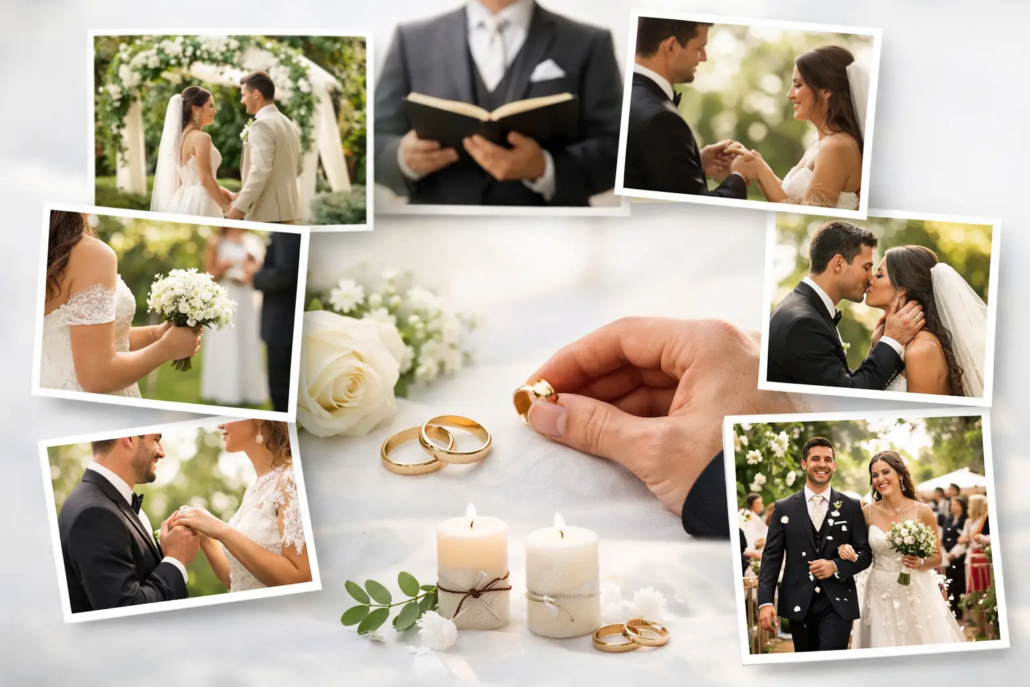
Some couples want the moment to breathe. Others want to say, “We do,” kiss, sign the license, and get to dinner before the coffee gets cold. Both are valid. If you’re searching for short wedding ceremony examples, you’re probably not trying to make your wedding less meaningful. You’re trying to make it feel like you.
A short ceremony can still be warm, personal, and memorable. In fact, trimming away anything that feels forced often makes the important parts stand out more. The key is knowing what to keep, what to shorten, and how to make a brief ceremony feel intentional instead of rushed.
Why short wedding ceremony examples work so well
Short ceremonies are especially popular with couples planning elopements, small weddings, weekday celebrations, second marriages, and events with mixed family expectations. They also make sense when the weather is unpredictable, the guest list is intimate, or one or both partners simply do not want to stand in front of a crowd for 30 minutes.
The biggest benefit is clarity. A shorter ceremony keeps the focus on the commitment itself. Guests stay engaged, nerves have less time to spiral, and the whole experience often feels more relaxed.
That said, short does not automatically mean easy. If you cut too much, the ceremony can feel abrupt. If you leave in too many moving pieces, it stops being short. The sweet spot is usually five to ten minutes, with just enough structure to create a real sense of occasion.
What a short ceremony usually includes
Most short ceremonies still have the same basic building blocks. There is a welcome, a few words about marriage or the couple, the legal declaration of intent, vows or vow-style promises, the ring exchange if desired, the pronouncement, and the kiss.
You do not need all of these in long form. A welcome can be two sentences. A reflection can be four lines instead of a full reading. Personal vows can be one paragraph each. Even with those elements included, the ceremony can still be beautifully brief.
9 short wedding ceremony examples
1. The simple legal ceremony
This is the most streamlined option and works well for couples who want a no-fuss wedding with a little warmth.
“Welcome, everyone. We are here today to celebrate the marriage of Alex and Jordan. Marriage is a promise to walk through life together with love, honesty, and care. Alex and Jordan, do you each choose one another as your spouse, to love and support each other in all the days ahead?”
“We do.”
“Please exchange rings as a symbol of that promise. By the authority given to me, I now pronounce you married. You may kiss.”
This format is short, clear, and legally complete while still sounding like a real ceremony.
2. The warm and personal ceremony
This version adds a little personality without adding much time.
“Welcome. We’re gathered here to celebrate something simple and extraordinary – that Alex and Jordan have found in each other a partner, a best friend, and a home. Today they are choosing to make that partnership official, surrounded by the people who matter most. Alex and Jordan, do you promise to love, respect, and support one another through all that life brings?”
“We do.”
“Please share your rings and repeat after me: I give you this ring as a symbol of my love and commitment. By the authority vested in me, I pronounce you married.”
This style works well when you want heartfelt but not overly formal.
3. The ultra-short elopement ceremony
For mountaintops, city hall-style gatherings, backyards, and last-minute weddings, this one keeps things moving.
“Alex and Jordan, you are here today to make a beautiful and lasting promise. Do you take each other in marriage?”
“We do.”
“With these rings, you seal that promise. By the authority vested in me, I now pronounce you married.”
Done well, this can take under three minutes. It is perfect when the setting is dramatic and the ceremony itself does not need a lot of extra words.
4. The modern secular ceremony
Couples who want something contemporary and non-religious often like this format.
“Welcome, everyone. Marriage is not about perfection. It is about choosing each other, again and again, with patience, humor, and love. That is what Alex and Jordan are doing here today. Alex and Jordan, do you promise to be honest, kind, and faithful partners to one another?”
“We do.”
“Please exchange rings as a sign of the promises you’ve made. It is my great joy to pronounce you married.”
This feels grounded and modern without sounding stiff.
5. The short ceremony with personal vows
If your vows matter most, keep the rest brief so those words get the spotlight.
“Welcome. We’re here to celebrate the marriage of Alex and Jordan. Marriage begins with love, but it grows through everyday acts of trust, respect, and showing up for one another. Alex and Jordan have written personal vows they would like to share.”
Each partner then reads a short vow, usually 75 to 150 words. After that:
“Do you each accept these promises and this marriage freely and fully?”
“We do.”
“Please exchange rings. By the authority vested in me, I pronounce you married.”
This is one of the best options for couples who want a short ceremony that still feels deeply personal.
6. The family-centered short ceremony
When children, parents, or blended families are part of the emotional heart of the day, a few extra lines can make the ceremony feel inclusive.
“Welcome. Today we celebrate not only the marriage of Alex and Jordan, but the joining of the family they are building together. Marriage is a commitment made between two people, but its love often extends far beyond them. Alex and Jordan, do you promise to love, support, and care for one another and for the family you share?”
“We do.”
“With these rings, you affirm that promise. By the authority vested in me, I now pronounce you married.”
You can also add a brief acknowledgment of children by name, which takes very little time but means a lot.
7. The bilingual short ceremony
A bilingual ceremony does not have to double the length. It just needs to be structured with care.
“Welcome, and bienvenidos. We are gathered here to celebrate the marriage of Alex and Jordan. Hoy celebramos su amor, su compromiso, y la vida que construirán juntos. Alex and Jordan, do you take each other in marriage? Se aceptan mutuamente en matrimonio?”
“We do. Sí.”
“Please exchange rings. Por favor, intercambien sus anillos. By the authority vested in me, I pronounce you married. Los declaro casados.”
Short bilingual ceremonies work best when the wording is concise and balanced, rather than translating long passages line by line.
8. The spiritual but not religious ceremony
Some couples want a sense of reverence without a formal faith tradition.
“Welcome. We gather today with gratitude for the love that has brought Alex and Jordan to this moment. Marriage invites us to live with openness, generosity, and grace. Alex and Jordan, do you promise to walk together in love and partnership for all your days?”
“We do.”
“Please exchange rings as symbols of your commitment. It is my honor to pronounce you married.”
This gives a gentle, meaningful tone without leaning into doctrine.
9. The short ceremony with one reading
If a family member or friend wants to participate, one brief reading can add heart without turning the ceremony into a full program.
Start with a welcome, then include a short reading of 30 to 60 seconds. After that:
“Alex and Jordan, you have heard words about love and partnership. Do you choose now to enter this marriage with open hearts and steadfast commitment?”
“We do.”
“Please exchange rings. By the authority vested in me, I pronounce you married.”
This is a good middle ground when you want a little ceremony texture but still want to keep things tight.
How to choose the right short wedding ceremony example
The best format depends on what matters most to you. If your priority is simplicity, a legal or ultra-short ceremony may be enough. If you want emotional impact, personal vows usually give you more feeling than adding extra readings or ritual elements.
Guest expectations matter too. A five-minute ceremony can feel perfect for an elopement or cocktail-style wedding, but if you’ve invited a larger group or asked people to travel, many couples prefer something closer to eight or ten minutes. Still short. Just not over before Grandma gets settled.
It also helps to think about your setting. Outdoor weddings often benefit from shorter ceremonies because weather, noise, and comfort can all become factors. On the other hand, if you’re in a quiet indoor space with everyone fully present, you may want to let the moment stretch a little.
How to keep a short ceremony meaningful
A short ceremony feels strongest when the language is specific. Even one or two custom lines about your relationship can change the whole tone. Mention how you met, what you admire in each other, or what kind of life you’re building. That small detail does more work than a long generic script ever could.
It also helps to choose one emotional focal point. That might be your vows, a bilingual welcome, an acknowledgment of family, or a ring exchange with personal wording. Pick one area to personalize and let the rest stay clean and simple.
And practice reading everything out loud. Words that look lovely on paper can feel long once spoken. A ceremony that reads as “short” in a document may still run longer than expected if there are pauses, laughter, or a few happy tears. That is not a problem. It is just worth planning for.
For couples across Seattle and Western Washington, this is often where having a steady, experienced officiant makes all the difference. The right person can help you trim what you do not need, keep what matters, and make the whole process feel calm instead of complicated.
A short ceremony does not have to be bare-bones to be beautiful. It just has to sound like the two of you standing in the truth of what you’re promising each other, with nothing extra getting in the way.