
An Inclusive Wedding Ceremony Guide for You
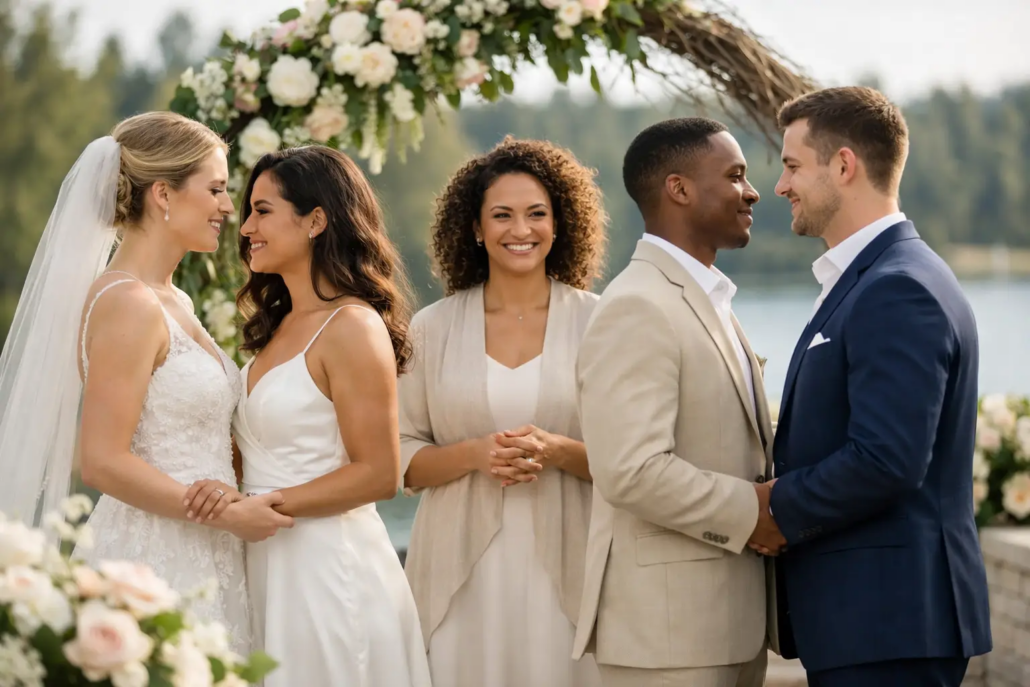
A ceremony can be only ten minutes long and still carry a lifetime of meaning. The difference is not a complicated script or a room full of wedding traditions. It is whether the words, people, and choices feel like they belong to you. This inclusive wedding ceremony guide is for couples who want that feeling without having to manage everyone else’s expectations alone.
For many Seattle and Western Washington couples, “inclusive” means more than using welcoming language. It may mean honoring two cultures without turning either into a performance. It may mean making space for a beloved grandparent, choosing words that feel right for a same-sex couple, including children, or skipping a religious ritual that does not reflect your beliefs. It can also mean planning a ceremony that lets every guest feel considered, while keeping the focus where it belongs: on the two of you.
An Inclusive Wedding Ceremony Guide That Starts With You
Before choosing readings, rituals, or even a ceremony length, decide what you want the experience to feel like. Calm and intimate? Joyful and a little funny? Traditional in structure but secular in language? A bilingual celebration where both families can follow every promise?
Those answers give your ceremony a center. From there, it becomes much easier to decide what belongs and what does not. A ceremony should not be a collection of things you felt obligated to include. It should be a clear reflection of your relationship, your values, and the community that has supported you.
A helpful place to begin is with three conversations. Talk about what you want to honor, what you would rather avoid, and who needs special consideration. You may want to honor a faith tradition, a parent’s heritage, your shared love of the outdoors, or the friends who introduced you. You may prefer to avoid gendered wording, public prayer, references to children, or jokes that would feel uncomfortable in front of family.
None of these choices are too small to discuss. They are the details that make a ceremony feel safe, personal, and unmistakably yours.
Use Language That Fits Your Relationship
The most inclusive ceremony language is not necessarily formal or casual. It is language that is accurate. Your officiant can refer to you as spouses, partners, husbands, wives, or any terms that feel natural. The same care applies to vows, ring exchanges, and introductions after the kiss.
Many traditional scripts still assume a bride and groom, a father giving someone away, or a single definition of marriage. You do not have to use those assumptions just because they are familiar. A parent or chosen family member can offer a blessing. Both partners can be escorted, walk in together, or enter separately. You can also skip an escort entirely.
Think about how you would like your relationship introduced. “Today, we celebrate the marriage of Alex and Jordan” is simple and welcoming. So is language that names the strength of your partnership, the home you have built, or the promises you are choosing to make. There is no need to force your story into someone else’s template.
If you are writing personal vows, aim for honesty over performance. A thoughtful promise about showing up after a hard day can be more moving than a page of polished poetry. If public speaking makes you nervous, share private vows before the ceremony and use shorter, repeat-after-me vows in front of guests. Both approaches are real, and both count.
Make Room for Culture and Faith Without Losing Yourselves
Blending traditions can be beautiful, but it works best when each element has a purpose. Instead of adding a ritual because it looks good in photos, ask what it means to you or your family. A handfasting, lasso ceremony, tea ceremony, breaking of the glass, unity candle, ring warming, or family blessing can create a powerful moment when it is introduced with context and care.
You do not need equal amounts of every tradition for the ceremony to be fair. One partner may have a deeply personal connection to a cultural or religious practice, while the other may not. The goal is mutual respect, not mathematical balance. A brief explanation from the officiant can help guests understand the significance without making the moment feel like a lecture.
Bilingual ceremonies deserve the same intentional planning. Translating every single sentence can make a ceremony longer than you want, especially for an elopement or small wedding. A better fit may be to deliver key moments in both languages: the welcome, a reflection on the couple, the vows, ring exchange, and final pronouncement. Another option is to weave both languages throughout the ceremony so neither side of the family feels like an observer.
For Spanish-speaking families, pronunciation and pacing matter as much as translation. A bilingual officiant who understands the emotional weight of the words can help the ceremony feel connected rather than divided into separate parts.
Include Family, Chosen Family, and Children Thoughtfully
Family involvement should feel like an invitation, not a test of loyalty. A reading, shared blessing, ring warming, or brief acknowledgment can be meaningful ways to include loved ones. If children are part of your life, they might walk in with you, participate in a family vow, or simply receive a special mention during the ceremony.
It also depends on their age and personality. A shy child may not want the pressure of speaking in front of a crowd. A toddler may have strong feelings about following a processional schedule, as toddlers often do. Give children roles that create joy, not stress, and have a backup plan that lets an adult step in if needed.
Chosen family deserves the same recognition as relatives by blood or marriage. Your ceremony can acknowledge the people who helped you become who you are, whether they are lifelong friends, mentors, siblings, parents, or a combination of all of the above. This is particularly meaningful for couples whose family relationships are complicated, distant, or still evolving.
You do not owe guests a detailed explanation of private family circumstances. An experienced officiant can use warm, broad language that honors support and community without putting anyone on the spot.
Plan for Guests to Feel Welcome, Too
An inclusive ceremony considers the guest experience before anyone takes a seat. At an outdoor ceremony in Seattle, that can mean offering clear directions, choosing a location with accessible paths, considering seating for older guests, and having a weather plan that is more substantial than “we will hope for the best.” A little planning protects the relaxed feeling you want on the day.
Accessibility can include physical access, but it is broader than that. Make sure guests can hear the ceremony. Consider whether there is shade, shelter, or a quiet place for someone who may need a break. If you are using readings in another language, a short printed translation or spoken explanation can help everyone stay connected.
Be thoughtful with traditions that ask guests to participate. A ring warming, group response, or collective blessing can be lovely, but it should be optional and clearly explained. Some guests will be delighted to join in; others may prefer to witness quietly. Both are welcome.
The same principle applies to religious language. If prayer is meaningful to you, you can include it while making space for guests of different beliefs. A simple invitation such as, “Please join in prayer or reflection in the way that feels right to you,” is gracious and clear.
Set Boundaries Around Family Expectations
There is a difference between listening to loved ones and handing over the ceremony. Family members may have strong opinions about who walks with whom, whether a religious reading should be included, or how long the ceremony ought to be. Their feelings can be real and still not determine your choices.
When possible, look for a point of connection rather than a compromise that leaves you resentful. Perhaps a parent reads a poem instead of leading a prayer. Perhaps a cultural ritual is included during the reception rather than the ceremony. Perhaps you keep your ceremony secular while inviting a family elder to offer a private blessing before it begins.
Some requests will not fit, and that is okay. Clear, kind boundaries are a gift to yourselves and often a relief to the people helping you plan. Your officiant can also serve as a calming guide, helping explain the flow of the ceremony and keeping the focus on the commitments you are making.
Choose an Officiant Who Listens Closely
A personalized ceremony begins with better questions. Your officiant should want to know how you met, what you admire in one another, what you have overcome, how you want guests to feel, and which words are off-limits. They should also be comfortable discussing pronouns, blended families, religious boundaries, cultural traditions, and bilingual needs without treating any of it as unusual.
Practical flexibility matters, too. A short legal signing at a Seattle park has different needs than a full ceremony with 150 guests in Snohomish County. An elopement on a weekday, a last-minute wedding, and a bilingual family celebration all deserve the same care, even if the format changes. At Forever, Together, personalization is built around your actual plans, not a script you are expected to fit.
The right officiant does more than read words aloud. They create enough structure that you can relax, enough flexibility that the ceremony feels natural, and enough warmth that everyone understands this moment matters.
Your wedding ceremony does not need to represent every person you have ever been or satisfy every tradition your families carry. It only needs to tell the truth about the promise you are making now. Start there, choose what feels generous and genuine, and let the rest be beautifully yours.