
How to Write Heartfelt Wedding Vows Together
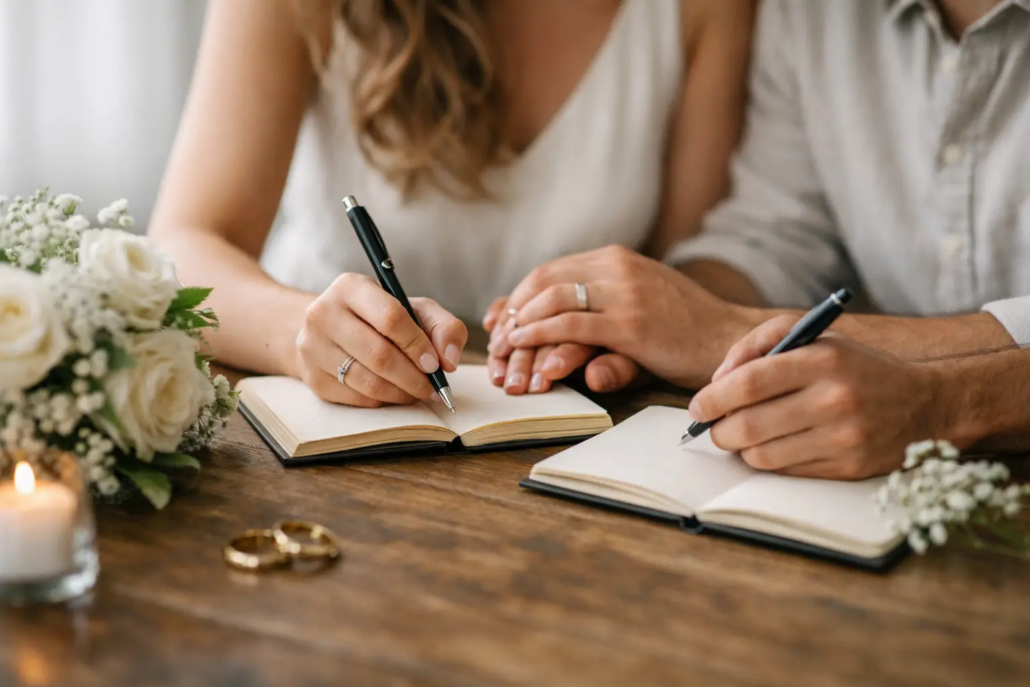
The moment your partner starts reading their vows is not the time to discover they wrote a beautiful three-page letter while you prepared four nervous sentences on the way to the venue. When you write heartfelt wedding vows together, you are not taking away the surprise. You are giving each other the same foundation: a shared understanding of tone, length, promises, and what you want this moment to feel like.
For many couples, vows are the most personal part of the ceremony and the most intimidating part of the wedding plan. The good news is that they do not need to sound poetic, formal, or polished enough for a greeting card. They need to sound like you – honest, specific, and spoken to the person you are choosing.
Why write heartfelt wedding vows together?
Writing vows as a team does not mean composing every line side by side. Usually, the best approach is to agree on a few guidelines together, then write separately. That gives you room for a genuine reaction during the ceremony while keeping one person from accidentally delivering a stand-up routine and the other a solemn speech.
A short conversation upfront can prevent most vow-related stress. Decide whether you want your vows to feel tender, lighthearted, traditional, spiritual, secular, or a little of everything. Talk about a comfortable length, too. For most ceremonies, one to two minutes per person is plenty. It leaves space for emotion without asking your guests to stand in the summer sun for an extra twenty minutes.
This shared plan can be especially helpful when you are blending families, honoring cultural traditions, planning a bilingual celebration, or navigating different comfort levels around public emotion. You do not have to use the same words or make identical promises. You only need to make sure both of you feel seen and supported.
Start with the promises, not the perfect opening
A blank page can make even a very talkative person forget every meaningful thing that has ever happened. Instead of trying to write a sweeping introduction, begin with the promises you want to make.
Think beyond broad statements like “I promise to love you forever.” That sentiment is lovely, but the details are what make vows memorable. What does love look like in your actual life? Maybe it is making coffee before your partner wakes up, cheering them on when they take a risk, being patient through a stressful move, or always saving them the last dumpling.
Your promises can be serious, practical, playful, or all three. A balanced set might include a promise to listen with generosity, to keep choosing adventure, to make space for each other’s dreams, and to keep laughing when life gets messy. The goal is not to predict every challenge ahead. It is to name the kind of partner you intend to be.
If you are stuck, complete these sentences in a notebook without worrying about grammar:
- I knew our relationship was different when…
- One thing I admire about you is…
- You make ordinary life better by…
- I feel most loved by you when…
- I promise to…
- I hope we never stop…
Write more than you need. The strongest material often appears after the obvious first answer.
Choose stories that belong in the ceremony
Specific memories make vows feel alive. A quick story can show your guests something true about your relationship, even if they have known you for years. Maybe it is the rainy first date that turned into a four-hour conversation, the way your partner showed up during a hard season, or the tiny ritual that became part of your home.
Still, not every meaningful story needs a microphone. A good rule is to choose a memory that is easy for guests to follow, kind to both partners, and appropriate for the people in the room. If a story requires a lot of backstory, mentions an ex, or could make a grandparent gasp for the wrong reason, it may be better saved for the reception or a private note.
One or two details are enough. You are writing vows, not an oral history of the relationship. Let the story lead naturally to what it taught you about your partner or the promise you want to make.
Create a shared vow agreement
Before either of you starts drafting, take ten minutes to make a few decisions. You can keep it simple: agree on a target length, decide whether to include humor, and confirm whether you will each say a certain number of promises. Some couples also choose whether to mention family members, faith, or the story of how they met.
There is no universal right answer. Couples planning a short legal signing or an elopement may want deeply personal vows with fewer boundaries because the audience is small. Couples marrying in front of a large group may prefer a clearer structure and a little more privacy. If you are including a religious reading, cultural tradition, or bilingual elements in your ceremony, consider how your personal vows will complement that portion rather than repeat it.
It can also help to agree on one important boundary: no major surprises. A vow is not the place to announce a future move, reveal an expensive gift, make a joke about a past argument, or pressure your partner into a promise they have not discussed. The best surprises are affectionate and safe, not emotionally complicated.
Write separately, then check the balance
Once you have your agreement, set aside separate time to draft. Some people write best early in the morning with coffee; others need a quiet evening after the planning tabs are closed. Give yourselves enough time to step away and return with fresh eyes. Starting three or four weeks before the wedding is ideal, but even a shorter timeline can work when you use a simple structure.
A reliable vow structure looks like this: begin with a statement of love or appreciation, add one brief memory or observation, name what you value in your partner, and finish with your promises. You do not have to follow that order exactly, but it keeps the vows grounded.
When you have drafts, you can share them fully or just compare the basics. Some couples want to read every word ahead of time. Others prefer to protect the surprise and only compare length, tone, and the number of promises. Either choice is valid. The point is to avoid a mismatch that distracts from the moment.
If one set of vows is noticeably longer, do not panic. Edit for clarity before adding filler to the shorter version. A concise, sincere vow will always land better than one padded with extra sentiment. The partner with the longer draft may find that the most powerful lines become clearer when they cut a few paragraphs.
Edit for speaking, not for reading
Vows live out loud. Read yours aloud at least twice, preferably to yourself first and then to someone you trust if that feels helpful. You will quickly notice sentences that are too long, phrases that do not sound like you, and places where emotion may make you pause.
Use everyday language. If you would never call your partner “my beloved” over breakfast, you do not need to say it at the altar. At the same time, do not edit out every meaningful feeling because you are worried about crying. Tears, laughter, a shaky breath, and a pause are all normal. Your guests are there because they care about you, not because they expect a flawless performance.
Print the final version in a readable font, with generous spacing. Put it in a small vow book or on a sturdy card rather than relying on your phone. Ask your officiant where to place it before the ceremony. A calm, experienced officiant can also help you decide where personal vows fit within the ceremony and make sure you have a quiet moment to read them.
Let the vows sound like your marriage
The most moving vows are not the ones that impress everyone in the room. They are the ones that make your partner feel recognized. Whether your wedding is a Seattle backyard gathering, a mountain elopement, a bilingual family celebration, or a simple courthouse-style signing, the words can be warm without being complicated.
At Forever, Together, we have seen that couples relax when they know there is room for their real voices in the ceremony. Give yourselves permission to be sincere, a little funny, and completely yourselves. Then take a breath, look at the person in front of you, and say the promises you are ready to live.