
Personal Vows Versus Traditional Vows Compared
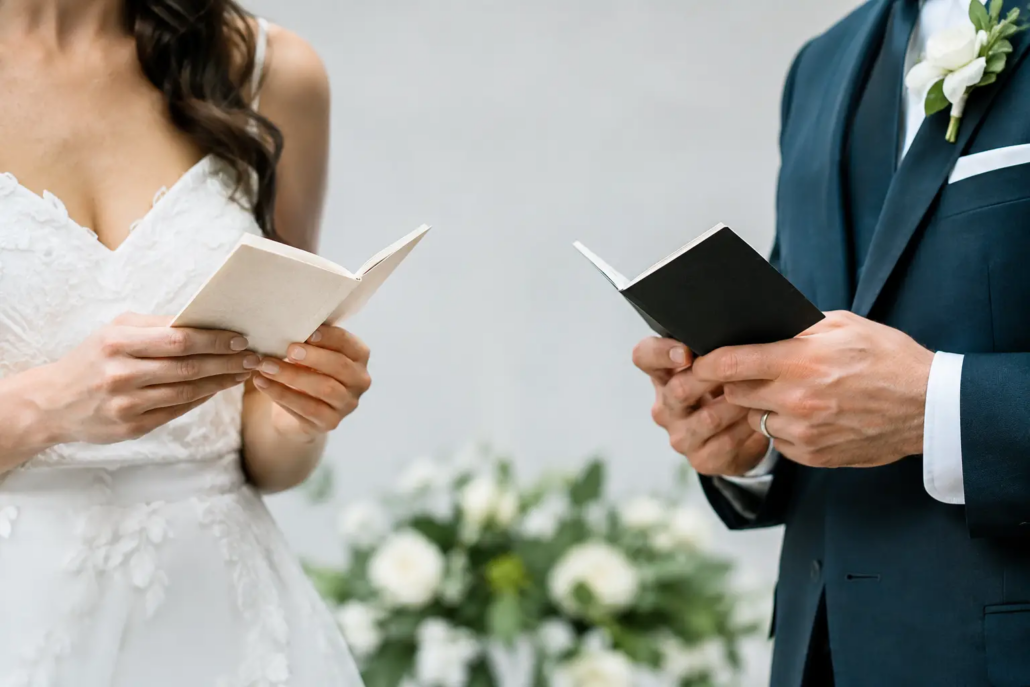
The moment you promise a life together is not the place to perform someone else’s relationship. Yet when couples weigh personal vows versus traditional vows, they often feel pulled between two real desires: saying something unmistakably their own and honoring the gravity, comfort, or family tradition of familiar words. The good news is that this is not an all-or-nothing choice.
A meaningful wedding ceremony can make room for both. The best option is the one that lets you stand in front of each other, your people, and your officiant feeling present rather than worried about getting every word perfect.
What Are Traditional Wedding Vows?
Traditional vows are established promises that have been used in religious, secular, or cultural wedding ceremonies for generations. You may recognize phrases such as “to have and to hold,” “for better or worse,” or “in sickness and in health.” Some faith traditions have specific required wording, while other ceremonies use a nonreligious version of classic commitments.
Their strength is their clarity. Traditional vows name the serious, everyday promise of marriage: choosing one another through joy, illness, uncertainty, growth, and all the ordinary Tuesdays in between. They can feel grounding, especially for couples who want a ceremony with a timeless structure.
They are also wonderfully low-stress. An officiant can lead you line by line, so you simply repeat each promise. For people who become emotional or nervous in front of a crowd, that support can be a huge relief. You still get to look into your partner’s eyes and mean every word without having to remember a speech.
Traditional vows may be especially right for you if faith, cultural heritage, or family continuity is central to your celebration. They can also be a good fit when you are planning quickly, eloping, or keeping the ceremony short and simple.
What Makes Personal Vows Different?
Personal vows are promises written by each partner in their own voice. They can reflect how you met, what you have weathered together, what you admire in one another, and how you hope to show up in your marriage. They might be tender, funny, poetic, plainspoken, or all of the above.
A personal vow does not need to tell your entire love story. In fact, it is usually stronger when it does not. Your guests do not need a ten-minute relationship recap to understand that you love each other. A few specific details can carry far more emotional weight: the way your partner brings you coffee before an early shift, the patience they showed during a hard season, or the promise to keep making room for adventure and quiet nights at home.
The trade-off is vulnerability. Writing personal vows takes time, and reading them aloud can feel exposed. Couples sometimes worry that one set of vows will be funnier, longer, or more polished than the other. That concern is understandable, but matching word counts is not the goal. Honest, intentional promises matter more than symmetry.
Personal Vows Versus Traditional Vows: How to Choose
Start by asking how you want to feel during the ceremony. Do you want the confidence of familiar language? Do you want your guests to hear the particular commitments that define your relationship? Are you comfortable speaking from notes, or does the thought make your palms sweat?
Consider your ceremony as a whole, too. A private elopement at a Washington beach may invite a different style than a formal wedding with 150 guests, grandparents in the front row, and meaningful religious or cultural expectations. Neither setting requires one type of vow, but context can help you decide what feels natural.
Family expectations deserve care, not control. If a parent values traditional wording because it connects them to their own marriage or faith, listen to the meaning beneath the request. You may be able to honor that meaning without giving up your voice. Conversely, if traditional vows feel deeply important to you, do not choose personal vows just because you think you are supposed to be more original.
It also depends on what you want your vows to accomplish. Traditional vows are often broad, communal, and ceremonial. Personal vows are intimate and specific. One says, “I make this enduring commitment.” The other can say, “I promise to make you laugh when the moving boxes are still in the hallway three weeks later.” Both are real promises. They simply carry different kinds of intimacy.
The Blended Approach Many Couples Love
For many couples, the most comfortable answer is a blend. You can exchange traditional call-and-response vows, then read a short personal promise to each other. This creates a reliable ceremony structure while leaving room for your own language.
Another option is to use personalized wording within a classic format. Your officiant might ask each of you whether you promise to support the other’s dreams, offer honesty and kindness, protect time for connection, and face life as a team. The promises are tailored, but you can respond with a simple “I do.”
You can also keep your personal vows private. Some couples exchange letters before the ceremony or read vows alone during a first look, then use traditional vows in front of guests. This is not less meaningful. It is a thoughtful choice for people who want emotional privacy or do not enjoy public speaking.
At Forever, Together, we often help couples create a ceremony that balances those needs, whether that means bilingual vows, a few cherished religious lines in an otherwise secular ceremony, or a fully personal exchange with plenty of breathing room.
How to Write Personal Vows Without Overthinking Them
Give yourselves a simple shared framework before you start. Agree on a rough length, such as one to two minutes each, and decide whether you will include humor, mention family members, or share vows in advance. These small agreements prevent surprises without making the writing feel scripted.
A strong personal vow usually has three parts: a reflection on what your partner or relationship means to you, a few promises for your marriage, and a closing commitment. You do not need to use those labels or follow them rigidly. They are simply a helpful way to move from memory to meaning to promise.
Be specific, but keep the tone generous. A gentle joke about your partner’s devotion to hiking in the rain may land beautifully. A story that would embarrass them, confuse half the room, or bring up a private conflict probably belongs in a card instead.
Read your vows out loud at least once. Written words can look short on a page and feel much longer when you are crying, laughing, or pausing for the crowd. Print them in a large, easy-to-read font, or write them in a vow book with clear spacing. There is no prize for memorizing them. Holding your vows is practical, and it gives you something steady to look at when emotions arrive.
A Few Ceremony Details That Reduce Stress
Your officiant can make the exchange feel calm rather than exposed. Let them know whether you want to read your vows first, alternate promises, or repeat lines after them. If one of you is more nervous, the officiant can offer a reassuring introduction and a pause before you begin.
For a Washington wedding, your ceremony needs to include your agreement to marry before an authorized officiant and two witnesses. Beyond those legal essentials, there is room to shape the moment around your relationship. Your vows can be secular, spiritual, bilingual, brief, detailed, traditional, or entirely original.
If you choose personal vows, bring a backup copy. Hand one to your officiant or tuck it somewhere secure. Wind, happy tears, and last-minute wardrobe changes have a way of making even the best planning feel very human.
The words you exchange do not have to impress every guest. They only need to feel true when you turn toward the person you are choosing. Whether those words have been spoken by generations before you or written in your own handwriting the night before, let them be promises you will be glad to keep.