
What Happens During a Ceremony Rehearsal?
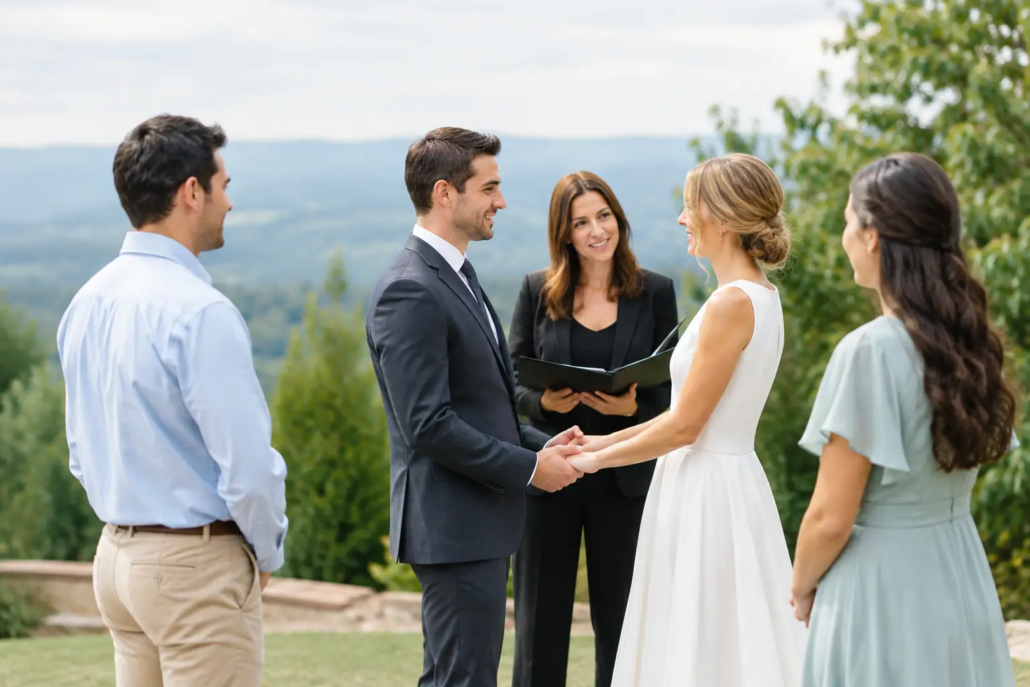
The first time everyone tries to enter a ceremony space together can feel a little like directing traffic in formalwear. That is exactly why a rehearsal helps. If you are wondering what happens during ceremony rehearsal, the short answer is that your key people walk through the plan once, ask the practical questions, and leave knowing where to be when it matters.
A good rehearsal is not a test of anyone’s memory or an attempt to make the wedding feel overly choreographed. It is a calm, low-pressure run-through that gives you, your wedding party, family members, and officiant a shared picture of the ceremony. For many couples, that clarity is what allows the actual wedding day to feel present, personal, and joyful.
What Happens During a Ceremony Rehearsal?
Most ceremony rehearsals take 30 to 60 minutes, depending on the size of your wedding, the number of participants, and how many moving pieces are involved. A simple elopement with just the couple, officiant, and two witnesses may need only a brief conversation. A ceremony with a large wedding party, children, readings, cultural traditions, or a bilingual format may benefit from more time.
Your officiant, planner, coordinator, or venue representative will usually lead the rehearsal. Their job is not to make everyone stand perfectly still. It is to make the sequence clear, solve small logistical issues before they become stressful, and help each person understand their role.
The goal is simple: when the ceremony begins, no one should be wondering, “Am I supposed to go now?”
Who Should Attend?
Invite the people who will have an active part in the ceremony. That usually includes both partners, the officiant, wedding party members, anyone escorting a partner down the aisle, readers, musicians who need timing cues, and children participating as flower kids or ring bearers.
Parents and close family are welcome when they have a role or when their presence will help them feel comfortable. They do not always need to attend, especially if the ceremony is straightforward. If family dynamics are complicated, you can also keep the rehearsal focused on the people who genuinely need the information. Your wedding is not a committee meeting.
If someone cannot attend, do not panic. Share a short written outline afterward or ask a trusted wedding party member to explain their entrance, seating, or reading cue. One absent groomsman or a parent stuck in Seattle traffic does not ruin a rehearsal.
Start With the Ceremony Space
Before anyone walks down the aisle, take a few minutes to orient the group. Identify where the aisle begins, where everyone will stand, where guests will be seated, and which direction the couple will face. Outdoor venues in Western Washington often bring extra considerations, from uneven lawns and gravel paths to wind, weather cover, or a ceremony site that is a short walk from parking.
This is also the time to confirm practical details. Where will bouquets be placed during vows? Who has the rings? Is there a microphone, and who will hold it? Where should readers wait before being called forward? If there is a unity ritual, such as handfasting, a wine ceremony, or a family blessing, make sure the needed items have a clear home.
You do not need to recreate every chair, flower arrangement, or candle exactly as it will appear on the wedding day. You only need enough of the space set up to understand the flow.
Practice the Processional and Recessional
The processional is usually the main event of a rehearsal. Everyone practices entering, walking at a comfortable pace, finding their place, and standing without accidentally blocking the couple or the photographer’s view.
A typical walk-through covers four practical moments:
- The order of entrances, including parents, wedding party members, children, and each partner
- Where each person stands once they reach the front
- What happens during special moments, such as a reading or ring exchange
- How the couple and wedding party exit at the end of the ceremony
Your officiant can help with the details people often forget. For example, the person standing closest to the aisle may need to turn slightly so they are not in every photo. A partner may decide to stand on the side that feels most natural, rather than following a tradition that does not fit them. If one of you is entering with both parents, or with a chosen family member, you can practice the handoff so it feels warm instead of awkward.
The recessional deserves a run-through, too. Once you share your first kiss or are pronounced married, you will be excited. Knowing whether you will pause for a photo, walk directly down the aisle, or be followed by your wedding party keeps that moment from becoming a cheerful traffic jam.
Rehearse the Personal Parts, Not Every Word
You do not need to recite the entire ceremony at rehearsal. In fact, many couples prefer not to hear the full ceremony beforehand, especially if the officiant has crafted personal reflections or surprises into the script.
Still, it helps to practice the transitions. Your officiant can explain when you will step closer together, join hands, exchange rings, or turn toward guests. If you are sharing personal vows, you can decide whether you will hold a vow book, use a microphone, or have the officiant take your bouquet. These small choices can make you feel much more at ease.
For bilingual ceremonies, the rehearsal is a particularly helpful time to clarify pacing and participation. A reading may be offered in Spanish and English, or a family blessing may happen in one language with a brief explanation in the other. Walking through those moments helps everyone follow along while preserving the meaning behind them.
Use the Rehearsal to Make Last-Minute Adjustments
A rehearsal often reveals details that looked easy on paper but need a small change in real life. Perhaps the aisle is narrower than expected. Maybe a young child is unlikely to walk alone. A reader may need larger print, a chair, or a clearer cue. These are not failures. They are useful discoveries.
Be open to simplifying. If a complicated entrance feels like too much, shorten it. If a unity ritual is taking longer than expected, your officiant can adjust the wording or timing. If rain is possible, confirm the backup location and how the processional will work there. Flexibility is not settling for less. It is how you protect the feeling you want on your wedding day.
A Ceremony Rehearsal Is Not a Performance
No one needs to be polished, emotional on cue, or perfectly coordinated. People may laugh, forget where to stand, or ask the same question twice. That is normal. The rehearsal exists so the ceremony can feel less like a production and more like a meaningful moment between the two of you.
It also helps to set expectations with your group. Ask everyone to arrive on time, pay attention during the walk-through, and save unrelated conversations for afterward. Then keep the mood light. Thank them for being there, answer what needs answering, and let everyone get to the rehearsal dinner or a quiet evening before the wedding.
When You May Not Need a Full Rehearsal
A full rehearsal is optional for some weddings. If you are having a legal signing, a very small elopement, or a short ceremony with no wedding party, a brief pre-ceremony review is often enough. Your officiant can meet you at the ceremony site a little early to confirm where to stand, how the license will be handled, and what to expect.
On the other hand, a rehearsal is worth considering when you have many participants, a nontraditional venue, children, multiple entrances, meaningful cultural traditions, or family members who are nervous about their roles. It depends on your comfort level as much as the guest count. A 20-person ceremony with lots of personal elements can need more guidance than a 150-person ceremony with a simple format.
At Forever, Together, we believe the ceremony should be one of the most fun and least stressful parts of planning. A thoughtful rehearsal gives you room to handle logistics ahead of time, so when you finally stand together, you can focus on the faces in front of you and the promise you are making.