
Religious and Secular Wedding Ceremony Choices
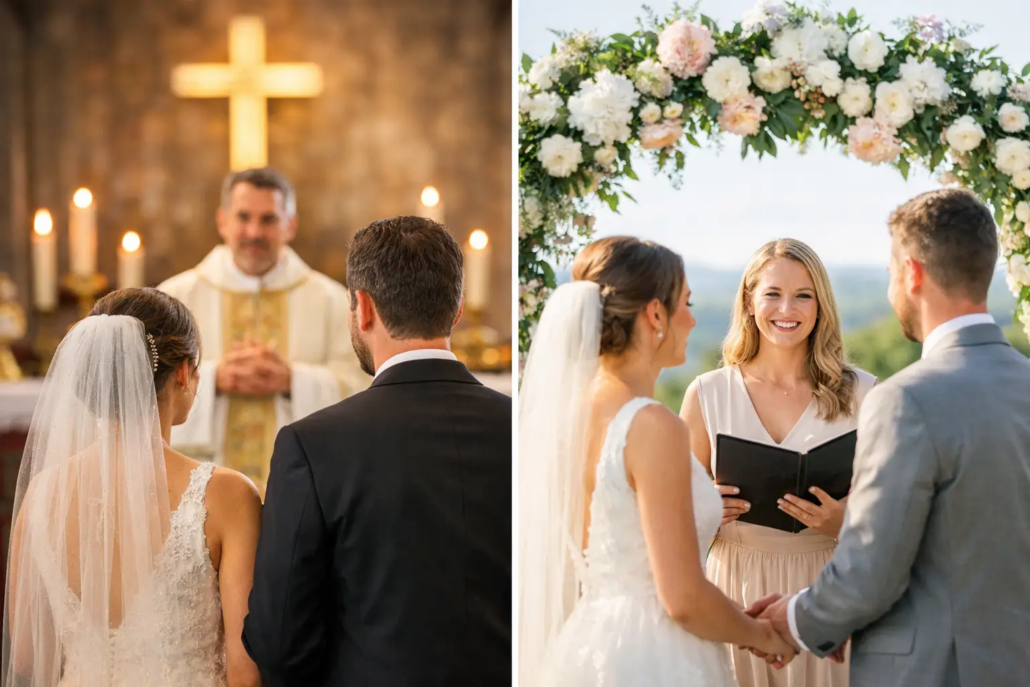
One partner may picture a prayer spoken by a beloved grandparent. The other may want a ceremony that feels warm and meaningful without language that does not reflect their beliefs. Neither vision is wrong, and you do not have to choose between honoring family and being honest about who you are.
A religious and secular wedding ceremony can take many forms: fully faith-based, entirely nonreligious, or thoughtfully blended. The right choice is the one that lets both of you stand in front of your people and recognize your relationship in the words being spoken. With a little intention and the right guidance, this can become one of the most personal, and least stressful, parts of planning your wedding.
Start With What You Want the Ceremony to Feel Like
Before deciding whether your ceremony is religious, secular, or somewhere in between, talk about the feeling you want your guests to carry away. Maybe you want it joyful and lighthearted, reverent and traditional, intimate and emotional, or brief and beautifully simple. Those answers will guide every choice that follows.
It also helps to separate ceremony traditions into two categories: the parts that genuinely matter to you and the parts that feel expected. A tradition can be deeply meaningful because it connects you to faith, culture, or a person you love. But if a reading, ritual, or phrase makes either of you feel like a guest at your own wedding, it deserves a conversation.
You are not required to recreate anyone else’s ceremony. Your wedding can honor where you come from while making room for the life you are building together.
Religious and Secular Wedding Ceremony Options
There is no single formula for a ceremony with faith elements, and there is no rule that a secular ceremony must feel less profound. The difference is not how much emotion the ceremony holds. It is simply the source of the language, readings, rituals, and promises you choose to include.
A religious ceremony
A religious ceremony may include prayers, scripture, blessings, worship music, faith-based marriage teachings, or rituals specific to a religious tradition. For some couples, these elements are central to the promises they are making. They may want a ceremony led within the structure of their faith community or one that incorporates selected sacred elements in a more flexible setting.
If you are planning outside a house of worship, ask early about any requirements from your faith tradition. Some communities have specific expectations around who may officiate, where the ceremony can happen, or which words must be included. Knowing that upfront prevents a frustrating surprise later.
A secular ceremony
A secular ceremony focuses on the couple’s story, values, commitments, and community without religious language. It can include heartfelt readings, personal vows, a ring exchange, music, family participation, and moments of reflection. It can be funny, moving, elegant, and deeply serious without mentioning faith at all.
Many couples choose a secular ceremony because they come from different religious backgrounds, are not religious themselves, or simply want words that feel more personal than traditional. A good secular ceremony is not a generic legal script with a few names added. It should still explain why you are choosing each other and what marriage means to you.
A blended ceremony
For many Seattle and Western Washington couples, the best fit is a blend. You might include a short opening blessing and a secular love story. You might invite a family member to offer a prayer, then exchange vows you wrote yourselves. You might use a cultural ritual with spiritual roots while keeping the rest of the ceremony non-denominational.
Blended ceremonies work especially well when both partners want to make space for different backgrounds. The key is balance. One person’s traditions should not become a footnote, and neither person should feel pressured to speak words that are not true for them.
Build the Ceremony Around Shared Values
The most meaningful ceremonies are not defined by a label. They are built around the values you both recognize in your relationship: kindness, laughter, faith, resilience, family, adventure, service, or the simple relief of having found your favorite person.
Start by discussing a few practical questions together. Do you want references to God, a higher power, or spiritual language? Are there readings, prayers, or songs that are nonnegotiable? Would you like your officiant to tell your story, or would you rather keep the focus on vows and tradition? How involved do you want your guests and family members to be?
Then decide where those choices belong. Faith elements do not have to appear throughout the ceremony to be meaningful. A prayer before the vows, a blessing after the ring exchange, or a reading during a quiet moment may be exactly enough. Likewise, a secular ceremony can acknowledge the importance of family heritage without turning into a religious service.
Meaningful ways to include loved ones
Family participation can help bridge different expectations, particularly when relatives are nervous about an unconventional ceremony. A parent, sibling, grandparent, or close friend might offer a reading, a blessing, a short toast-like reflection, or a cultural welcome.
Choose participants because their involvement will feel good to you, not because you are trying to manage every opinion in the room. The goal is generosity, not performance. If someone is likely to go off-script or make the moment uncomfortable, it is okay to give them a different role, such as an usher, witness, or reader of a pre-approved passage.
Handle Family Expectations With Kind, Clear Boundaries
Conversations about religion can carry more weight than conversations about flowers or seating charts. Your family may see certain traditions as an expression of love, continuity, or identity. You may see the same tradition as something that does not fit your partnership. Both can be true.
Lead with appreciation when you share your plans. You might say, “We know this tradition is meaningful to you, and we want our ceremony to feel meaningful for everyone. We have chosen to include a blessing and a family reading, while keeping the rest of the ceremony reflective of both of us.” Clear language is kinder than vague promises that create false expectations.
You do not need to debate every decision. If relatives have strong preferences, listen respectfully, decide together as a couple, and repeat your decision calmly when necessary. A wedding ceremony lasts a short time. The marriage it celebrates belongs to the two of you.
Plan the Practical Details Early
The ceremony style affects more than the script. It can influence your timeline, rehearsal, music, participant coordination, and officiant selection. A full religious service may have required elements and a set order. A personalized secular or blended ceremony usually offers more flexibility in length and structure.
For an outdoor wedding in Seattle or elsewhere in Western Washington, keep the weather and sound in mind. If a prayer, reading, or bilingual portion matters deeply, make sure guests can hear it. A microphone is not an overly formal extra when your grandmother is offering a blessing or your best friend is reading words you chose together.
If you are getting legally married in Washington, remember that the marriage license process is separate from the style of ceremony. A secular ceremony is just as legally valid as a religious one when the paperwork is handled correctly and the marriage is solemnized by an authorized officiant. Washington licenses generally have a three-day waiting period and are valid for 60 days, so confirm current requirements with the county where you apply.
Let the Words Sound Like You
Whether your ceremony includes scripture, a family blessing, a handfasting, personal vows, or none of the above, the words should sound natural when spoken aloud. You do not need to be poetic. You only need to be sincere.
That is where personalized ceremony support makes a real difference. An experienced officiant can offer options without steering you toward a script that feels borrowed. At Forever, Together, the goal is to help couples create a ceremony with room for tradition, personality, Spanish or bilingual elements, and the occasional well-timed laugh.
Your ceremony does not have to settle every question about faith, family, or identity. It simply needs to give the two of you a true place to begin: side by side, heard clearly, and surrounded by the people who are ready to celebrate your next chapter.