
10 Best Symbolic Ceremony Rituals for Your Wedding
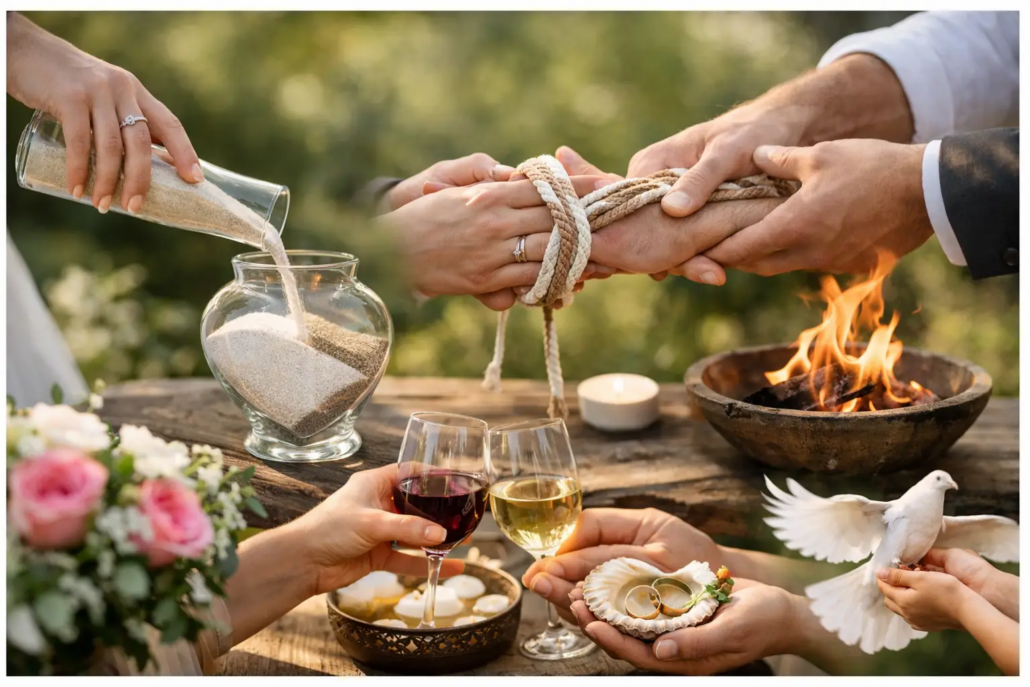
A symbolic ritual can turn a beautiful wedding ceremony into a moment people remember years later: your grandmother reaching for a ribbon, your kids adding soil to a shared planter, or the two of you pausing long enough to hear the water move through the trees. The best symbolic ceremony rituals do not exist to fill time or create a photo opportunity. They give your promises a physical shape.
For couples planning a Seattle or Western Washington wedding, the possibilities are especially wide open. A candle may feel right in a historic venue, while a tree planting may suit a backyard gathering or a celebration near the water. The right choice is less about what is trendy and more about what makes you think, “Yes, that sounds like us.”
What Makes a Symbolic Ritual Meaningful?
A ceremony ritual is a shared action that represents something larger than the action itself: unity, family, memory, faith, home, resilience, or the beginning of a new chapter. It can be spiritual, cultural, secular, bilingual, quiet, playful, or a blend of all of the above.
The strongest rituals have a clear connection to your relationship. Perhaps you have built a life through travel, gardening, cooking, parenting, or weathering hard seasons together. A ritual gives that story a place in the ceremony without requiring either of you to deliver a five-minute speech in front of everyone.
There is also a practical side. Most rituals take two to five minutes, and that is usually enough. If you are hosting an elopement or want a short, simple ceremony, choose one meaningful action rather than adding several. If your ceremony includes children, parents, or a close-knit group, an interactive ritual can make them feel warmly included without turning the ceremony into a production.
10 Best Symbolic Ceremony Rituals to Consider
1. Handfasting
Handfasting involves gently binding your joined hands with one or more cords, ribbons, or pieces of fabric as you make your vows. It has historical roots in Celtic traditions, but it can be adapted in a respectful, personal way for couples of any background.
Each cord can represent a value such as trust, laughter, patience, or shared adventure. Couples sometimes invite loved ones to place the cords over their hands, which is especially moving when family support has been central to the relationship. Keep the wording simple so the visual moment can breathe.
2. Unity Candle
In a unity candle ritual, each partner lights a central candle from two smaller candles. The image is familiar for a reason: two separate lights become one shared flame while still honoring each person’s individuality.
This choice works beautifully for indoor ceremonies and can include parents or children lighting the side candles. It is less practical outdoors, where wind has strong opinions, so consider hurricane glass or a different ritual for a breezy waterfront or mountaintop setting.
3. Sand Blending
A sand ceremony combines different colors of sand in one vessel, creating a keepsake you can display at home. It is simple, accessible, and particularly helpful for blended families because each person can pour a separate color into the same container.
Unlike a candle, sand works well outside. The trade-off is that the final design is somewhat unpredictable, which is part of its charm. Choose colors you genuinely like in your home, not just colors that match the wedding palette for one afternoon.
4. Wine, Whiskey, or Tea Blending
Sharing or blending a favorite drink can represent hospitality, joy, and the life you will build around the table. Wine is a classic option, but it is not the only one. Coffee-loving couples may prefer a tea ceremony. A pair who enjoy local distilleries may choose whiskey. Couples who do not drink alcohol can use sparkling cider, a special blend of tea, or another meaningful beverage.
This ritual can be elegant and brief. It can also honor family heritage when a particular drink is connected to a culture, a grandparent, or a beloved tradition. If you plan to drink from one glass, make sure the timing feels comfortable and does not interrupt your vows or photographs.
5. Tree Planting or a Shared Plant
For couples who love the Pacific Northwest, planting a tree, shrub, or houseplant can feel wonderfully fitting. You add soil together and acknowledge the ongoing care required for something living to grow.
A potted plant is often easier than planting directly in the ground, especially at a rented venue or during a rainy season. Take it home after the wedding, and choose something suited to your actual light levels and schedule. A symbolic ritual should not become a guilt-inducing plant emergency six weeks later.
6. Love Letter and Wine Box
Before the ceremony, each of you writes a private letter to the other. You seal the letters in a box, often with a bottle of wine or another small memento, and agree to open it on a future anniversary or during a difficult season when you need to remember the promises you made.
This is an intimate option for couples who prefer not to speak every feeling aloud in front of guests. You can invite guests to write notes as well, but keep the process organized. A designated box and a clear deadline prevent the ritual from becoming a last-minute hunt for envelopes.
7. Ring Warming
Ring warming invites guests to hold your wedding rings briefly and offer a silent wish, blessing, prayer, or good thought before the exchange. It is a lovely choice for a small wedding where the rings can move through the group without taking too long.
For larger celebrations, limit the ritual to immediate family or the wedding party. Assign one trusted person to guide the rings and return them before the vows. These are, after all, the only rings you need at that exact moment.
8. The Warming of the Rings With Family Heirlooms
A variation on ring warming is to place the rings on a meaningful family item, such as a piece of lace, a small tray, or a cloth made from a loved one’s garment. This can quietly honor someone who has passed away or acknowledge a family connection without making the ceremony feel heavy.
Ask permission before using an heirloom, and avoid anything delicate that could be damaged outdoors. A short explanation from your officiant is enough. The sentiment does not need a long introduction to land.
9. Stone or River Rock Ceremony
Guests can each hold a small stone during the ceremony and offer a silent intention for your marriage. At the end, the stones become part of a garden, a bowl in your home, or a display from your wedding day.
This ritual is grounded, inexpensive, and well suited to a Pacific Northwest setting. It also gives guests a role without asking anyone to come forward or speak publicly. If children are involved, make sure the stones are smooth and large enough not to disappear into tiny pockets.
10. A Bilingual Blessing or Shared Words
Not every symbolic ritual needs an object. For bilingual families, hearing a blessing, reading, or set of promises in English and Spanish can be one of the most meaningful moments of the ceremony. It allows more guests to feel fully present in the words that matter most.
The key is thoughtful translation, not word-for-word duplication. A bilingual officiant can help shape language that sounds natural in both languages and honors the emotional tone you want, whether that is spiritual, secular, humorous, or tender.
How to Choose From the Best Symbolic Ceremony Rituals
Start with one question: what do we want this moment to say? If your answer is “our families are becoming one,” sand blending, ring warming, or a group stone ritual may fit. If the answer is “we have grown through a lot and keep choosing each other,” handfasting, letters, or planting something living may feel more honest.
Then consider the setting and guest count. A flame-based ritual may be difficult outside. A ring-passing ritual can feel intimate with 20 guests and cumbersome with 150. A tree planting may require cleanup, water, and a plan for transporting the pot. None of these details make a ritual less romantic. They are what allow the moment to happen calmly.
You also do not have to choose a ritual because family members expect one. It is possible to honor a cultural or religious tradition while adapting it to fit your beliefs and ceremony style. It is equally okay to skip rituals entirely if your vows, readings, and ring exchange already say what you need them to say.
At Forever, Together, we often encourage couples to choose the ritual that makes them feel more connected, not more performative. The best ceremony moments are rarely the most complicated ones. They are the ones where you can look at each other, take a breath, and recognize your real life in the promises you are making.
Choose one action that feels like home, give it enough space in the ceremony, and let it become yours.