
How to Plan Wedding Elopement Without Stress
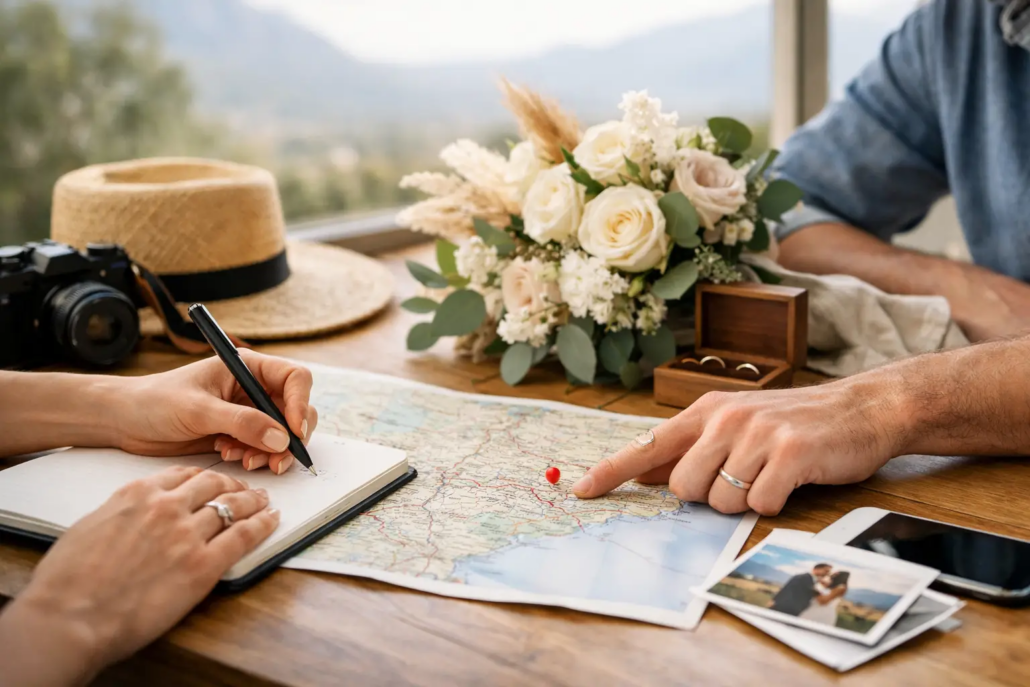
A lot of couples decide to elope right after one very specific moment: they realize they care more about being married than producing a full-scale event. If that sounds familiar, learning how to plan wedding elopement starts with giving yourselves permission to keep things simple, meaningful, and true to who you are.
Eloping does not mean your wedding matters less. It usually means the opposite. You are stripping away what does not fit so you can focus on what does. That can look like a two-person ceremony on a bluff above Puget Sound, a quiet signing in a city park, or a small gathering with a few loved ones and a custom ceremony that still feels deeply personal.
How to plan wedding elopement step by step
The easiest way to approach elopement planning is to make a few clear decisions in the right order. Couples often get overwhelmed because they start with too many Pinterest ideas and not enough real-world structure. A calm plan works better.
Start with your version of intimate
Before you choose a location or outfit, decide what elopement means to you. For some couples, it means just the two of them plus an officiant and witnesses. For others, it means 10 to 20 guests, dinner afterward, and photos that still feel special without the scale of a traditional wedding.
This choice affects almost everything else – budget, timeline, permit needs, travel, seating, sound, and ceremony design. It also helps you avoid a common problem: planning a small wedding while calling it an elopement. There is nothing wrong with either option, but they work best when you are honest about what you want.
Ask yourselves a few practical questions. Do you want privacy or a little audience? Do you want to hike to your ceremony spot or wear great shoes and stay close to parking? Do you want to include family members in person, later, or not at all? Those answers create your planning framework.
Choose the feeling before the location
Couples often start by searching for the perfect view. A better approach is to choose the experience first. Do you want urban, coastal, forested, mountain, indoors, formal, relaxed, spontaneous, or carefully timed around sunset?
In Seattle and Western Washington, the scenery is not the problem. The challenge is choosing a place that fits your priorities. A dramatic overlook may sound romantic until you factor in wind, mud, crowds, or limited accessibility. A quieter garden or shoreline may be a better fit if you want a calm ceremony and time to actually be present.
Think through privacy, travel time, weather backup options, restroom access, parking, and whether your guests can comfortably reach the site. If you are inviting older relatives, young kids, or anyone with mobility needs, that matters. The best location is not just beautiful. It supports the kind of moment you want to have.
Understand the legal pieces early
This is the unglamorous part, but it saves stress later. In Washington, you will need a marriage license, and timing matters. You cannot leave the legal part until the last minute and hope it works itself out.
Make sure you know where to apply, what identification is required, what the waiting period is, and when the signed license must be returned after the ceremony. If you are planning quickly, this step becomes even more important. Short-notice weddings can absolutely happen, but the legal timeline still needs to line up.
You will also need an officiant authorized to perform the ceremony and, in Washington, two witnesses. If you are eloping privately, couples sometimes forget that witness requirement until surprisingly late in the process.
Build a ceremony that feels like you
One of the biggest misconceptions about elopements is that they have to be bare-bones. They can be short, yes, but short does not have to mean generic.
A meaningful elopement ceremony might include a welcome, a few words about your relationship, personal vows, a ring exchange, a bilingual element, a family acknowledgment, or a simple ritual that reflects your values or culture. Even a 10-minute ceremony can feel intimate and memorable when it sounds like you instead of a script pulled off a shelf.
If one of you wants something very simple and the other wants more emotional depth, that is normal. This is where a good officiant makes a real difference. You want someone who can guide the process, keep things easy, and create a ceremony that lands in the right place emotionally without turning it into something performative.
For couples in Seattle and Western Washington, this is often where working with an experienced, flexible officiant takes pressure off fast. Forever, Together helps couples shape ceremonies that feel personal, inclusive, and manageable, whether the plan is a legal signing, a bilingual elopement, or a fully customized small ceremony.
Decide who is included and how
Guest count is often the trickiest emotional part of elopement planning. The practical question is small. The family question is sometimes not.
If you are not inviting family, decide early how you want to communicate that choice. Most people respond better when they can hear that the decision is about keeping the day small and low-stress, not about excluding them personally. If you are including just a few people, be clear and consistent. A guest list built on guilt tends to grow fast.
There are also middle-ground options. Some couples elope privately and celebrate later with a dinner or casual party. Some invite immediate family only. Some livestream the ceremony for relatives who want to witness the moment without changing the intimacy of the day.
It depends on your family dynamics, your budget, and your emotional bandwidth. There is no perfect formula. There is only the version that protects your peace while still feeling respectful.
Budget for what matters most
Elopements are often more affordable than traditional weddings, but affordable does not automatically mean cheap. Costs still vary depending on location, travel, photography, florals, attire, permits, hair and makeup, dining, and ceremony customization.
The smartest way to budget is to choose two or three priorities and protect those first. For one couple, that might be photography, a private location, and a personalized officiant. For another, it might be dinner at a beautiful restaurant, upgraded attire, and a bouquet that feels special.
This is where trade-offs help. If you care deeply about photos, maybe you keep decor minimal. If the ceremony itself is the centerpiece, invest there and skip extras that do not affect the experience. If the weather is unpredictable and you hate uncertainty, an indoor option may be worth more than a dramatic but risky outdoor setting.
Plan for Washington weather like a local
Western Washington is beautiful, but it likes to keep couples humble. Even in warmer months, weather can shift quickly. Rain is not always a problem, but pretending it cannot happen usually is.
Build a backup plan from the beginning. That might mean clear umbrellas, a covered outdoor location, flexible timing, or an indoor alternative you genuinely like. If your ceremony only works in perfect weather, it is a fragile plan.
The same goes for timing. If you want a popular public location, think carefully about crowds and lighting. A weekday elopement can feel quieter and more relaxed than a Saturday afternoon. Sunset can be gorgeous, but only if it leaves enough time for travel, parking, and the ceremony itself.
Keep the timeline light
One of the best parts of eloping is not packing the day so full that you barely experience it. You do not need a military-grade schedule. You need enough structure to stay calm.
Leave room for getting ready without rushing. Give yourselves time to travel, breathe, and arrive mentally before the ceremony starts. If you are doing photos, decide whether you want them before, after, or woven naturally into the day. If you are sharing a meal afterward, choose a place and make the reservation early.
The goal is not to optimize every minute. The goal is to create a day that feels spacious enough to remember.
Small details still matter
Even a simple elopement benefits from intention. Write your vows in a format you can actually read outdoors. Bring your rings in a secure box or pouch. Confirm who is holding the marriage license. Double-check permit rules if your location requires them. Wear something you can move in comfortably, especially if your setting involves stairs, trails, or uneven ground.
And if you are worried about crying, wind, or both, welcome to the club. That is not a planning failure. That is a wedding.
When to ask for help
If planning your elopement is starting to feel heavier than expected, that is a sign to bring in support, not a sign you are doing it wrong. A good officiant, photographer, or planner can help with far more than logistics. They can help you make decisions, reduce second-guessing, and keep the ceremony grounded in what matters to you.
Elopements may be smaller, but the emotions are not. You are still making a big promise, often while balancing family opinions, budget questions, weather variables, and legal details. You do not have to sort through all of that alone.
The best elopements feel easy on the surface because the right pieces were handled with care behind the scenes. If you keep your focus on the experience you want, not the expectations you are trying to escape, your day has a much better chance of feeling calm, personal, and genuinely joyful.
Start there. The rest gets simpler.