
Same Sex Wedding Ceremony Example That Feels Real
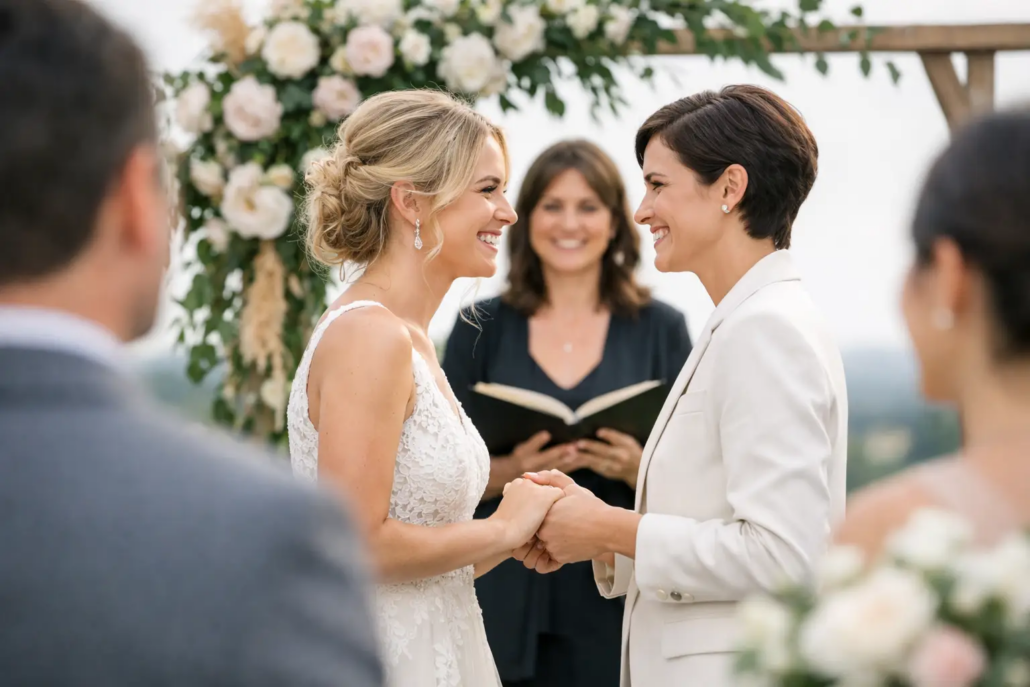
If you are searching for a same sex wedding ceremony example, chances are you do not want a stiff script that could belong to anyone. You want something that sounds human, feels like your relationship, and gives you a clear place to start without boxing you into a formula. That is exactly where a good ceremony should begin – with your story, your people, and the tone you actually want for the day.
Some couples want heartfelt and traditional. Some want short, modern, and low-pressure. Some want to honor family, culture, or faith without stepping into language that does not fit them. A strong ceremony can hold all of that. The goal is not to find the one perfect script. It is to build a ceremony that sounds like the two of you.
A same sex wedding ceremony example you can build from
Here is a sample ceremony written in a warm, non-denominational style. It works well for an elopement, small wedding, or larger celebration, and it can easily be shortened or expanded.
Sample ceremony script
Welcome, everyone. We are here today to celebrate the marriage of Alex and Jordan.
Thank you for being here to witness this moment and to support them as they begin this next chapter together. A wedding ceremony is not just a formality. It is a public promise, a gathering of the people who matter most, and a chance to pause and recognize a love that has been built day by day.
Alex and Jordan have created a relationship rooted in laughter, honesty, partnership, and care. Like every strong couple, they have learned each other’s strengths, quirks, rhythms, and soft spots. They have chosen each other not just for the easy days, but for the ordinary days, the stressful days, and the days that ask a little more of love.
Marriage is not about perfection. It is about showing up. It is about listening when it would be easier to assume, being kind when life feels busy, and continuing to choose one another with intention. Today is a celebration of that choice.
Alex and Jordan, as you stand here together, take a moment to look at each other. This is one of those memories that tends to stay bright. Right here, with your people around you, you are making promises that will carry into your everyday life – into quiet mornings, shared meals, hard conversations, inside jokes, road trips, laundry piles, and all the ordinary moments that become a life.
Officiant to Alex: Do you, Alex, take Jordan to be your lawfully wedded spouse, to love and support them, to honor and respect them, and to share in all that life may bring?
Alex: I do.
Officiant to Jordan: Do you, Jordan, take Alex to be your lawfully wedded spouse, to love and support them, to honor and respect them, and to share in all that life may bring?
Jordan: I do.
If the couple is exchanging personal vows:
Alex and Jordan will now share the vows they have written for one another.
Partner One shares vows.
Partner Two shares vows.
If there are rings:
These rings are simple circles, with no beginning and no end. Let them be a reminder of the promises made here today and of the steady, daily love that gives those promises meaning.
Alex, please place the ring on Jordan’s finger and repeat after me:
Jordan, I give you this ring as a sign of my love and commitment. Today and every day, I choose you.
Jordan, please place the ring on Alex’s finger and repeat after me:
Alex, I give you this ring as a sign of my love and commitment. Today and every day, I choose you.
By the promises you have made, by the love you have shared, and by the commitment you have declared here today, it is my great joy to pronounce you married.
You may kiss.
Family and friends, it is my honor to present Alex and Jordan, married at last.
Why this ceremony works
This same sex wedding ceremony example works because it is specific in feeling without being overly narrow in language. It does not rely on gendered roles, outdated assumptions, or awkward phrasing. It also leaves room for personality.
That balance matters. Some couples want a ceremony that feels elevated and emotional. Others want it short enough that nobody starts sweating in the sun or worrying about what to do with their hands. Both are valid. The best script is the one that fits the room.
You will also notice that the language centers partnership rather than tradition for tradition’s sake. That tends to feel more natural for couples who want a ceremony built around equality, choice, and real life together.
How to personalize a same sex wedding ceremony example
A sample script is useful, but the details are what make guests say, “That felt so them.” Personalization does not have to mean writing a twenty-minute ceremony from scratch. Usually, a few thoughtful choices do more than a lot of filler.
Start with your relationship, not a template
Think about how you want people to feel during the ceremony. Warm and teary? Relaxed and smiling? Formal but not stuffy? Once that tone is clear, the wording becomes much easier.
It also helps to identify what you do not want. Some couples want to skip anything that feels performative. Others want to avoid heavy religious language or any mention of obedience, hierarchy, or rigid roles. That clarity saves time and stress.
Decide how much story to include
A short relationship story can make a ceremony feel grounded and intimate. This might include how you met, what changed as your relationship grew, or what makes your partnership strong. The sweet spot is usually a few meaningful details, not a full biography.
If one of you is private, keep it simple. If you both love storytelling, add a bit more texture. It depends on your comfort level and your crowd.
Make vows realistic
Personal vows do not need to sound like poetry to be moving. In fact, the most memorable vows are often the most honest. Promising to be patient, keep showing up, make each other laugh, or take on life as a team can land harder than a dramatic speech.
If writing your own vows feels stressful, you can use repeat-after-me vows and still have a deeply personal ceremony. There is no prize for making wedding planning harder.
Include family in a way that feels good
Family dynamics can be loving, complicated, or a little of both. A ceremony can acknowledge parents, children, chosen family, or longtime friends without forcing a moment that feels uncomfortable.
You might include a welcome statement honoring everyone who helped support your relationship. You might ask a loved one to do a reading. Or you might keep the ceremony centered on the two of you and save family involvement for later. There is no single right answer here.
Common ceremony choices for same-sex couples
Many couples planning same-sex weddings want freedom from outdated scripts, but they still want structure. That is completely normal. A ceremony does not need to be unconventional to feel affirming. It just needs to be intentional.
Some couples choose a traditional order with updated language. Others want a modern ceremony with a quick welcome, short address, vows, rings, and pronouncement. Some include a unity ritual, bilingual elements, or a brief acknowledgment of the legal and personal significance of being able to marry openly and joyfully.
The trade-off is usually between length and depth. A ten-minute ceremony can feel clean and elegant. A fifteen- to twenty-minute ceremony gives more room for storytelling, readings, or cultural elements. Neither is better. It depends on what matters most to you.
What to ask your officiant
A ceremony gets much easier when your officiant knows how to guide the process instead of just reading a script. Ask how they handle customization, whether they are comfortable adjusting language around family, faith, or cultural traditions, and how they help couples who are not sure what they want yet.
You can also ask practical questions that people often forget until the last minute. How long will the ceremony run? Can they help with vow structure? What happens if you want something heartfelt but still light? Can they pivot for a short-notice wedding, outdoor setting, or small guest count?
For couples in Seattle and Western Washington, that flexibility matters. Weather shifts, timelines move, family travel gets messy, and sometimes the most meaningful ceremonies are the ones that stay calm and simple when the day does not go exactly to plan. That is a big part of what we focus on at Forever, Together.
When a sample script is enough, and when it is not
Sometimes a same sex wedding ceremony example is all you need. If you are planning a courthouse-style signing, a small elopement, or an intimate ceremony with very little formal structure, a clean sample can be the perfect foundation.
But if you are blending families, including children, balancing secular and religious expectations, or trying to create something bilingual or culturally specific, it usually helps to shape the ceremony more carefully. That extra thought can turn a nice ceremony into one that feels deeply right.
Your wedding ceremony does not need to prove anything to anyone. It does not need to follow old language that never fit, or perform a version of marriage that feels borrowed. It can be simple, personal, joyful, and fully yours – and that is more than enough.