
Inclusive Ceremony Language That Feels Like You
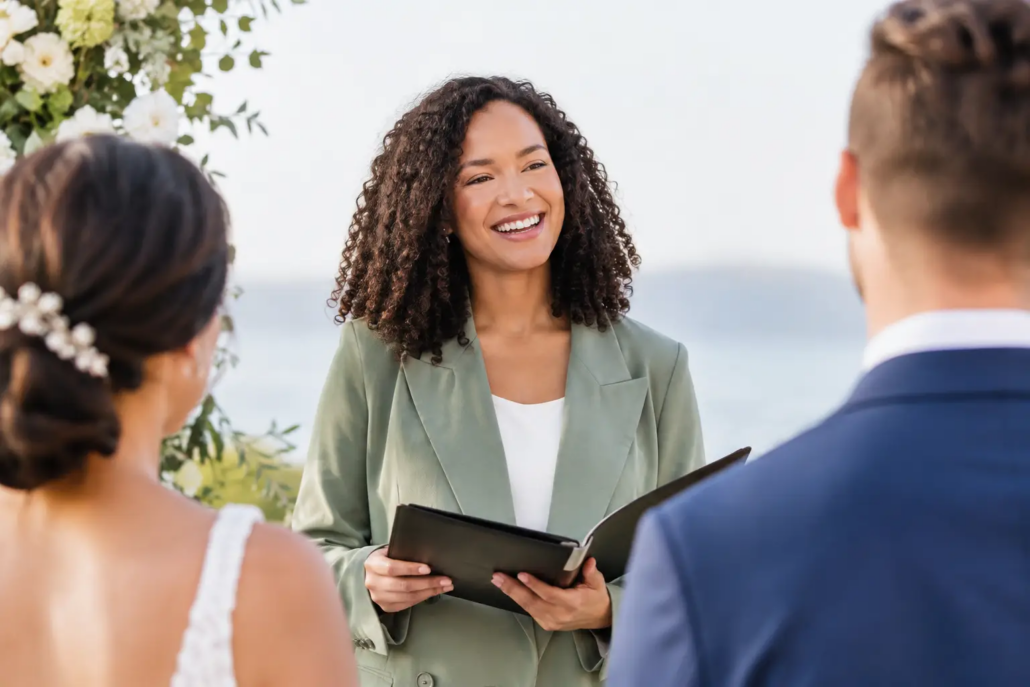
A ceremony can be beautifully written and still feel slightly off if it makes assumptions about who you are, who raised you, what marriage means to you, or how your family fits together. Inclusive ceremony language is what helps the words at the heart of your wedding make room for your real life – not a stock version of it.
For many couples, this is not about being formal or careful for the sake of it. It is about hearing your names, values, relationships, and promises reflected with warmth. The result is a ceremony where you can relax, look at one another, and think: yes, this is us.
What inclusive ceremony language really means
Inclusive language is language that welcomes people without making unnecessary assumptions. In a wedding ceremony, that can mean avoiding gendered roles when they do not fit, recognizing chosen family, honoring faith without requiring every guest to share it, and speaking about marriage in terms that feel true to the couple standing at the front.
It is also more personal than swapping one word for another. Calling everyone “loved ones” instead of “ladies and gentlemen” can be a thoughtful choice, but a genuinely inclusive ceremony considers the full picture. Who is being recognized? Which traditions matter? Are there complicated family relationships to navigate? Is one partner religious and the other secular? Will guests speak Spanish, English, or both?
There is no single correct script. Some couples want traditional language such as “husband and wife.” Others prefer “spouses,” “partners,” or simply their names. Some want a prayer, a reading from a beloved faith tradition, or a brief moment of silence. Others want a fully secular ceremony that centers friendship, commitment, and the life they are building. The right choice is the one that feels honest, not the one that checks the most boxes.
Start with the words that describe you
The easiest place to begin is with how you want to be named during the ceremony. This may sound small, but it affects the entire tone.
Your officiant can use your first names, your full names, “the couple,” “these two,” “partners,” “fiancés,” or the terms you use with each other. If one or both of you use a different name than relatives expect, the ceremony is also a meaningful place to establish the name you want your community to use.
Titles and pronouns deserve the same care. A couple may use she/her, he/him, they/them, a mix of pronouns, or no pronouns in the ceremony at all. The most graceful approach is usually the least performative one: use the correct language naturally and consistently. Your wedding is not a lesson for your guests. It is a celebration of your relationship.
Traditional labels can still have a place if you love them. A bride marrying a bride may both proudly use “bride.” A groom may want to be introduced as a husband. Inclusive language does not mean stripping away words that feel joyful or meaningful. It means you get to choose them.
Keep the legal portion simple
In Washington, the legal requirements for a marriage ceremony are straightforward, which leaves plenty of room for personal expression. Your officiant can use whatever wording is needed to clearly perform the marriage while making the rest of the ceremony sound like you.
That flexibility is especially helpful for couples who want a short legal signing before a larger celebration, an elopement with a few loved ones, or a full ceremony with personal vows and readings. Meaningful does not have to mean lengthy, and inclusive does not have to mean complicated.
Make space for every kind of family
Many wedding scripts default to phrases like “your parents” or “the two families joining together.” For some couples, those words are perfect. For others, they can leave out stepparents, grandparents, siblings, chosen family, estranged relatives, deceased loved ones, or the person who truly showed up when it mattered.
More flexible language gives you options. Your officiant might welcome “the family, friends, and community who have gathered here,” or acknowledge “the people who have loved and supported you on your journey.” This honors the room without forcing anyone into a role that does not fit.
If you want to recognize specific people, you can do that with care. You might thank parents and stepparents individually, mention a grandparent who helped raise you, or include a brief remembrance for a loved one who cannot be there. Specificity often feels more moving than a broad, traditional phrase, particularly when your family story is layered.
The same goes for processional choices. There is no rule that says someone must be “given away.” You can walk in together, walk alone, enter with a parent, be escorted by a sibling, or have your wedding party lead the way. If a loved one accompanies you, your officiant can frame it as support, celebration, or a blessing rather than ownership or transfer.
Write promises that honor equality and consent
The heart of a ceremony is the commitment you are making. Older scripts sometimes lean on language about obedience, possession, or roles that may not reflect a modern partnership. Couples can choose vows that speak more clearly about mutual care, shared responsibility, respect, delight, and the decision to keep choosing one another.
That does not mean every vow needs to sound serious. A little humor can make a ceremony feel wonderfully human. If you both love hiking, cooking, old movies, board games, or cheering for rival teams, those details can find their way into a personal story or vows. The key is that the humor should invite your guests in, not embarrass either partner.
A strong vow exchange can be traditional, entirely custom, or a blend of both. Some couples repeat meaningful promises after their officiant because nerves make it hard to speak from memory. Others write their own vows and keep them private until the ceremony. Neither option is more romantic. It depends on what helps you be present.
Honor culture, faith, and language without flattening them
Couples often bring more than one cultural or spiritual background to their wedding day. A thoughtful ceremony does not have to treat those differences as a problem to solve. It can honor the traditions that have shaped you while remaining welcoming to everyone present.
Perhaps you include a blessing, a handfasting, a lasso ceremony, a unity ritual, a family reading, or a cultural wedding tradition passed down through generations. Perhaps you include none of those things, but speak openly about the values you share. Both are valid.
Bilingual ceremonies need special attention because translation is not always a word-for-word exercise. A phrase that feels natural and heartfelt in English may carry a different rhythm or level of formality in Spanish. Rather than repeating every sentence twice, some couples choose key moments for both languages: the welcome, family acknowledgment, vows, ring exchange, or closing pronouncement. This keeps guests included while allowing the ceremony to move comfortably.
If faith is part of one partner’s life but not the other’s, balance matters. You might include one reading, blessing, or prayer and explain its personal significance, rather than building the entire ceremony around language that only part of the room understands. When a tradition is offered with intention, it can feel generous rather than exclusionary.
Consider accessibility in the words and the moment
Inclusive ceremonies also consider how guests will receive what is being said. Clear, plainspoken language is easier for everyone to follow, especially outdoors near Puget Sound, in a lively reception space, or at a ceremony with young children and older relatives.
Your officiant can use a microphone, pause after meaningful lines, face guests when speaking, and provide a printed program when helpful. If a guest uses ASL interpretation, captions, or another accommodation, planning ahead makes the experience much smoother. The goal is not a flawless production. It is making sure the people you love can participate in the moment.
Be thoughtful with participation, too. A call-and-response affirmation, a ring warming, or a group blessing can be lovely. But guests should always have a comfortable way to opt out, especially if they do not share a religious belief or if public participation feels difficult. An invitation is warmer than an expectation.
How to work with an officiant on inclusive wording
You do not need to arrive with a completed script or the perfect vocabulary. A good ceremony-planning conversation can begin with a few honest answers: What words feel like you? What language definitely does not? Who do you want to recognize? Are there traditions you hope to include, adapt, or avoid?
It also helps to name sensitivities early. If divorced parents need separate acknowledgment, if a family member has recently died, if a particular relative may use the wrong name or pronouns, or if you want to avoid religious language entirely, your officiant can plan with care. These are not awkward details. They are the details that help a ceremony feel safe and personal.
At Forever, Together, we believe the ceremony should be one of the most fun and least stressful parts of planning your wedding. That starts with listening closely, offering clear options, and shaping language that sounds natural when spoken aloud.
Your ceremony does not need to represent every part of your identity, family history, or future in fifteen minutes. It simply needs to tell the truth about the commitment you are making and welcome the people who are there to witness it. Choose words that let you both breathe a little easier. Those are usually the words your guests remember, too.