12 Meaningful Handfasting Ceremony Ideas to Make Yours
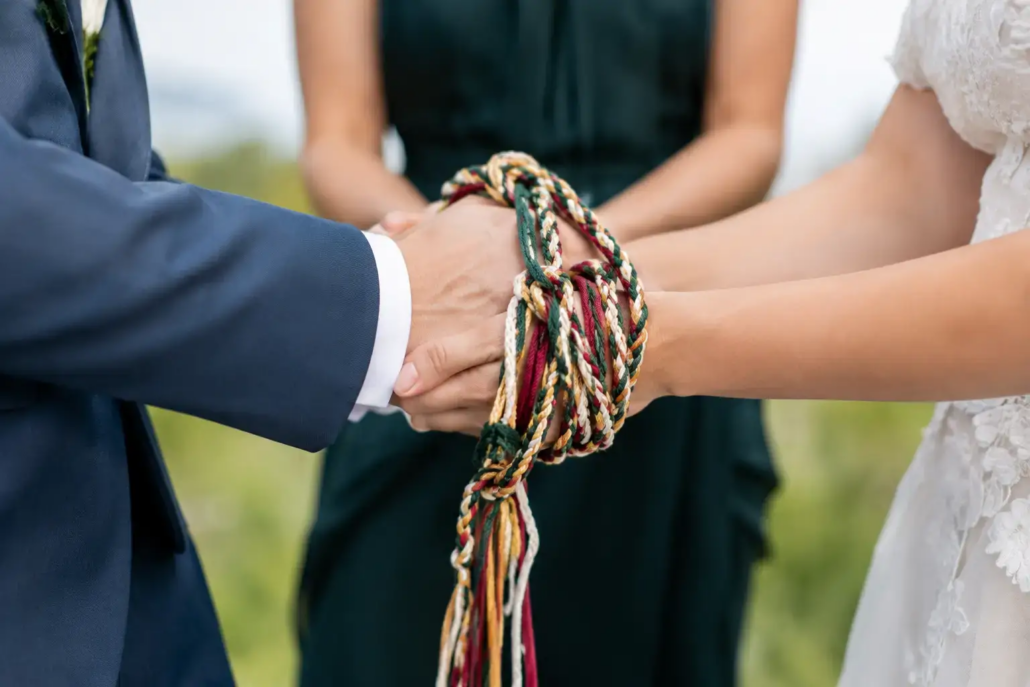
A handfasting can turn a few quiet minutes of your wedding ceremony into the part guests remember most: your hands joined, your people close, and words that actually sound like the two of you. The best meaningful handfasting ceremony ideas are not about making the ritual more elaborate. They are about choosing details that carry real weight for your relationship, while keeping the moment comfortable, clear, and true to you.
Handfasting has Celtic associations and is widely embraced today by couples of many backgrounds. It can be spiritual, secular, traditional, playful, bilingual, or wonderfully simple. It is also flexible enough for a mountaintop elopement, a Seattle backyard wedding, or a full celebration with a room full of loved ones.
Start with the meaning you want to hold
Before selecting cords or searching for readings, decide what you want the act of binding hands to represent. For some couples, it is the joining of two independent lives. For others, it is a promise to choose one another through change, joy, conflict, parenthood, grief, and all the ordinary Tuesdays in between.
A handfasting is symbolic. In Washington, it does not replace the legal parts of a marriage ceremony, such as the declaration of intent and signing the marriage license. That is actually good news: it means you can shape this ritual without worrying that there is one correct script or sequence.
12 meaningful handfasting ceremony ideas
1. Choose cords with a story behind them
Use ribbons, fabric strips, braided rope, or cords in colors you simply love. Meaning can come from color symbolism, but it does not have to. A strip of fabric from a parent’s wedding dress, a piece of tartan honoring family heritage, or ribbon from a favorite shared trip can feel far more personal than a color chart.
If you use sentimental fabric, choose a sturdy backing or have it sewn into a cord. Delicate heirlooms deserve protection, especially if there may be wind, rain, happy tears, or enthusiastic hugs afterward.
2. Make one cord together
Creating a cord together before the wedding can be a lovely low-pressure ritual during the planning season. Braid three strands to represent your past, present, and future, or select materials that reflect qualities you want to bring into marriage: patience, laughter, courage, tenderness, and trust.
You do not need to explain every strand to guests. The private meaning can be the point. A ceremony should share what feels good to share, not turn your relationship into a presentation.
3. Invite loved ones to offer the cords
Instead of having the officiant place every cord, ask a few important people to come forward. Each person can offer one cord with a brief blessing, a single sentence, or no spoken words at all. This works especially well for intimate weddings where you want parents, siblings, children, or chosen family to have a role.
Keep the number manageable. Three to five participants usually feels intentional and keeps the ceremony moving. If many people want to participate, they can place a hand on a final cord together or offer a collective blessing from their seats.
4. Include your children in a family handfasting
For blended families, a handfasting can acknowledge that the wedding is creating or affirming a family, not just joining two adults. Children may place a cord over your joined hands, help choose the colors, or read a short message about what family means to them.
This needs care. Avoid putting children on the spot or asking them to make promises that feel too adult. Participation should be an invitation, not a test. A simple role, practiced in advance, is often the most meaningful one.
5. Speak vows while each cord is placed
One powerful format is to pair each cord with a promise. The first might represent friendship, the next partnership, and the final cord a promise to keep growing together. Your officiant can introduce each theme, and you can respond with short, personal vows.
This structure is especially helpful if long self-written vows feel intimidating. Three clear promises can say a great deal without asking either of you to memorize a speech while everyone watches.
6. Honor two cultures or two languages
A bilingual handfasting can make room for both families in a natural, welcoming way. A blessing can be spoken first in English and then in Spanish, with the same promise echoed in both languages. You might also use materials, music, or family words that honor each partner’s cultural background.
Translation is not just about swapping words. It is about preserving tone and emotional meaning. Keep phrases concise, and work with an officiant who can help the language sound warm and natural aloud.
7. Ask guests for a quiet moment of support
Not every interactive ritual requires guests to stand, pass objects around, or sing on cue. During the handfasting, your officiant can invite everyone to take a silent moment to hold you in their thoughts, offer a prayer in their own tradition, or make a private wish for your marriage.
This is a gentle option for couples who value community but do not want guests to feel performative. It is also inclusive when your loved ones hold different beliefs.
8. Use a reading that sounds like real life
A beautiful reading can deepen the ritual, but only if it feels like something you would actually say to each other. Look for language about partnership, friendship, home, resilience, or choosing love repeatedly. A short excerpt from a meaningful book, song lyric, or a few original lines often lands better than a long passage with lofty language.
Place the reading just before the cords are tied, so it gives emotional context to the action that follows. Let the words do their job, then leave room for the moment itself.
9. Tie a knot you can keep
Some handfasting ceremonies leave the cords draped over your hands. Others involve tying a knot after the binding. If you want a keepsake, a knot can be lovely, provided the person tying it practices first.
The practical detail matters. Thick cords, complicated knots, and cold fingers can create an unintended comedy routine. There is nothing wrong with laughter, but a simple, reliable knot gives you one less thing to manage in the moment.
10. Build in a pause after the binding
Once your hands are bound, pause. Look at each other. Breathe. Let your guests witness the quiet without rushing to the next line. This can be ten seconds, but it often feels surprisingly expansive amid the speed of a wedding day.
Your officiant can step back during this pause, allowing the focus to stay on you. It also creates a beautiful moment for photos without making the ceremony feel staged.
11. Pair the ritual with a ring exchange or unity act
Handfasting works well alongside rings, but it does not need to compete with them. You can bind hands before exchanging rings, then remove the cords and continue with the legal and ceremonial promises. Alternatively, use the handfasting as your central unity ritual and keep the ring exchange simple.
If you are considering candles, sand, wine, or a tree-planting ritual too, be selective. Multiple unity ceremonies can dilute the impact. One thoughtfully designed ritual is often more moving than three rushed ones.
12. End with words that point forward
The strongest closing language recognizes that marriage is not a finish line. Your officiant might say that the cords are not a restraint, but a visible reminder of the promises you freely make and renew. You can then untie your hands, keep the knot intact, or walk forward still lightly bound for your first steps as a married couple.
Choose an ending that feels like you. Some couples want a joyful pronouncement and a kiss. Others want a brief private embrace before turning back to their cheering guests.
A few practical details that make the ritual easier
Practice the physical setup once or twice, preferably in the clothing you will wear or something similar. Consider where your bouquet will go, whether sleeves will interfere, how the cords will be carried, and who will handle them after the ceremony. For an outdoor Western Washington wedding, have a plan for wind and moisture, especially with lightweight ribbons.
Tell your officiant exactly how visible you want the spiritual language to be. A handfasting can include a prayer, a blessing from multiple traditions, or entirely secular wording. There is room for all of it, and no need to adopt language that does not reflect your beliefs simply because it appears in a sample ceremony.
Finally, give the ritual enough time. A simple handfasting may take three to five minutes. With multiple participants, readings, and bilingual elements, it may need closer to eight or ten. Building that time into the ceremony lets everyone stay present instead of watching the clock.
Your handfasting does not need to impress anyone. It only needs to give you a moment where, amid the flowers, logistics, and celebration, you can look at your partner and recognize the promise you are making together.