
Sustainable Elopement Planning in Seattle
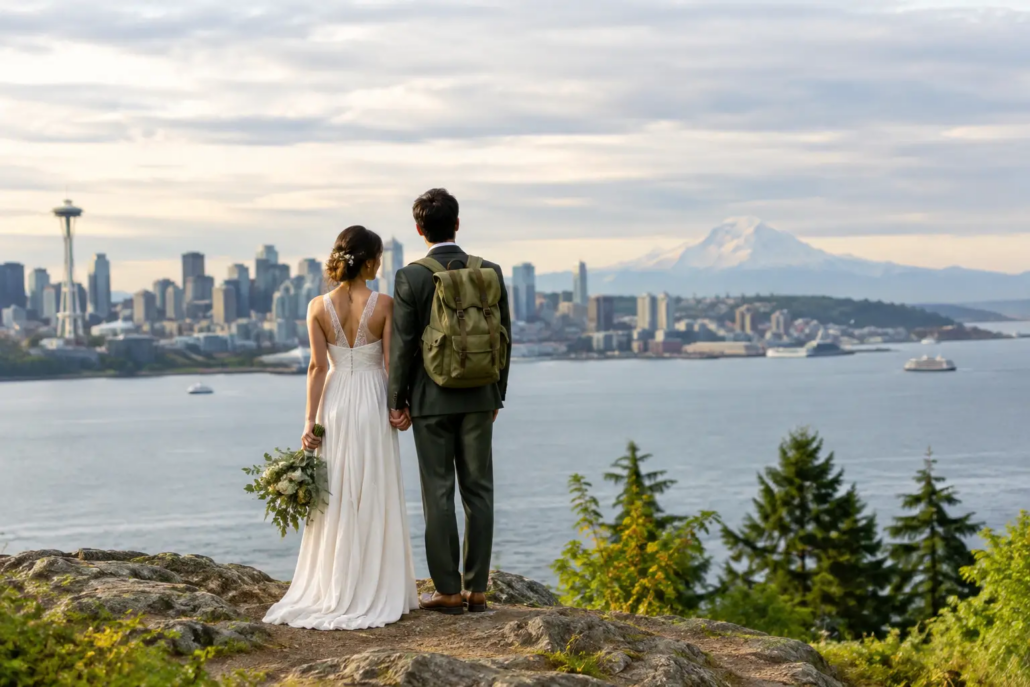
A wedding can be wonderfully small and still have a real footprint. That does not mean your mountaintop vows, waterfront first look, or courthouse signing needs to come with a spreadsheet full of guilt. Sustainable elopement planning is simply about making choices that honor the place where you are getting married, the people helping you celebrate, and the life you are building together.
For couples in Seattle and Western Washington, that often starts with a simple truth: the landscapes we love are not endless backdrops. Beaches, forests, alpine meadows, and public parks need care. The good news is that an intimate ceremony already gives you a strong foundation. With fewer guests, fewer moving parts, and more freedom to choose what matters, an elopement can be personal, joyful, and gentler on the environment without feeling overly precious or restrictive.
Start sustainable elopement planning with your priorities
Before choosing a location or shopping for anything, talk about what you want your day to feel like. Maybe you want a quiet sunrise ceremony with just the two of you. Maybe your dream is a small gathering where your parents, children, or closest friends can be present. Perhaps having a bilingual ceremony matters because you want everyone to feel included.
Those answers shape the most sustainable decisions. A ceremony close to home may create less travel than a destination event, but a meaningful destination can still be a thoughtful choice if you stay longer, travel intentionally, and support local businesses. Renting an outfit may appeal to one couple, while another will treasure rewearing a simple suit or dress for anniversaries. Sustainability is not a contest for the fewest purchases. It is choosing with care rather than buying or traveling on autopilot.
It can help to set three priorities for the day. For example: protect the location, keep the guest experience easy, and make the ceremony deeply personal. When a choice comes up later, you have a kind and practical way to decide.
Choose a location that can welcome you well
Washington offers no shortage of beautiful places to say “I do,” but beautiful does not always mean available for a wedding. Many public lands, beaches, parks, and trails have rules about group size, parking, commercial photography, amplified sound, decorations, and permits. Some places restrict ceremonies during busy seasons or protect sensitive areas entirely.
Check the specific rules before announcing your location. A permit fee can feel like one more planning expense, but it often supports the management and preservation of the place you chose. It also helps you avoid the deeply unromantic surprise of being asked to move your ceremony halfway through it.
If you are inviting a few loved ones, consider access as carefully as scenery. A trail that is easy for you may be difficult for a grandparent, a young child, or someone using mobility support. A waterfront park, private rental, backyard, or accessible overlook may offer the same sense of Washington beauty with less logistical strain and a lower risk of impact from a larger group.
Leave the place better than you found it
The most meaningful environmental choice may be the least glamorous: leave no trace. Stay on established paths, use existing gathering areas, and avoid stepping into meadows for a better photo. Do not toss flower petals, rice, confetti, glitter, or biodegradable confetti unless the site explicitly allows it. “Biodegradable” does not always mean safe for wildlife or easy for land managers to remove.
Bring a small bag for every bit of waste, including food scraps, floral wire, ribbon, and packaging. If you bring chairs, an arbor, signs, or blankets, make sure they are permitted and can be removed without damaging the ground. In a windy Seattle-area setting, simple is not only sustainable. It is much less likely to take flight at the exact moment you exchange rings.
Keep travel thoughtful, not stressful
Travel can be one of the biggest parts of an elopement’s environmental impact, especially when a ceremony involves a remote trailhead or out-of-state guests. You do not need to abandon a place you love. Just plan with intention.
Choose a location that does not require multiple cars if possible. Carpool with your photographer and officiant when schedules allow, arrange one shared ride for guests, or select a location near where you are staying. If your elopement includes a weekend away, consider spending a few extra days in the area rather than making a quick, high-mileage trip for a single afternoon.
Timing matters, too. A weekday ceremony can reduce crowding at popular locations and make parking easier. A morning ceremony may offer softer light, quieter trails, and less need for extensive décor or a long reception afterward. There is no prize for making an elopement complicated. A plan that gives you breathing room is often the plan people remember most fondly.
Let your vendors support the values behind the day
You do not have to find vendors who use the word “sustainable” in every sentence. Ask practical questions instead. Can your florist design with seasonal, locally grown flowers? Does your caterer offer compostable serviceware when rentals are not practical? Can your photographer meet you at one location rather than driving between several? Is your baker able to make a small cake that serves the people actually attending?
A smaller guest count makes it easier to choose quality over excess. You might rent a beautiful table setting for six rather than purchase disposable supplies for fifty. You might share a restaurant dinner instead of arranging a large catered meal outdoors. You might skip favors altogether and write each guest a personal note. The goal is not to make every detail handmade or perfect. The goal is to spend where it creates genuine meaning.
Flowers deserve a little extra thought because they are both lovely and often short-lived. Seasonal blooms, potted plants, dried arrangements you will keep, or a single bouquet can all be beautiful. If you want a traditional floral moment, ask whether the blooms can be donated, composted, or enjoyed by family afterward. Avoid floral foam when you can, as it breaks down into microplastics.
Make the ceremony the part that lasts
An elopement does not need a large production to carry emotional weight. In fact, a smaller setting gives you room to be more specific. Your ceremony can include the story of how you met, a reading from a sibling, a cultural tradition, a moment in Spanish for family members, or vows that sound like the two of you rather than a greeting card.
This is where customization becomes a sustainable choice in its own way. When the ceremony reflects your relationship, you are less likely to feel pressure to add extra details just to make the day feel significant. A meaningful ceremony can be the centerpiece, not an item squeezed between a photo schedule and a décor plan.
At Forever, Together, we see how much calmer couples feel when they know their ceremony is being handled with care. Whether you want a short legal signing, a private elopement, or a small gathering with family, your officiant can help you create a ceremony that fits the setting, respects the timeline, and feels unmistakably yours.
Remember the legal details early
Washington couples need a valid marriage license and must observe the required waiting period before the ceremony. You also need an authorized officiant and two witnesses who are present for the ceremony and able to sign the license. Those witnesses can be loved ones, but they do not have to be. For a very private elopement, plan this piece early so your guest list and location choice still work for you.
Keep the license protected from rain, sand, coffee, and the bottom of a backpack. Assign it to one responsible person before and after the ceremony. Romance is wonderful. Paperwork still appreciates a dry folder.
Build in room for real life
Sustainable planning is also human planning. Build a weather backup for outdoor ceremonies, especially in Western Washington. A covered patio, a nearby inn, a private rental, or even a simple umbrella plan can save you from a frantic last-minute scramble. Choosing a flexible location may be more valuable than chasing a forecast that changes every hour.
Give yourselves permission to edit. You can skip the favors, the matching getting-ready outfits, the elaborate exit, or the décor that only exists for one photograph. You can have dinner at your favorite restaurant, wear shoes you can walk in, and bring your dog only if the location permits it and your dog will genuinely enjoy the day.
The best sustainable elopement is not the one with the most impressive list of eco-friendly details. It is the one that leaves you feeling connected: to each other, to the people who showed up for you, and to the place that held your promises. Plan with care, then let yourselves be present enough to enjoy it.